Harvard Law Professor Goldsmith Calls DOJ's Comey Case 'Obviously a Sham' as Statute of Limitations Ruling Looms
Key Takeaways
- •Judge Trevor McFadden, appointed by President Donald Trump, must decide whether the Justice Department's case against James Comey can proceed despite the statute of limitations issue.
- •Prosecutors accuse Comey of unauthorized transmission of national defense information to a reporter on Oct. 5, 2016, conduct they say violates 18 U.S.C. § 793 of the Espionage Act.
- •Federal law provides a ten-year window for indictments under Section 793, setting a deadline of Oct. 5, 2026, but the DOJ filed an 'information' instead of obtaining a grand jury indictment.
- •Harvard law professor Jack Goldsmith argues the charging document fails to satisfy the statute's indictment requirement and has called the DOJ's legal interpretation 'convoluted.'
- •Whichever way Judge McFadden rules, both the government and Comey's side are likely to appeal.
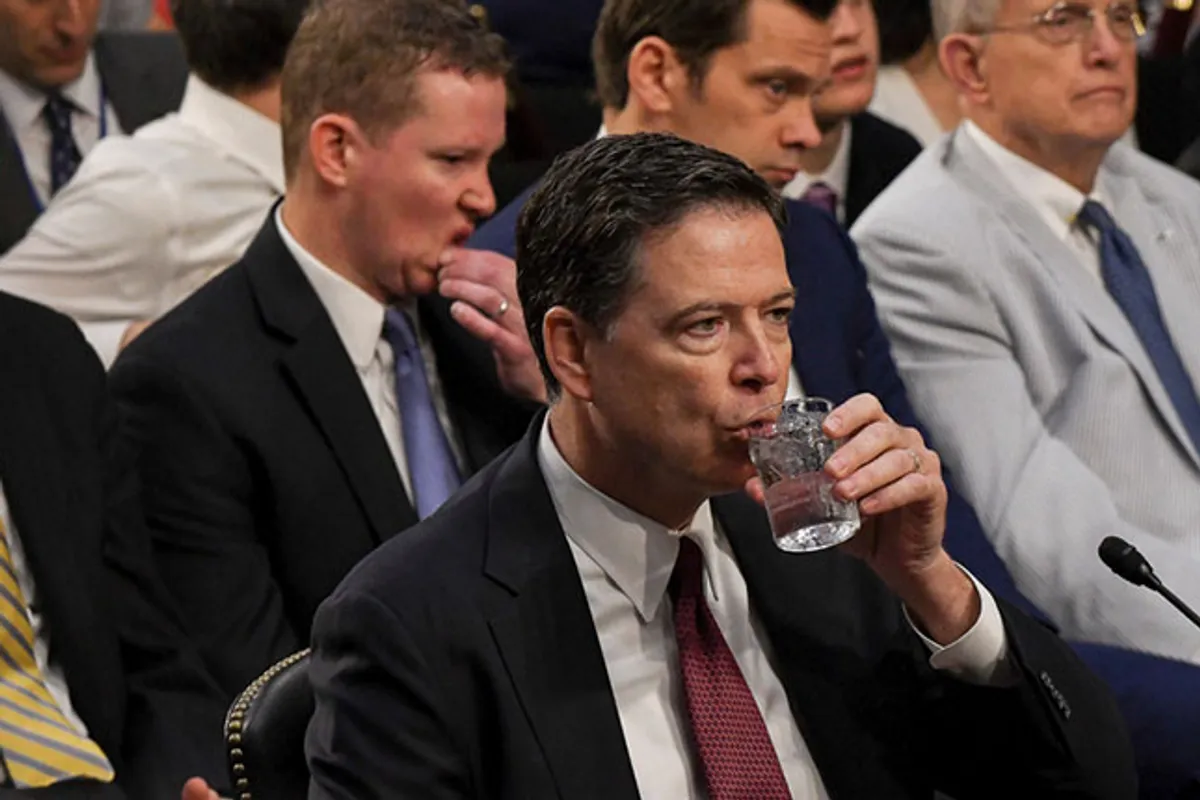
Former FBI Director James Comey is waiting for a ruling from Donald Trump-appointed Judge Trevor McFadden on whether the Justice Department can bring an indictment despite the statute of limitations — a decision that will determine whether the case can proceed at all.
Prosecutors accuse Comey of "leaking" information to a reporter on Oct. 5, 2016 — conduct the DOJ says violates 18 U.S.C. § 793, a provision of the Espionage Act that criminalizes the unauthorized gathering or transmission of national defense information. Harvard Law School Professor Jack Goldsmith, who previously led the Justice Department's Office of Legal Counsel, laid out the department's 10-year problem in a recent Substack post.
Section 19 of the Internal Security Act of 1950 states that "[a]n indictment for any violation of" § 793 "may be found at any time within ten years next after such violation shall have been committed."
According to Goldsmith, if the DOJ wanted to bring a Section 793 indictment within the 10-year window, it needed to actually indict. Instead, the department filed an "information" — a charging document prosecutors can submit without a grand jury vote — hoping it could later be rolled into an indictment without counting toward the statute of limitations.
In other words, the government is attempting to use a rule tied to a different, shorter deadline to salvage a case filed under a longer deadline — one that carries a stricter requirement the government did not meet. Goldsmith called the DOJ's reading of the law "convoluted."
Congress understands the difference between an indictment and an information, Goldsmith noted, pointing to Section 3282 and other statutes. For most federal crimes, either filing can start the 5-year clock. But for Comey's alleged espionage offense, Congress gave the DOJ 10 years only if it obtained an indictment before Oct. 5, 2026.
"I feel a bit silly making technical legal points when this matter — filed not by the U.S. Attorney or the National Security Division of the Justice Department, but rather by Attorney General Blanche's cronies — is so obviously a sham," Goldsmith wrote. "It's hard to fathom what the Attorney General tells himself as he grossly abuses the power of the Department of Justice at the behest of his Article II master."
Andrew C. McCarthy, a Republican former federal prosecutor and senior fellow at the National Review Institute, weighed in on the case in a column for the conservative outlet. In a normal Justice Department, he argued, an indictment would come and the judge would dismiss the case while shaming the prosecutors for bringing it in the first place.
"The Trump DOJ, however, is not a normal Justice Department. Its top priorities include exploiting the legal processes with which they've been entrusted, not to promote the rule of law, but to punish the president's political enemies – putting them through the anxiety, expense, and humiliation of criminal investigations even when the absence of a meritorious prosecution is patent," McCarthy said.
Whichever way McFadden rules, each side is likely to appeal.

