Ireland Launches First National AML Strategy, Flags Stricter Crypto Wallet Checks
Key Takeaways
- •Ireland’s first national anti-money-laundering strategy sets a policy roadmap through 2030.
- •The strategy includes enhanced checks on private crypto wallets, according to reporting on the launch.
- •Tánaiste and Minister for Finance Simon Harris unveiled the framework, which was published by the Department of Finance.
- •The document outlines direction and priorities rather than immediate operational rules, so further measures will be needed.
- •If implemented more strictly, the plan could raise compliance demands for exchanges, wallet providers, and users in Ireland.
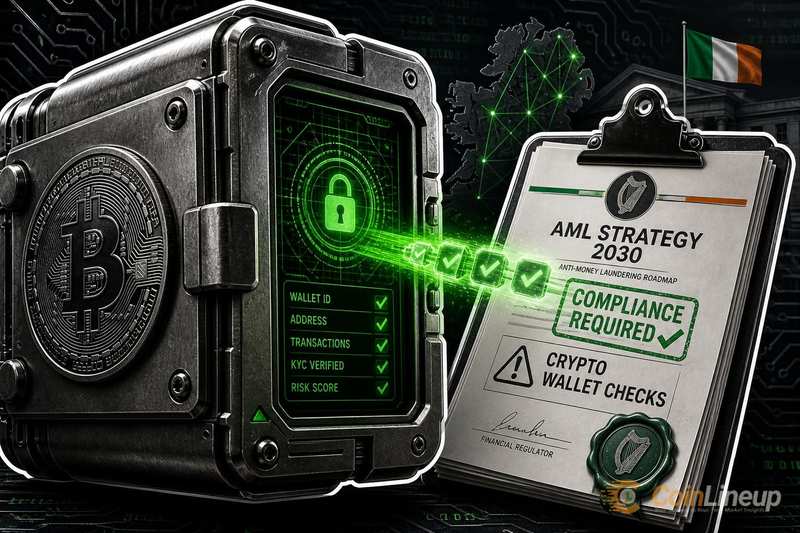
Ireland has launched its first national anti-money-laundering strategy, a 2030 roadmap that signals tighter checks on crypto wallets as part of a broader effort to close gaps in the country’s financial-crime defenses.
The strategy was unveiled by Tánaiste and Minister for Finance Simon Harris, who described it as Ireland’s first national approach to anti-money-laundering, according to the Department of Finance. The framework is set out in the government’s published National AML/CFT/CPF Strategy document.
Reporting on the launch said the strategy includes enhanced checks on private crypto wallets, according to Decrypt. That places wallet activity among the areas Ireland intends to scrutinize more closely as the plan runs toward 2030. For crypto businesses and users, the significance is less about an immediate rule change than about the policy direction: the government is setting expectations now, with the operational details still to come through later measures. For related coverage, see Proposed 401(k) Rule Could Expand Crypto Access for U.S. Retirement Savers.
What the 2030 strategy signals for crypto wallets
“Tighter checks” in an anti-money-laundering context generally refers to stronger customer due diligence, identity verification, and transaction monitoring at the points where digital assets interact with regulated services. For related coverage, see US Regulator Conditionally Approves Bank Charter for Trump-Backed World Liberty Financial.
The document is a strategy rather than a finalized rulebook. It sets direction and priorities through 2030, so any operational details for wallet-related requirements would follow in later measures rather than take immediate effect at launch.
The 2030 horizon frames the plan as a longer-term regulatory roadmap. Ireland’s separate initiative to combat financial crime, fraud, and money laundering was outlined in a related government announcement, indicating a coordinated policy effort across departments.
Why wallets are central to AML enforcement
Crypto wallets are the specific compliance touchpoint highlighted in the coverage of the strategy. Anti-money-laundering frameworks typically focus on transaction visibility and controls that verify who is moving funds and why.
That approach links wallet monitoring to identity verification and transaction screening. Self-custody wallets and third-party custodial services can raise different compliance questions, since responsibility for checks is clearer where a regulated intermediary holds the assets.
Stronger checks also revive the recurring tension between financial surveillance and user privacy. Broader oversight of wallet-linked activity increases the data authorities and firms collect, a trade-off that sits at the center of crypto regulation debates and also appears in U.S. efforts such as the CFTC’s pending work on crypto market rules.
Possible impact for exchanges, providers, and users
If wallet checks become stricter, exchanges and wallet providers serving Ireland would likely face higher compliance expectations. That could mean expanded due-diligence and transaction-review workflows, along with the cost of building and staffing them.
Users could also face additional verification steps when wallet-linked activity is reviewed more closely. The direction resembles the tighter posture regulators are signaling elsewhere, including U.S. panels weighing crypto and AI rules and shifting SEC regulatory timelines.
Based on the available evidence, the strategy points toward tougher oversight for Ireland’s crypto sector, but the specific measures, thresholds, and timelines will need to be set out in follow-up rules rather than at the launch stage.
Disclaimer: This article is for informational purposes only and does not constitute financial or investment advice. Cryptocurrency and digital asset markets carry significant risk. Always do your own research before making decisions.

