Iraq Aims to More Than Double Oil Output Within Six Years, but Faces OPEC Quota and Export Route Hurdles
Key Takeaways
- •Iraq is targeting oil production of 8 million to 10 million barrels per day, up from about 4 million barrels per day before the Iran war.
- •Baghdad has sent its oil and finance ministers to Saudi Arabia to seek a higher OPEC production quota.
- •OPEC+ has hired DeGolyer and MacNaughton to assess members’ sustainable capacity, with findings expected by the end of September.
- •Iraq’s crude exports have been hit by reduced traffic through the Strait of Hormuz, though flows have recovered to around 2 million barrels per day this month.
- •Iraq plans to expand exports through Turkey’s Ceyhan port and pursue new routes via Syria and Jordan, but the options face major infrastructure, time, and cost constraints.
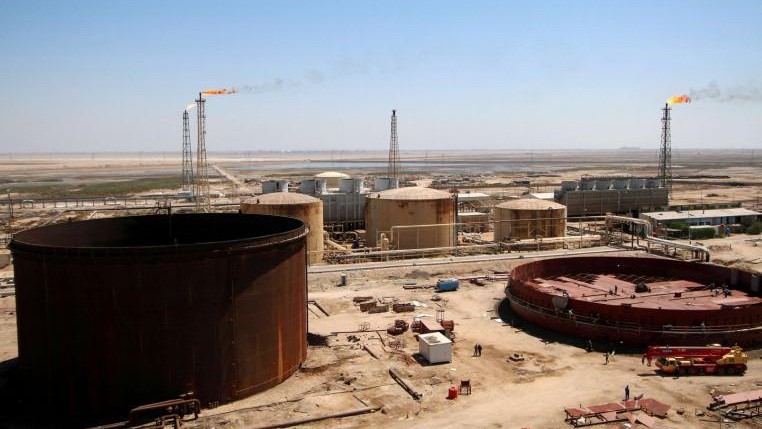
Iraq aims to more than double its oil production within six years, but the plan first requires OPEC's blessing and a fix for the country's strained export infrastructure. The stakes run beyond national ambition: oil sales fund the bulk of the Iraqi state's revenue, and the country has long ranked among OPEC's largest producers.
Baghdad is targeting output of between 8 million and 10 million barrels per day, up from roughly 4 million bpd before the Iran war, Prime Minister Ali al-Zaidi said Friday. On the same day, Iraq dispatched its oil and finance ministers to Saudi Arabia to make the case for a higher OPEC production quota. Grand capacity goals are familiar terrain for Baghdad, which a decade ago spoke of building toward 12 million bpd before falling well short amid underinvestment, payment arrears to international oil companies, and recurring political turmoil — a track record that will color how the new target is received.
The push comes as OPEC+ has hired consultancy DeGolyer and MacNaughton to independently assess the maximum sustainable production capacity of most members, including Iraq. The consultancy is expected to submit its findings by the end of September, kicking off negotiations over production baselines for 2027. Those talks tend to get testy because a higher baseline generally means permission to pump more oil. The precedent cuts both ways: the UAE parlayed an independent capacity review into a higher quota in a previous round, while Iraq has a history of pumping above its allocation and then making compensation cuts — one reason fellow members are likely to scrutinize any Iraqi capacity claim closely.
Even if a higher quota is approved, Iraq faces a second problem: getting all those barrels out. The country has been among the producers hit hardest by Iran's effective closure of the Strait of Hormuz, historically Iraq's primary crude export route and the passageway for roughly a fifth of globally traded oil. Iraq has managed to push exports through Hormuz back to around 2 million bpd this month, but traffic through the chokepoint remains well below pre-war levels.
Al-Zaidi said Iraq plans to expand exports through Turkey's Ceyhan port while pursuing new routes through Syria's Baniyas and Jordan's Aqaba. The existing Iraq-Turkey pipeline, a line with a nameplate capacity of roughly 1.5 million bpd that has been repeatedly idled — including by the halt that followed a 2023 arbitration award over Kurdish crude flows — is currently moving only about 170,000 bpd. A proposed pipeline to Syria—another route around Hormuz—could take four years to build and cost at least $15 billion. The constraints make Iraq's 8-million-to-10-million-bpd target as much an infrastructure problem as a drilling one, which is why the pace of any Turkish, Syrian, or Jordanian route agreements will matter as much as the quota arithmetic once baseline talks resume after September's capacity report.
China, meanwhile, is already buying more Iraqi crude as Middle Eastern supply routes fracture, including recent purchases of 8 million barrels of Basrah Heavy and Basrah Medium. China has long been Iraq's single biggest crude buyer, underlining that demand looks less like the binding constraint than export capacity.
By Julianne Geiger for Oilprice.com.

