Intel Officials and Journalist Fred Kaplan Warn Iran War Is Weakening U.S. National Security
Key Takeaways
- •The U.S. has expended more than half of its pre-war stockpile of Pentagon-classified key munitions, and replenishing those supplies is estimated to take three to four years.
- •American forces are firing interceptor missiles costing approximately four million dollars each to down Iranian drones priced at roughly thirty thousand dollars apiece, a ratio defense analysts consider unsustainable.
- •Kaplan argues that Iran is waging an asymmetrical conflict in which avoiding defeat effectively equals winning, a dynamic that U.S. strategy centered on overwhelming firepower fails to address.
- •Military and intelligence officials worldwide are observed to be studying the Iran war and adjusting their strategies to potentially counter or defeat the U.S. in future crises.
- •The strain on U.S. weapons inventories was already a concern due to years of military support for Ukraine, and the Iran conflict has compounded pressure on a domestic industrial base struggling to increase output.
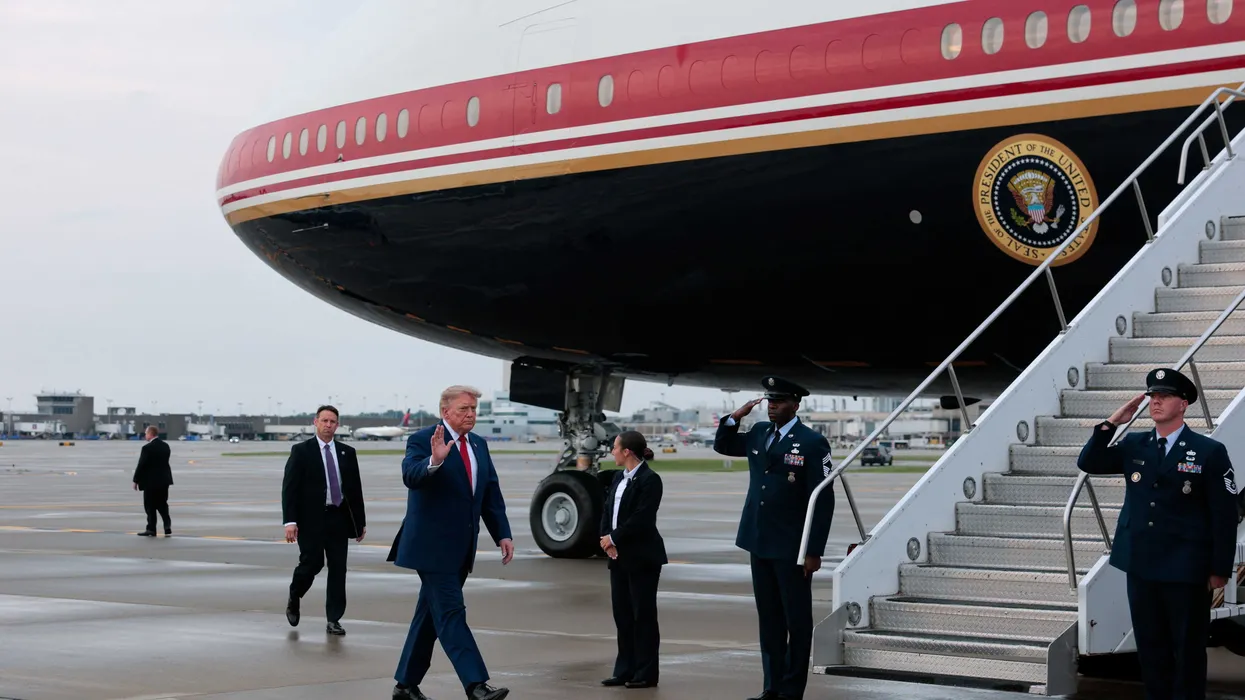
More than five and a half months into the United States' war with Iran, President Donald Trump continues to maintain that military action is necessary to stop Iran's Islamist government from obtaining a nuclear weapon. Critics, however, argue that the conflict is only radicalizing the regime further — and journalist Fred Kaplan, writing in the UK-based i Paper, contends that the war is significantly damaging U.S. national security and military readiness.
"With every day that President Donald Trump prolongs his war on Iran," Kaplan warns, "his country becomes weaker, in at least three ways."
Kaplan identifies three core reasons the war is undermining the U.S. military position. First, he points to the reality that the world's most powerful nation is losing an asymmetrical conflict to what he describes as a third-rate military power. Second, the war has consumed a striking volume of advanced weaponry — more than half of the pre-war stockpile of what Pentagon planners classify as "key munitions." Replenishing those supplies, he notes, will take three to four years, leaving critical gaps in America's capacity to respond to future conflicts that could directly threaten its security interests. Third, Kaplan highlights the geopolitical consequences: "Military and intelligence officials worldwide are watching this war and adapting their strategies so they might better face down the West's great superpower in a crisis and possibly, if it escalates to conflict, win a war."
The strain on U.S. weapons inventories is a concern that predates this conflict. During years of sustained military support for Ukraine, Pentagon officials and lawmakers repeatedly flagged the slow pace of domestic munitions production, particularly for precision-guided weapons and air-defense interceptors. The Iran war has now compounded that pressure on an industrial base already struggling to surge output.
The depletion, Kaplan emphasizes, is accelerating. American commanders, focused on overwhelming firepower as the metric of military strength, have expended more than half of their cruise missile stockpile — with each missile costing between $1.6 million and $3.6 million — against as many targets as they could identify, operating on the assumption that, in Trump's words, the Iranians would eventually capitulate. Kaplan argues that this approach overlooks the nature of the conflict: Iran is waging a different kind of war and possesses sufficient missiles and other weapons to avoid defeat — which, in practice, amounts to the same outcome as winning.
The cost asymmetry extends to air defense. U.S. forces have been firing $4 million (£3 million) Patriot interceptor missiles to down Iranian drones that cost approximately $30,000 (£22,200) each — a ratio Kaplan describes as unsustainable. A similar dynamic has been documented in the Red Sea, where U.S. Navy destroyers have expended multimillion-dollar Standard Missile interceptors against low-cost Houthi drones and missiles, drawing scrutiny from defense analysts and members of Congress. Despite these efforts in the Iranian theater, some Iranian drones have inflicted significant damage on energy facilities belonging to the U.S. and its allies, as well as on American military installations in the Middle East.
"This new twist — technology that can be built in great quantities for little money — has turned what was once the source of the U.S. military's edge into its gravest vulnerability," Kaplan concludes.
