Trump-Iran war drives bond market stress as yields rise, CNN reports
Key Takeaways
- •The war with Iran has driven a US bond market sell-off that has pushed the 10-year Treasury yield to its highest level in nearly three years.
- •Higher yields are raising costs for mortgages, corporate borrowing, and US government debt payments on a national debt that hit $40 trillion for the first time last month.
- •Net interest spending has reached $931 billion this fiscal year, exceeding the $804 billion spent on national defense, and is projected to top $16 trillion over the next decade.
- •Treasury Secretary Scott Bessent's intervention promising to at least double Treasury buybacks stabilized markets for only a few hours before the sell-off resumed at higher rate levels.
- •Strategists including JPMorgan's David Kelly say the government cannot stop the market pressure without changing the debt trajectory or finding a credible way out of the war.
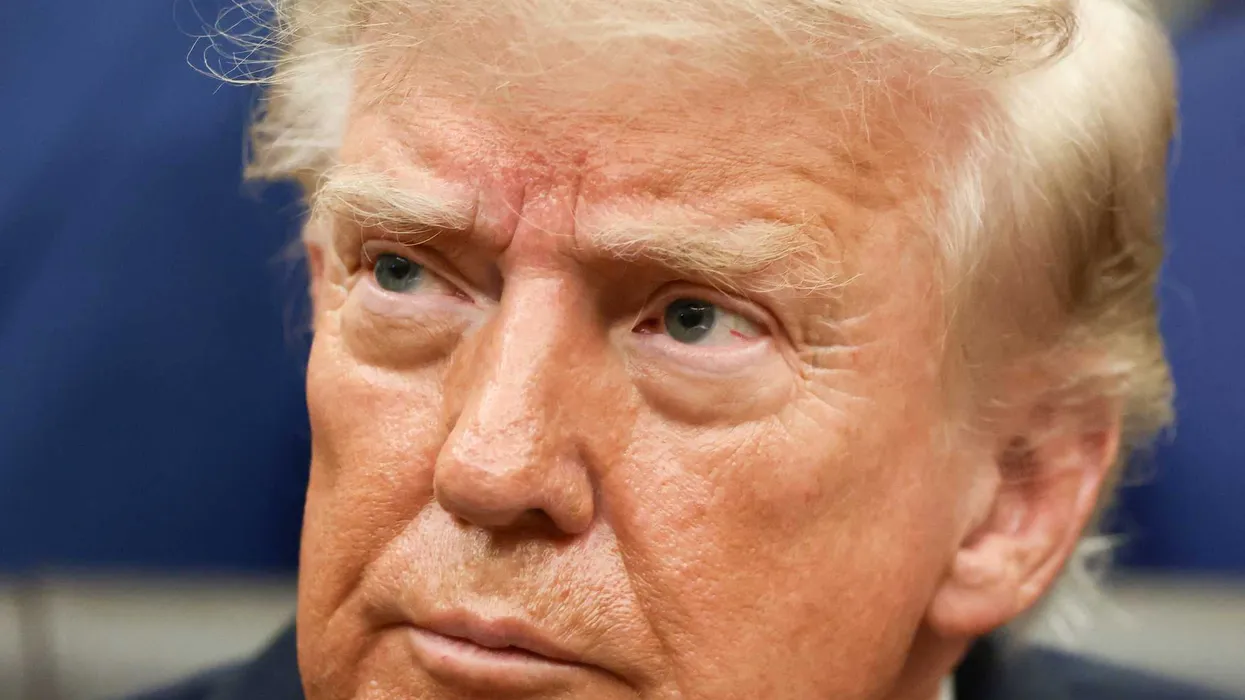
President Donald Trump’s war with Iran has created an economic “doom loop” that experts warn has “no end” in sight. According to new reporting from CNN, “yellow lights are flashing in the most important market on the planet: The US bond market.” As bond yields climb sharply, investors are selling quickly, sending ripples across the broader economy. Because bond prices and yields move in opposite directions, a sell-off pushes yields higher, which in turn raises borrowing benchmarks across the financial system.
CNN said the situation is being driven by several factors, led by the war with Iran, which is “driving up US defense spending and the cost of oil, gasoline, diesel and jet fuel.” The energy spike is reinforcing inflation concerns in a bond market already unsettled by America’s $40 trillion debt burden. The yield on the benchmark 10-year Treasury, a measure of how much the US government pays to borrow more money, climbed on Wednesday to the highest level in nearly three years. The 10-year yield is closely watched because it anchors pricing for mortgages, corporate loans and other long-term credit, so moves of this kind tend to spread quickly through household and business finances. CNN said the stress in the bond market will make mortgages more expensive for consumers, raise borrowing costs for businesses and increase the cost for Washington to pay its bills.
CNN said the result has heightened concern that the economy has entered a “doom loop, where the more the war intensifies, the more it will spook the bond market and slow the economy and stocks.” Hardika Singh, economic strategist at Fundstrat Capital, said, “It feels like there is no end to the inflation problem, the war or the deficit in the near term.”
The war has pushed bond yields higher for two main reasons: the U.S. has had to borrow more to finance defense spending, and inflation has risen more broadly. CNN reported that the longer the war continues, the worse the problem could become. Art Hogan, chief market strategist at B. Riley Wealth Management, told CNN, “This becomes a circular argument unless and until there is a credible way to get out of this war.” David Kelly, chief global strategist at JPMorgan Funds, said, “Sadly, it looks like the world has entered a new set of forever wars – and that’s very expensive.”
CNN also noted that higher bond yields typically slow the economy by raising the cost of capital. Companies must pay more interest to open factories, small businesses face higher loan costs when expanding, and Washington is hurt by higher interest payments on the national debt, which last month hit $40 trillion for the first time ever. The United States has spent $931 billion on net interest so far this fiscal year, ahead of the $804 billion spent on national defense, according to Treasury. Over the next decade, net interest on debt is projected to exceed $16 trillion, and analysts say that estimate could rise further if rates continue to increase.
Last month, Treasury Secretary Scott Bessent tried to slow the sell-off with a surprise and controversial intervention. CNN reported that “his plan – promising to at least double Treasury buybacks – worked, but only for a few hours.” The bond sell-off quickly resumed, and rates moved above pre-intervention levels. Singh called the effort a failure, saying, “It massively flopped. If anything, this may have made the problem worse. Bessent showed his hand. To investors, it was like, ‘Oh my gosh, he’s worried. We should be too.'”
Kelly told CNN that Bessent’s move did not solve the underlying problem of large deficits. “It’s just moving around a bunch of borrowed money. That’s not going to move the needle,” Kelly said. “Unless they can find a way to truly change the trajectory on our debt, the government is powerless to stop this. We’ve maxed out the credit cards.” Kelly added that even if oil prices fall, it may not be enough and may come too late to prevent a major crisis. “The only foolproof way to get a major bond market rally is to have a massive recession,” he said. “That would do it.”

