US and Iran trade strikes in largest exchange since July
Key Takeaways
- •The latest U.S.-Iran exchange of fire was the largest since July and renewed concerns about a broader war.
- •The U.S. said it struck air defenses, radar, maritime assets, mine-laying capabilities and communications sites near Iran’s southern coast.
- •Iran said it retaliated against U.S. assets in Bahrain, Jordan, Kuwait and Iraq, while U.S. officials said they saw no casualties in initial assessments.
- •Iran accused Washington of hitting a wedding in Sirik, saying four people were killed and many others were wounded, but Reuters could not independently verify the incident.
- •Markets reacted to the escalation as Asian and European shares fell and oil prices moved higher in a volatile session.
WASHINGTON/DUBAI — Iranians and their Arab neighbors feared a return to war on Wednesday after the biggest exchange of fire between Tehran and Washington since July, with U.S. forces striking Iran’s southern coast and Iran firing at American bases across the region.
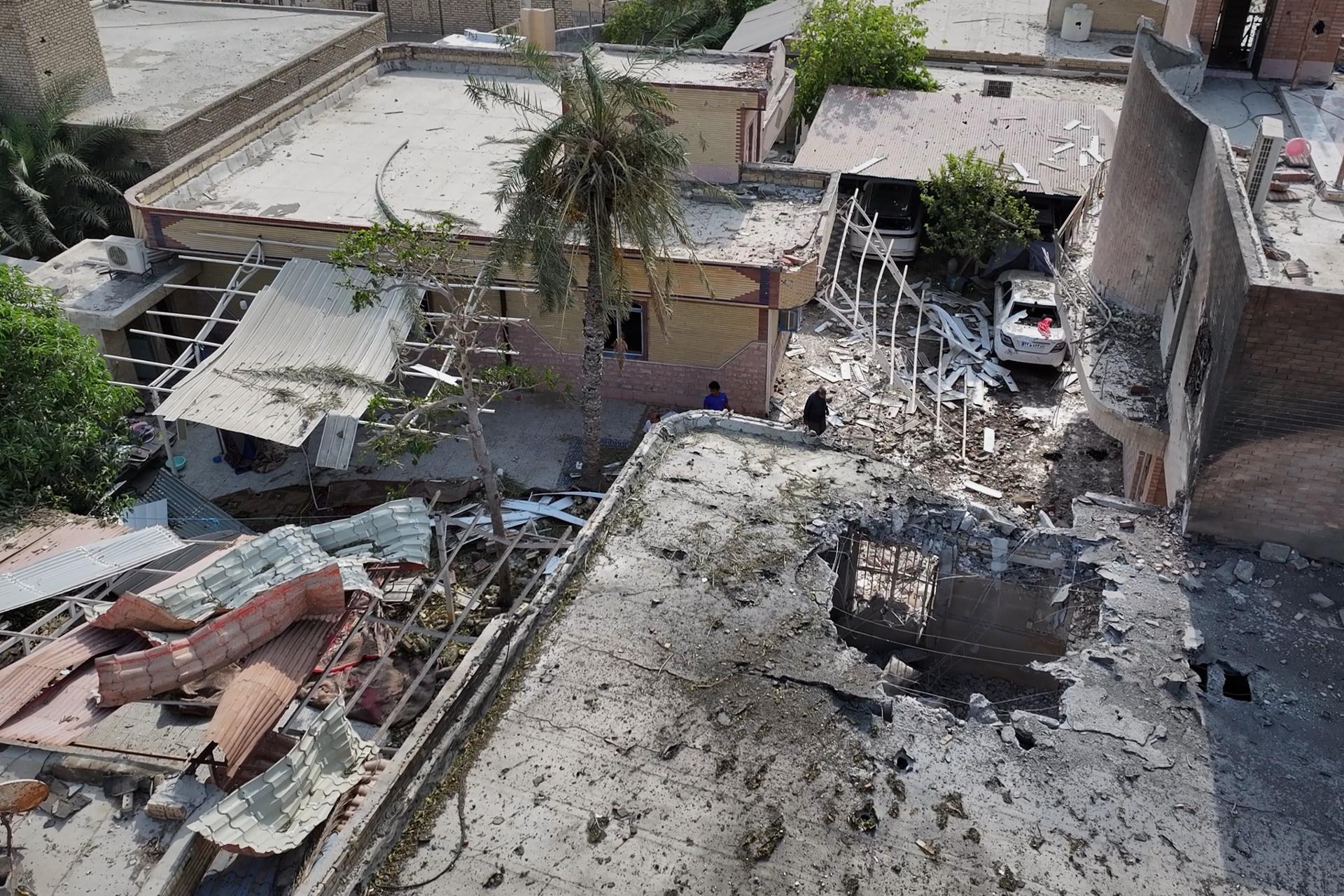
The United States threatened more devastating strikes. Iran accused Washington of hitting a wedding party, killing four people and wounding dozens. Its health minister later said 18 people in total had been killed and 108 injured in the latest wave of U.S. strikes.
Asian and European stocks fell after the airstrikes, though Wall Street opened higher as investors focused instead on AI developments. Oil prices were slightly firmer in a volatile session that had earlier seen them reach levels not recorded since July, underscoring how the fighting is feeding into already fragile markets and concern over the war’s broader economic impact.
'Like the end of the world'
The U.S. military said it struck air defenses, radar systems, maritime assets, mine-laying capabilities and communications sites on Tuesday. Iran reported hits on multiple targets near the Strait of Hormuz.
“Last night was like the end of the world,” Mahmoud, 38, a municipal worker in Sirik County along the strait, told Reuters by telephone, describing attacks on the area that includes the city where the wedding was reported to have been hit.
Iran responded by striking what it said were U.S. assets in Bahrain, Jordan, Kuwait and Iraq, and said its aim was now to drive U.S. forces from the vast network of military bases they have occupied for decades across the Middle East.
“American evil in the region will be met with heavier, more widespread, and devastating responses, and any country that cooperates with the aggressive American army must accept its dangerous consequences,” Iran’s military command said.
Iran said it killed U.S. forces in Jordan and at a base in northern Iraq, but U.S. officials told Reuters there had not been any casualties, according to initial assessments.
In Kuwait, Iran said it had carried out a missile and drone attack on the vast U.S. Ali Al Salem Air Base and targeted the accommodation of a U.S. commander. Kuwait’s fire service said it put out a blaze at a residential complex hit by a drone.
Qatar, home to the largest U.S. air base in the Gulf, said it held Iran responsible for the attacks and their repercussions. Bahrain, which houses the regional headquarters of the U.S. Navy, said Iranian drones were intercepted and destroyed.
Iran also said two tankers had been struck by mines while being steered through the Strait of Hormuz by U.S. personnel.
Washington said that despite Iranian attacks it is guiding ships through the strait. Energy Secretary Chris Wright said more than 17 million barrels of oil exited on Monday, a reminder of how dependent global trade remains on the narrow waterway even during periods of conflict.
Iran blacklisted 11 more ships, bringing the total number of such vessels to 56, a government website showed, meaning it would consider them subject to fines, confiscation or detention if they try to sail through the Strait of Hormuz without Tehran’s permission.
U.S. President Donald Trump repeated his assertion that the strait, which handled 20% of global oil and liquefied gas shipments before the war, was open to shipping.
“Now that we have it under U.S.A. control, should we change the name Hormuz Strait to TRUMP STRAIT???” Trump said in a post on his Truth Social platform.
Iran says wedding struck
Iranians were fearful that the new strikes signaled the war could restart at full throttle.
“It’s very difficult to live like this. We don’t know when America will strike,” Mahpari, 28, a woman in the southern port city of Bandar Abbas, told Reuters by phone.
Iran said four people, including a 4-year-old, were killed while celebrating a wedding at a home in Sirik. Iranian media said as many as 68 people were wounded there, and released images of injured children in hospital.
Reuters was unable to independently verify the incident.
U.S. Navy Captain Tim Hawkins, a spokesperson for Central Command, said: “We are aware of reports, which originated from Iranian state media. The U.S. military never targets civilians, unlike the IRGC,” referring to Iran’s Revolutionary Guards.
Video filmed by Iran’s West Asia News Agency at the purported site showed rubble strewn across rooms and a courtyard. A pair of strappy women’s dress sandals lay abandoned on a blood-soaked carpet.
“I am just glad the casualties weren’t even worse,” said Ali Molahi, identified as the father of the bride.
Conflict draining both sides
The exchange of fire was the worst since July, when Trump abruptly halted two weeks of intense bombing of Iran after warnings from his military brass that they were using up munitions and running out of meaningful targets.
Trump has yet to achieve the aims he set when launching “Operation Epic Fury” in February — to end Iran’s nuclear program, deprive it of the ability to strike its neighbors and create conditions for Iranians to topple their rulers.
Treasury Secretary Scott Bessent said Washington was looking at targeting airlines, the maritime industry and digital assets as part of a campaign to increase economic pressure on Tehran.
Iran’s currency has dropped to a record low of more than 2.2 million rials per U.S. dollar, two websites tracking the free market showed on Wednesday. It has lost about 10% in the past week alone, adding to pressure on households and businesses already coping with sanctions and wartime disruption.
Sources have told Reuters Trump aides are trying to keep the war quiet for now to avert a rout in congressional elections in November. Polls show Americans oppose the war by more than a two-to-one margin.

