Iran threatens to halt Persian Gulf oil exports, warns US support will be treated as an act of war
Key Takeaways
- •The Strait of Hormuz carries roughly 25% of the world’s seaborne crude oil trade and is only about 21 miles wide at its narrowest point.
- •Iran has threatened to close the strait and block oil exports, although it has never fully shut the waterway before.
- •Iran’s oil exports have fallen from about 1.3 million to 1.5 million barrels per day before the conflict to below 300,000 barrels per day at their lowest levels.
- •Saudi Arabia and the UAE have partial pipeline alternatives, but the available capacity does not cover all Gulf exports, and Qatar’s LNG shipments still depend heavily on Hormuz.
- •A prolonged disruption would likely lift energy prices, disrupt supply chains, and increase risk premiums for shipping and insurance companies.
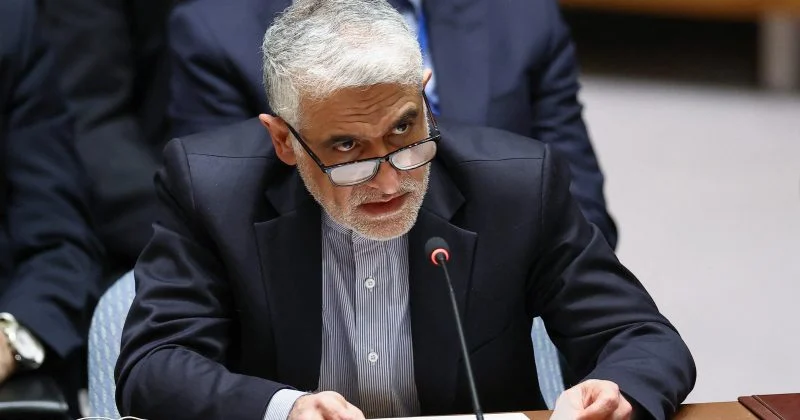
Mohsen Rezaee, Secretary of Iran’s Supreme National Security Council, told neighboring Gulf states on August 22 that supporting the US economic pressure campaign against Tehran would be treated as an act of war. He also threatened to close the Strait of Hormuz and ensure that “not a single drop of oil” leaves the Persian Gulf.
A chokepoint with global consequences
The Strait of Hormuz is a narrow waterway between Iran and Oman that carries roughly 25% of the world’s seaborne crude oil trade. At its narrowest point it spans only about 21 miles (33 km), with inbound and outbound shipping lanes just a few miles wide, leaving tankers little room to evade harassment. Iran has issued similar warnings before. Parliament Speaker Mohammad Bagher Qalibaf has previously made comparable threats about retaliating against Middle Eastern energy exports in response to American sanctions. Iran has never fully closed the strait, even during the “Tanker War” of the 1980s, when hundreds of commercial vessels were attacked in Gulf waters. However, the current geopolitical setting makes the rhetoric far more dangerous.
The US and Israel launched military strikes against Iran in late February 2026, setting off a series of escalations that have destabilized the broader region. In response, Iran has moved to assert more aggressive control over shipping lanes in the Strait of Hormuz, turning a long-standing threat into something closer to an operational reality. Iran’s naval forces are built for exactly this kind of pressure: the Revolutionary Guard’s fast attack boats, anti-ship missiles and naval mines are suited to asymmetric harassment of commercial shipping rather than conventional naval confrontation.
Iran’s oil exports have fallen sharply
Before the conflict intensified earlier this year, Iran was exporting an average of 1.3 million to 1.5 million barrels of oil per day. Since then, exports have fallen to below 300,000 barrels per day at their lowest levels, weighed down by enforced blockades and operational disruptions linked to US sanctions.
Gulf states face direct exposure
Countries such as Saudi Arabia and the UAE rely on uninterrupted oil flows through the same waterway Iran is threatening to shut down. Saudi Arabia alone depends on the strait for the vast majority of its seaborne oil exports. Both countries have partial workarounds: Saudi Arabia’s East-West pipeline can carry about 5 million barrels per day to Red Sea terminals, and the UAE’s Abu Dhabi Crude Oil Pipeline moves roughly 1.5 million barrels per day to Fujairah on the Indian Ocean coast, outside the strait. That combined capacity still falls well short of total Gulf exports, and Qatar’s liquefied natural gas shipments, nearly all of which also transit Hormuz, have no overland bypass at all.
A prolonged blockade would disrupt global supply chains and could drive energy prices higher, affecting both producers and consumers. Major importing countries hold emergency oil reserves, which were drawn down during past supply shocks including the coordinated release after Russia’s 2022 invasion of Ukraine, but such stocks serve as a temporary buffer rather than a replacement for lost supply.
China, one of the world’s largest oil importers and historically a major buyer of Iranian crude, would also be affected. Meanwhile, the insurance and shipping industries are already facing higher risk premiums for vessels transiting the strait as uncertainty around the region continues to build. The US Navy’s Fifth Fleet, headquartered in Bahrain on the Gulf’s western shore, remains a standing military presence in the region that any full closure attempt would directly confront.

