Iran Claims Strike on U.S. Vessel in Strait of Hormuz as Fighting Escalates
Key Takeaways
- •Iran said it struck an unmanned U.S. vessel attempting to enter the Strait of Hormuz on Sunday, an attack the United States did not immediately confirm.
- •The U.S. military said it struck three Iranian oil tankers the day before, in response to a missile attack on Navy warships.
- •The war began with U.S. and Israeli attacks on Iran on Feb. 28, and on-and-off fighting has persisted since a June ceasefire was announced.
- •The U.S., Britain, France and Germany are seeking to refer Iran to the U.N. Security Council over noncompliance with nuclear nonproliferation obligations, though Russia or China could block binding action.
- •Roughly a fifth of the world's oil trade normally passes through the Strait of Hormuz, and disruption there has raised concerns about shipping costs and insurance rates.
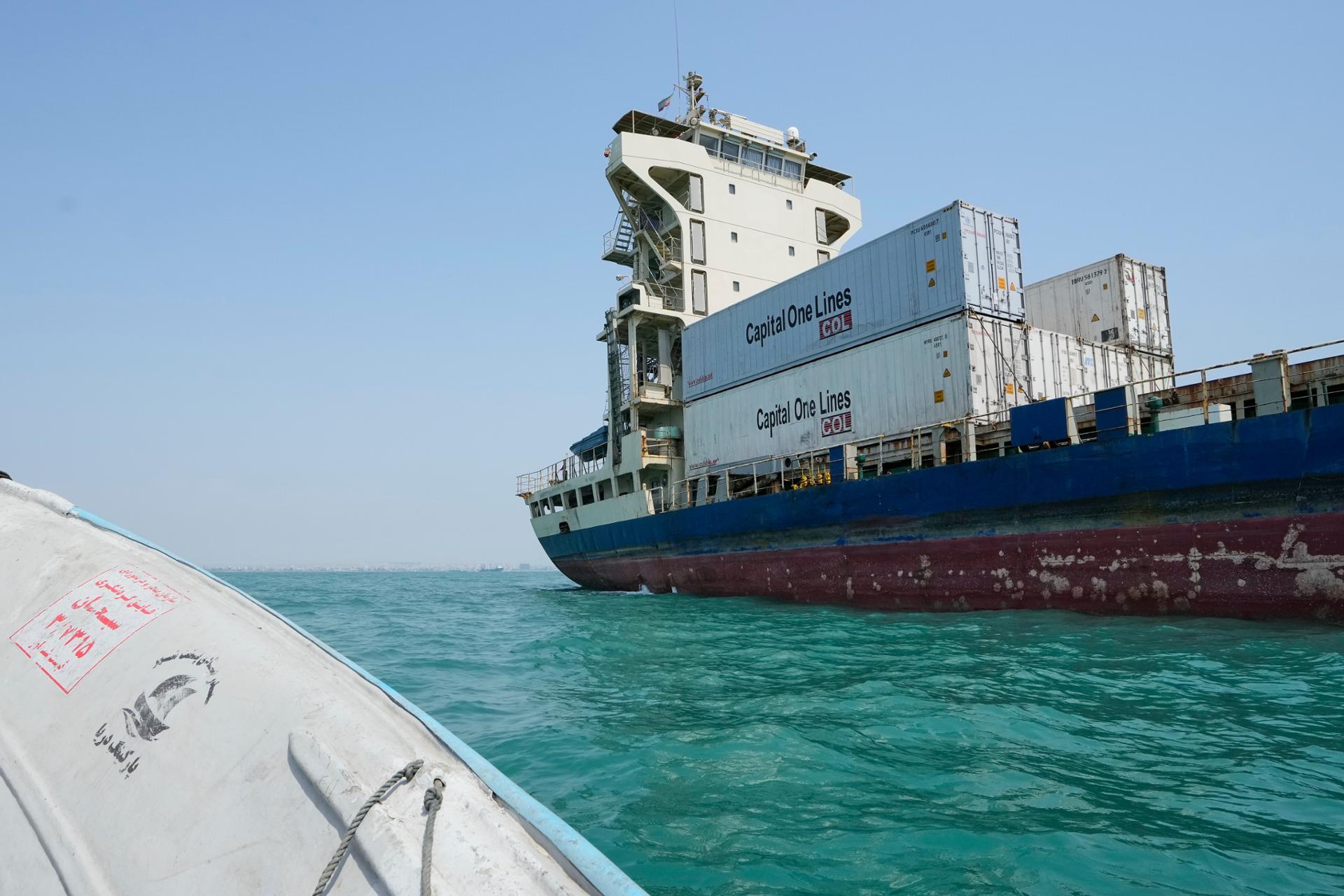
CAIRO — Iran said Sunday that it struck an unmanned U.S. vessel attempting to enter the Strait of Hormuz, the latest salvo in a renewed flare-up of fighting between the two countries.
The United States did not immediately confirm the purported attack, which came a day after the U.S. military said its forces struck three Iranian oil tankers in response to a missile attack on Navy warships.
The war began with U.S. and Israeli attacks on Iran on Feb. 28. Since a ceasefire agreement was announced in June, however, on-and-off fighting has persisted, with both sides seeking to inflict military and economic pain as negotiations have collapsed.
Strikes come about a week after fighting resumed
The U.S. and Iran resumed attacks last week after a month of relative calm, with the Strait of Hormuz and Iranian communities along it again being targeted. At least five people were killed earlier in the week during a U.S. bombardment of southern Iran.
The Trump administration appears to have adopted a dual-pronged approach to the conflict, responding militarily to attacks on the strait while going after foreign financial institutions that handle Iran's money. Tehran's hard-line new senior leaders, however, have signaled their willingness to dig in after weathering decades of sanctions.
Iran has found ways over the years to circumvent sanctions — and now the U.S. blockade — to get its oil to buyers and help ease growing economic pressures. That effort relies in part on a shadow fleet transporting its oil, aging tankers often operating under opaque ownership that Western governments have targeted with sanctions in recent years.
Meanwhile, Iran's nuclear program, the issue that contributed to the outbreak of the war, was meant to be addressed in negotiations that fell apart soon after the U.S. and Iran signed a memorandum of understanding in mid-June. Diplomats say the U.S., Britain, France and Germany are seeking to refer Iran to the U.N. Security Council for its failure to comply with nuclear nonproliferation obligations. A Security Council referral could open the door to renewed international sanctions, though any binding action would likely face resistance from veto-holding members such as Russia and China.
Instead, Tehran's new leverage focuses on the Strait of Hormuz, a waterway crucial to global oil and natural gas shipments — roughly a fifth of the world's oil trade normally passes through it — that was regarded as an international waterway before the war began. Disruption there has repeatedly raised concerns about shipping costs and insurance rates for vessels transiting the Gulf, effects that shaped earlier episodes of tension in the region.

