Iran and Oman to announce new passage through Strait of Hormuz
Key Takeaways
- •Iranian lawmaker Abbas Moghtadaei said Iran and Oman are set to release a joint statement on a new passage through the Strait of Hormuz.
- •The Strait of Hormuz is the world’s most important oil transit chokepoint and carries around 20 million barrels per day of petroleum liquids, or about one-fifth of global consumption.
- •Roughly one-fifth of global liquefied natural gas trade also passes through the strait, mostly as Qatari exports.
- •Market participants are treating the announcement as a sign of progress, but no formal agreement has been confirmed.
- •Oman’s role is notable because it has previously acted as a discreet intermediary between Iran and Western governments.
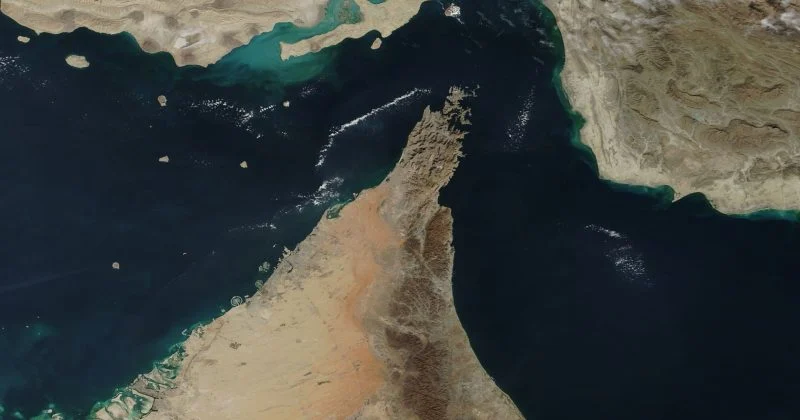
Iran and Oman are set to issue a joint statement on the establishment of a new passage through the Strait of Hormuz, a waterway of strategic maritime importance.
The announcement was made by Iranian lawmaker Abbas Moghtadaei, pointing to possible developments in the management of the critical chokepoint. The Strait of Hormuz has long been a major point of contention because of its role in global energy shipping, and any new route could signal notable changes in regional maritime security dynamics.
The strait connects the Persian Gulf to the Gulf of Oman and the Arabian Sea, running between Iran to the north and Oman and the United Arab Emirates to the south, and is roughly 21 miles wide at its narrowest point. The U.S. Energy Information Administration identifies it as the world's most important oil transit chokepoint: in recent years about a fifth of global petroleum liquids consumption, on the order of 20 million barrels per day, has passed through it, along with roughly a fifth of global liquefied natural gas trade, largely Qatari exports. Because overland alternatives such as Saudi Arabia's East-West pipeline and the UAE's pipeline to Fujairah carry far less crude than the strait's tanker traffic, most of this trade has no practical bypass, which is why changes in how the waterway is managed draw close international scrutiny.
Oman's involvement is also notable given its record as a discreet intermediary between Iran and Western governments, including the contacts that preceded the 2015 nuclear agreement.
Market participants appear to be interpreting the development as a sign of progress toward an agreement on managing the strait, although no formal agreement has been confirmed.
Key Takeaways
The announcement suggests potential progress in negotiations between Iran and Oman over maritime management in the Strait of Hormuz.
Market pricing shows a lower chance of a formal agreement by August 31, with the current YES probability at 21.5%, down from 29% a day earlier.
A longer-term outlook shows a 62% YES probability for a formal agreement by September 30, reflecting greater optimism for a later resolution.
What to Watch
Observers should watch for any official joint statement from Iran and Oman, as such an announcement could raise the probability of a finalized agreement. Iranian and Omani foreign ministry officials are expected to play an important role in shaping the outcome. Any geopolitical developments or incidents in the Strait of Hormuz could also affect the likelihood of an agreement.
The situation remains fluid, with potential implications for regional security and global energy shipping routes.
Get live prediction-market analysis, powered by Vera. Sign up for Vera.

