Iran and Oman in Final Stage of Strait of Hormuz Agreement as U.S.-Iran Talks Continue
Key Takeaways
- •Iran and Oman have agreed on geographic coordinates for a shipping lane through the Strait of Hormuz and are in the final stage of preparing a joint announcement.
- •Iran has warned Gulf nations that any further U.S. military attack on Iranian territory would result in retaliation against critical energy infrastructure across the region.
- •Crude oil prices have declined more than 9% over the past week to roughly $80 per barrel, reflecting market optimism about a potential agreement to keep the strait open.
- •Iranian officials have stated that a finalized agreement could be delayed if a U.S. naval blockade remains in effect and have emphasized that negotiations are being conducted solely through Omani mediators.
- •Multiple U.S. media outlets have reported that the Pentagon held an emergency meeting over munitions shortages, with Reuters reporting that the United States had expended virtually all of its long-range precision missiles during the Iran conflict.
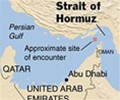
Iran and Oman are nearing the final stages of an agreement concerning the Strait of Hormuz — the narrow waterway through which roughly a fifth of global daily oil consumption transits — even as U.S. President Donald Trump has indicated that negotiations with Tehran are advancing.
Speaking on Wednesday evening, Trump reiterated his assertion that Iran had asked the United States to call off a major military strike over the weekend. "They wanted to negotiate and we're doing that and it seems to be working out quite well," Trump said, though he declined to offer specifics. He cautioned that the outcome remains uncertain, adding, "it may be or it may not be."
Earlier in the week, Trump stated that a deal to reopen the Strait of Hormuz was imminent, but he also warned that Iran could face further military action if it rejects an agreement. According to Reuters, Iran has informed Gulf nations that any new U.S. attack on Iranian territory would result in strikes against critical energy infrastructure across the region, a risk profile that recalls the 2019 missile and drone attacks on Saudi Aramco's Abqaiq and Khurais facilities, which temporarily removed roughly half of Saudi oil output.
Tehran has pushed back against Trump's characterizations, saying it is conducting negotiations solely through mediators in Oman, a sultanate that has repeatedly served as a discreet back-channel intermediary between Iran and Western governments, including during earlier rounds of nuclear diplomacy. Iranian officials have also indicated that a finalized agreement on the shipping route could be delayed if a U.S. naval blockade remains in effect. Iran stated that it and Oman have agreed on the geographic coordinates for a shipping lane through the Strait of Hormuz, and that a joint announcement is in its final stage.
Investors have maintained cautious optimism regarding a sustained de-escalation in the months-long Iran conflict, though analysts have noted a recurring pattern of threats followed by pullbacks.
Oil prices ticked higher to roughly $80 a barrel on Thursday. However, the prospect of an unblocked strait has contributed to a decline of more than 9% in crude prices over the past week. Last month, Iran's effective restriction of tanker traffic through the strategically vital waterway briefly drove crude prices to approximately $100 a barrel.
Separately, Trump asserted that the United States possesses "massive amounts of munitions" and that additional supplies are being manufactured, pushing back against reports of dwindling U.S. armament stockpiles. The strain on U.S. precision-munition inventories has been a recurring concern among defense analysts, as resupply timelines for advanced weapons systems can span months or years.
"The 'leakers' of these treasonous statements are being hunted down. Long term jail sentences will be sought," Trump wrote in a social media post on Wednesday evening, apparently referring to a series of media reports published this week.
NBC News reported on Wednesday that the Pentagon convened an emergency meeting to address a weapons shortfall. Earlier that day, the Washington Post reported that Trump had clashed with Defense Secretary Pete Hegseth over munitions shortages. Reuters also reported on Tuesday that the United States had expended "virtually all" of its long-range precision missiles during the Iran war.
Source: Investing.com
