Iran Nears Hormuz Transit Deal with Oman but Sets Sweeping Conditions for Full Reopening
Key Takeaways
- •Iran and Oman are nearing an agreement on temporary shipping lanes through the Strait of Hormuz, though Iran's Foreign Minister emphasized this would not automatically restore normal maritime operations.
- •Tehran is demanding US compensation, an end to sanctions, lifting of the naval blockade on Iranian ports, release of frozen assets, and full withdrawal of US military forces from the region before fully reopening the strait.
- •ADNOC reported that one of its vessels was struck by missiles on Saturday, bringing the total number of its ships attacked during the conflict to fifteen, resulting in one fatality and twenty injuries.
- •Houthi forces claimed responsibility for a drone strike on Saudi Aramco's Jazan refinery, though the company's CEO stated that recent incidents caused only temporary production disruptions with no material financial impact.
- •Any final agreement between Iran and Oman would require approval from Iran's Supreme Leader Mojtaba Khamenei, and no confirmation of his endorsement has yet been provided.
Iran indicated on Saturday that it is close to reaching an agreement with Oman on temporary shipping lanes through the Strait of Hormuz, while simultaneously laying out an extensive set of demands that must be met before the strategic waterway can fully reopen to maritime traffic.
Foreign Minister Abbas Araghchi said negotiators are nearing a deal on limited maritime transit routes for vessels entering and departing the Persian Gulf. He emphasized, however, that a partial arrangement would not translate into an automatic return to normal shipping operations. The strait is one of the world's most critical maritime chokepoints, and any prolonged disruption risks cascading effects on global energy supplies and freight costs well beyond the Gulf.
🇮🇷🇺🇸 Welcome to the new normal in the Strait of Hormuz
Over the past 48 hours, the picture looks the same as usual: traffic primarily using the Iran lane, while some ships gamble on the U.S-backed Omani lane
Those transiting the U.S route have naval escorts and have to turn…
— Mario Nawfal (@MarioNawfal) August 9, 2026
Iran's Conditions for a Full Reopening
Tehran is demanding compensation from the United States for what it characterizes as violations of the Islamabad Agreement — a memorandum of understanding signed in June that collapsed within weeks, underscoring the fragility of diplomatic efforts in this conflict. Iran is also calling for an end to US sanctions, the lifting of the naval blockade on Iranian ports, the release of frozen assets, and a complete withdrawal of US military forces from the region.
These demands extend well beyond what Washington has indicated it would consider acceptable. US Vice President JD Vance acknowledged that some progress had been made but questioned whether Iran would ultimately offer terms the United States could agree to. President Donald Trump has repeatedly insisted that Hormuz must reopen without restriction and has threatened further military action if it remains closed. The wide gap between the two sides' positions suggests that even a limited transit deal would face significant hurdles to becoming a durable arrangement.
Shipping Attacks Persist
Even as diplomatic efforts continue, attacks on commercial vessels transiting the strait show no sign of abating. Abu Dhabi National Oil Company (ADNOC) reported that one of its ships was struck by missiles early Saturday while passing through the strait. No injuries were reported and the situation was brought under control.
ADNOC said 15 of its vessels have been attacked over the course of the conflict, resulting in one crew member killed and 20 injured. Some ships have continued to navigate the strait under a limited shuttle program that involves US military assistance, though many have switched off their transponders to avoid detection and tracking. The reliance on naval escorts and transponder blackouts marks a stark departure from normal commercial shipping practices and reflects the degree to which the conflict has militarized one of the world's busiest trade routes.
In Yemen, Houthi forces claimed responsibility for a drone strike on Saudi Aramco's Jazan refinery, which has a processing capacity of 400,000 barrels per day. Saudi authorities said the resulting fire was extinguished and no injuries occurred. Aramco's CEO stated that recent incidents caused temporary production disruptions but had no material financial impact on the company.
Oil Markets Respond
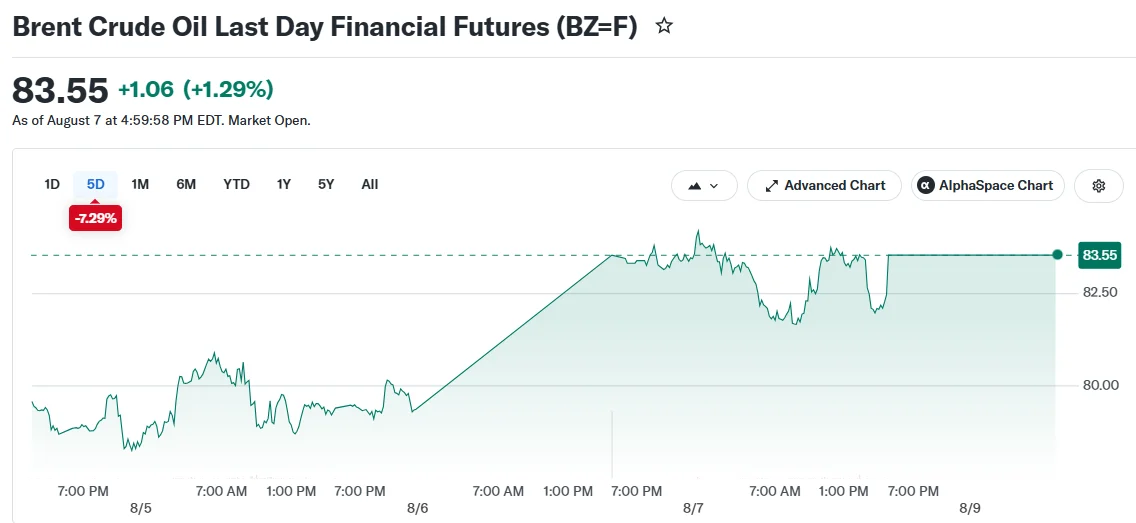
Brent crude settled above $83 a barrel last week as traders assessed the potential return of millions of barrels of Gulf supply to the market. The benchmark posted a third consecutive weekly loss amid uncertainty over whether a deal would materialize.
Rob Haworth, senior investment strategy director at US Bank Wealth Management, said agreements to reopen Hormuz "remain elusive" and that the path to a lasting accord is unclear.
The Strait of Hormuz normally handles approximately one-fifth of global oil consumption and has been largely blocked since the United States and Israel launched military operations against Iran on February 28.
Any final agreement between Iran and Oman would require the approval of Iran's Supreme Leader Mojtaba Khamenei. Officials have indicated that reaching him takes time, and no confirmation of his endorsement has been provided.

