Iran Considers Banning US and Israeli Vessels from Strait of Hormuz Amid Oman Negotiations
Key Takeaways
- •Iran's parliament is reviewing a draft bill that would ban vessels connected to the US, Israel, and other nations deemed hostile from transiting the Strait of Hormuz and Persian Gulf, with violation fines of up to 20% of cargo value.
- •Iran and Oman are negotiating a centrally managed shipping corridor in which Tehran would oversee inbound Gulf traffic while outbound vessels would be jointly managed by both countries.
- •Eight major international shipping associations sent a joint letter to the UN and IMO Secretaries-General warning that establishing a precedent for restricting strait transit could be difficult to reverse globally.
- •Washington has rejected any mandatory payments or requirement for Iranian transit approval as unacceptable, while Tehran has linked full reopening of Hormuz to the lifting of US maritime sanctions.
- •Maritime intelligence firm Windward identified eight OFAC-designated Iranian tankers carrying 8.56 million barrels of crude near Malaysia engaged in what appears to be a coordinated sanctions-evading transfer operation bound for China.
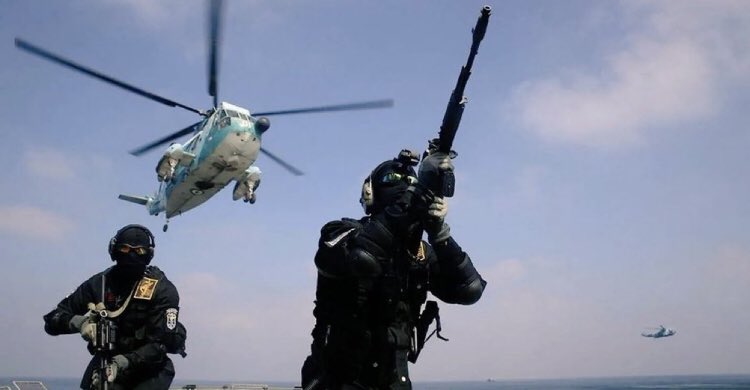
Iran is weighing a ban on vessels linked to the United States and Israel from transiting the Strait of Hormuz, even as Tehran and Oman edge closer to a new framework for managing traffic through one of the world's most critical maritime chokepoints — a waterway through which roughly a fifth of global oil consumption passes each day.
A draft bill under review in Iran's parliament would bar ships belonging to the US, Israel, and any other nations deemed hostile by Tehran from using the strait and the broader Persian Gulf. The proposed legislation would also block military and civilian cargoes connected to Israel and could deny transit to countries or individuals accused of harming Iran until compensation is paid. Violations would carry fines of up to 20% of a vessel's cargo value.
The proposals have introduced fresh complexity into ongoing negotiations between Iran and Oman over reopening Hormuz to commercial traffic. According to Iranian media reports, the two nations are developing a centrally managed corridor in which Tehran would oversee vessels entering the Gulf, while outbound traffic would fall under joint Iranian-Omani management. Existing northern and southern temporary routes would remain operational initially before being gradually phased out.
Iran has also advocated for ships to pay for services such as insurance, bunkering, environmental protection, and security. However, Tehran has pushed back against reports claiming it sought tolls calculated as a percentage of cargo value. Washington has stated unequivocally that mandatory payments or a requirement for Iranian transit approval would be unacceptable.
Eight of the shipping industry's largest international associations have collectively intervened, sending a joint letter this week to UN Secretary-General António Guterres and IMO Secretary-General Arsenio Dominguez. "Once such a precedent is established, it becomes increasingly difficult to resist similar measures elsewhere," the organizations cautioned. The warning reflects broader industry anxiety over a period of unprecedented disruption to commercial shipping, with attacks in the Red Sea and Bab el-Mandeb already forcing carriers to reroute around Africa.
The potential prohibition on US- and Israeli-linked vessels may have limited direct commercial effect, as relatively few commercial ships fly either flag. A greater challenge lies in defining what qualifies as an American- or Israeli-connected vessel, given the complex ownership, financing, and management structures that characterize global shipping.
Tehran has maintained that any complete reopening of Hormuz must be paired with the lifting of the US maritime blockade and has tied broader maritime normalization to sanctions relief.
With US midterm elections now less than three months away on November 3, the conflict with Iran is becoming an increasingly costly political liability for President Donald Trump — a vulnerability that Tehran has every strategic incentive to exploit by prolonging hostilities.
Meanwhile, efforts to curtail Iranian crude exports continue to prove difficult to enforce. This week in Southeast Asia, eight sanctioned Iranian-linked tankers carrying more than 8.5 million barrels of crude converged off the coast of Malaysia, where maritime intelligence analysts assess that a coordinated series of ship-to-ship transfers is being organized.
Windward, a maritime intelligence firm, identified the eight OFAC-designated, Iranian state-linked tankers near Malaysia's Eastern Outer Port Limits — a well-known hub for transferring sanctioned crude ultimately bound for China. The vessels are carrying a combined 8.56 million barrels loaded at Iran's Kharg Island. Seven of the eight ships had disabled their AIS transmissions by late July or early August, according to Windward, which noted that the concentration of vessels was consistent with a planned transfer operation rather than isolated attempts to evade detection.
"Extended, repeated dark periods across all eight vessels point to a coordinated, sanctions-evading transfer network rather than a single opportunistic transit," Windward assessed.
United Against Nuclear Iran reported earlier this week that at least 52 tankers from its Ghost Armada list were anchored or loitering in the same Malaysian transfer zone with their AIS transponders active.

