Iran's Basij Commander Asserts Control Over Strait of Hormuz Amid U.S. Tensions
Key Takeaways
- •Hossein Taeb, head of Iran's Basij organization under the IRGC, declared that the Strait of Hormuz is under Iranian control and management, reinforcing Tehran's longstanding territorial claims over the waterway.
- •The Strait of Hormuz is a strategically vital chokepoint through which roughly one-fifth of global oil consumption passes, connecting major Gulf producers to international markets.
- •Prediction markets responded to the announcement by dropping the perceived likelihood of a U.S.-Iran agreement by August 15 to 3.9%, reflecting weakened prospects for an imminent diplomatic breakthrough.
- •The U.S. Navy's Fifth Fleet maintains a continuous presence in the region to safeguard freedom of navigation through the strait and surrounding waters.
- •Past episodes of heightened tension near the strait have led to increased maritime insurance premiums and shipping costs, affecting global energy supply chains.
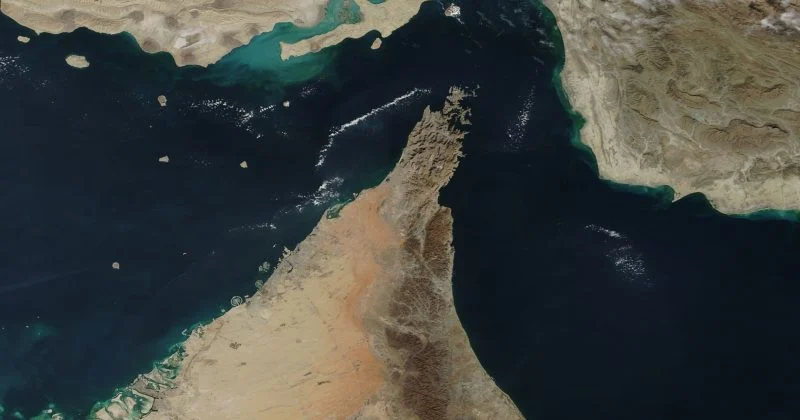
Hossein Taeb, head of Iran's paramilitary Basij organization, has declared that the Strait of Hormuz is under Iranian control and management, according to a report by Iran's semi-official Fars News Agency. The Basij operates under the broader command structure of Iran's Islamic Revolutionary Guard Corps (IRGC), which the U.S. has designated as a foreign terrorist organization.
The Strait of Hormuz is one of the world's most strategically important maritime chokepoints, through which roughly one-fifth of global oil consumption passes. The waterway connects the Persian Gulf to the Gulf of Oman and the Arabian Sea, making it a vital artery for energy shipments from major producers including Saudi Arabia, the United Arab Emirates, Kuwait, Iraq, and Qatar. At its narrowest point, the strait is approximately 21 nautical miles wide, with shipping lanes in both directions separated by a median zone.
Taeb's assertion reinforces Iran's longstanding position that it exercises authority over vessel passage through the strait. Iran has periodically made similar claims of sovereignty or control over the waterway, most notably during periods of heightened sanctions pressure and during the Iran-Iraq War in the 1980s, when a series of attacks on commercial shipping became known as the "Tanker War." Under the United Nations Convention on the Law of the Sea (UNCLOS), straits used for international navigation are subject to a regime of transit passage, though Iran has not formally accepted all provisions of the convention.
The declaration comes against a backdrop of heightened geopolitical friction between Tehran and Washington, with the strait serving as a recurring flashpoint in the broader U.S.-Iran relationship. The U.S. Navy's Fifth Fleet, headquartered in Bahrain, has maintained a continuous naval presence in the region aimed at ensuring freedom of navigation through the strait and adjacent waters.
The statement from a senior Iranian official could complicate ongoing negotiations between Iran and the United States regarding the strait's status and the resumption of normal shipping traffic.
Prediction markets responded to the development with a notable shift. The perceived likelihood of a U.S.-Iran agreement by August 15 dropped to 3.9% on the YES side, reflecting diminished expectations for an imminent diplomatic breakthrough. A secondary market resolution date of August 31 provides a wider window in which an agreement could theoretically be reached.
Market participants and analysts are closely watching for diplomatic signals from key actors, including U.S. Central Command and Iranian maritime authorities. Any joint statements, escalatory actions, or shifts in naval posture in and around the strait could significantly influence expectations for a potential agreement and the trajectory of regional stability. Past episodes of elevated tension near the strait have prompted increases in maritime insurance premiums and shipping costs, affecting energy supply chains dependent on Gulf exports.
