Iran Turns to Bitcoin and USDT for Cross-Border Trade as U.S. Sanctions Tighten
Key Takeaways
- •The Central Bank of Iran has permitted exporters to receive cryptocurrency payments and settle transactions through domestic exchanges, without publicly formalizing the policy.
- •Iran recorded approximately $9.9 billion in attributed cryptocurrency volume in 2025, of which four major domestic exchanges accounted for about $7.7 billion.
- •The United States designated several Iranian exchanges and expanded sanctions coverage to Iran’s digital-asset sector under Executive Order 13902.
- •Tether can blacklist addresses and freeze USDT, including a $344 million freeze linked to wallets later attributed to Iran’s central bank.
- •Iranian crypto trade remains exposed to sanctions and asset freezes affecting domestic exchanges, offshore platforms, wallets and issuers.
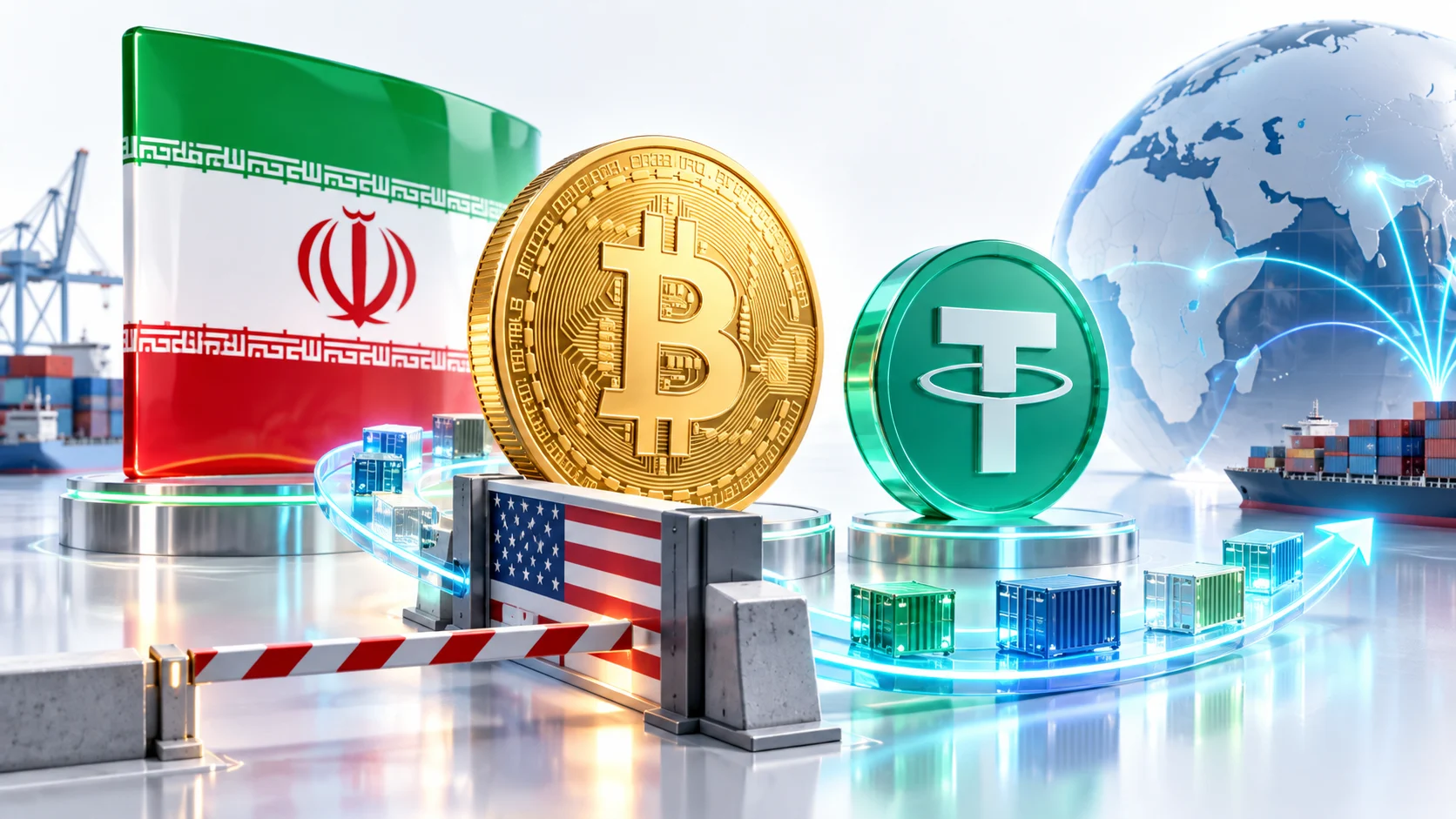
Iranian businesses are increasingly settling cross-border trade in Bitcoin and Tether's USDT as the country relaxes foreign-exchange controls and seeks payment routes that operate outside the global banking system.
The Central Bank of Iran has quietly permitted exporters to receive cryptocurrency payments and settle transactions through domestic crypto exchanges, according to Iranian businesses, regime insiders and industry participants interviewed by the Financial Times. The central bank has not publicly formalized the change and declined to comment on the policy.
Exporters Gain More Flexibility on Crypto Settlement
Iran previously required exporters to repatriate much of their foreign-currency earnings and sell them through government-controlled channels at official exchange rates. The relaxed approach allows companies to put export proceeds to more direct use for imports and gives some businesses greater freedom over how overseas earnings return to the country.
USDT provides a dollar-denominated settlement asset without requiring direct access to U.S. banks, while Bitcoin offers another route for moving value across borders. Domestic exchanges form part of that infrastructure, although their use creates substantial sanctions exposure outside Iran.
OFAC treats Iranian digital-asset exchanges as blocked Iranian financial institutions. The U.S. expanded that pressure on August 24 by formally adding Iran's digital-asset sector to the industries that can trigger sanctions under Executive Order 13902.
Iran Crypto Volume Reached $9.9B in 2025
Iran recorded approximately $9.9 billion in attributed cryptocurrency volume during 2025. Four major domestic exchanges — Nobitex, Bit Pin, Wallex and Ramzinex — accounted for roughly $7.7 billion, or 78%, of that activity.
Washington designated Nobitex and three other Iranian exchanges in June, followed by additional crypto-platform sanctions in August, according to on-chain analytics firm TRM Labs. Crypto flows between Iranian platforms and offshore venues have already produced compliance disputes, including more than $3.84 billion in Iran-linked flows involving CoinEx over several years.
USDT has played a particularly large role. Wallets later attributed to Iran's central bank were connected to a $344 million freeze executed by Tether in coordination with OFAC and U.S. law enforcement earlier this year.
Tether Controls Limit USDT's Sanctions-Evasion Utility
USDT can move globally across public blockchains, but Tether retains the ability to blacklist individual addresses and immobilize their tokens. The issuer had frozen more than $4.4 billion connected to illicit activity by April 2026 through cooperation with more than 340 law-enforcement agencies.
That control remains active at scale. Tether this week froze another $39.3 million across 10 Tron wallets linked by MistTrack to the sanctioned Telegram marketplace Xinbi Guarantee.
Iran's expanding use of crypto therefore runs directly into a tightening U.S. enforcement perimeter. OFAC's August 24 determination now explicitly includes Iran's digital-asset sector, giving Washington authority to target persons operating within it as Tehran increases its use of Bitcoin, USDT and domestic exchanges for cross-border settlement. For exporters and their counterparties, the practical constraint is therefore not only whether crypto can move across borders, but whether the exchange, wallet or issuer involved remains exposed to the sanctions and freezing actions described above.
Source: Crypto Adventure
