MAGA Has a 'Brand Problem' With Trump's Longtime Iowa Voters: GOP Pollster
Key Takeaways
- •Pollster Sarah Longwell's Iowa focus groups with 2024 Trump voters suggest the MAGA brand has grown stale and could weigh on Republican candidates in 2026 House, Senate, and gubernatorial races.
- •Of ten polls of Iowa's Senate race since September 1 in the New York Times aggregator, the Democrat led in four, the Republican led in five, and one was a tie.
- •Rep. Ashley Hinson, the GOP nominee for Iowa's open governor's seat, has a clean record but fails to excite former Trump supporters, who see her as a party-line politician who seems too polished.
- •One focus group participant said a banner plane accusing Hinson of selling Iowa out to China was enough to win her vote, showing that China criticism now lands against MAGA Republicans in ways it did not five years ago.
- •Participants rejected Hinson's bipartisan-themed ad because it cited working with Trump, leading Longwell to conclude that Republicans face a brand problem if they cannot mention Trump even in unity-focused messaging.
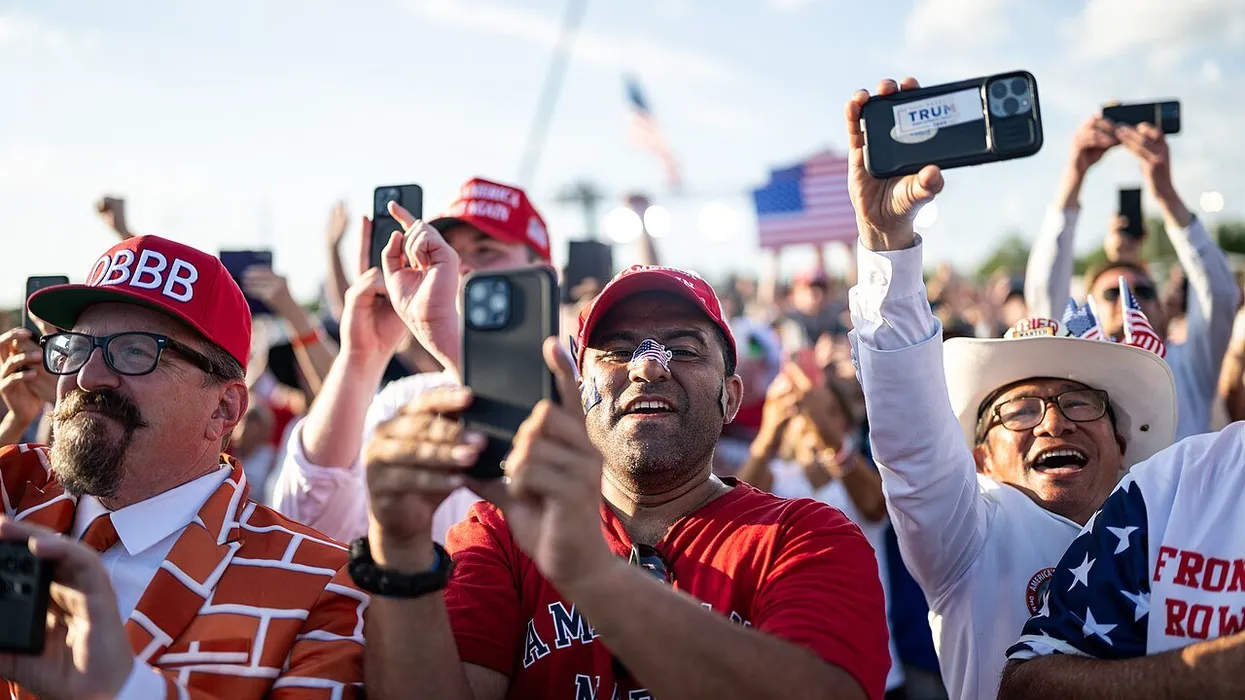
Sarah Longwell, publisher of The Bulwark, a former Republican and longtime pollster, spoke with her focus groups in Iowa about their experience living in Donald Trump's economy and how it is shaping elections for the House, Senate and governor's office in 2026.
Focus groups trade statistical representativeness for depth: small, screened samples of voters questioned at length, read for texture rather than as a precise measurement of the electorate.
In her analysis of the sessions, Longwell pointed out that Trump has never lost Iowa by more than eight points. This time around, however, his coattails are not what they once were.
"Of the ten polls of this race since September 1 in the New York Times polling aggregator, the Democrat leads in four, the Republican leads in five, and one was a tie," she wrote, citing the New York Times polling tracker, which compiles public surveys of the race.
The decisive factor in those contests, she argued, will be just how toxic the MAGA Republican brand has become.
Longwell has been talking with former Trump voters in the state about the GOP candidates on their ballot. Rep. Ashley Hinson (R), the GOP nominee for Iowa's open governor's seat — an open seat, meaning no incumbent is on the ballot — offers one example. Unlike other candidates, Longwell noted, Hinson has never messed up, has no Ken Paxton-level of scandals and is not incompetent. Even so, Republican-leaning voters cannot get themselves excited about her.
The skepticism carries extra weight because of its source: these are 2024 Trump voters now weighing Republican nominees, not opponents sizing the party up from the outside.
"Time comes for us all, and even the taboo-breaking, rule-smashing, norm-violating, punk-rock-in-khaki-pants MAGA movement has grown stale to many voters. It's not cool or subversive the way it once was," Longwell wrote. "Which means that already-establishment politicians like Hinson put themselves in double jeopardy when they have a years-long resume of red-hatting."
MAGA, in other words, is now "establishment" if not entirely "old school."
"I think to me she kind of falls in the camp of like a party politician, which is not necessarily a bad thing, just she kind of seems to toe the line of, like, the Republican Party, but not necessarily in a positive way," said Celeste, 30, of Hinson. "Just that, 'Hey, we have this party line. You get on board, you say the right things, we eventually bump you up, and you get more and more power as a politician, and then eventually you retire very rich.'"
Joel, 39, also voted for Trump in 2024, but he is no keener on the MAGA brand.
"[Hinson] definitely gives, like, MAGA vibes, and for some people that's a plus; for me it is not. But I think she comes across as almost too polished — like she's giving the answer that she thinks that people want her to give versus how she genuinely feels about things," he told Longwell.
Amanda, 42, said the only thing she knew about Hinson was the plane that towed a banner over the state fair for ten days reading "'Ashley Hinson sold us out to China,' or something like that." That was enough to persuade her to vote against Hinson.
Longwell admitted she was fascinated that a plane banner could win someone over, while cautioning that no one should extrapolate from one focus-group participant that such tactics can change the hearts and minds of the masses.
"But it's notable that a) whoever ran that ad about Hinson and China identified it as a possibly successful line of attack, and b) at least for this voter, it was. Five years ago, accusing a MAGA Republican of being soft on China just wouldn't land — voters wouldn't find it believable. anymore," she wrote.
Finally, Longwell played the group one of Hinson's ads, which touts her reaching across the aisle to pass bipartisan legislation. Participants said they loved the idea of the two sides coming together to produce more middle-of-the-road policies, but they did not buy it from Hinson. Because the ad mentioned Trump, the group questioned how "bipartisan" it really was if her example of crossing the aisle was working with Trump.
Longwell's assessment: "If Republicans can't mention Trump in an ad — even one about working with everyone — that's a brand problem."

