IonQ Unveils Superion 256 Quantum Computer as Bitcoin Security Debate Continues
Key Takeaways
- •SkyWater has produced IonQ’s first 256-qubit processors, and IonQ has trapped ions in prototype systems at several U.S. facilities.
- •IonQ says integrated electronics and semiconductor-based manufacturing will support scalable production, with chip design cycles reduced from nine months to two.
- •The first Superion 256 system was pre-sold in early 2026, with customer deliveries planned for 2027 and cloud access also expected.
- •IonQ has not disclosed performance results proving operation of a complete 256-qubit computer, making qubit reliability a key consideration.
- •The announcement comes amid debate over quantum risks to Bitcoin, while Galaxy has committed up to $5 million to related security efforts.
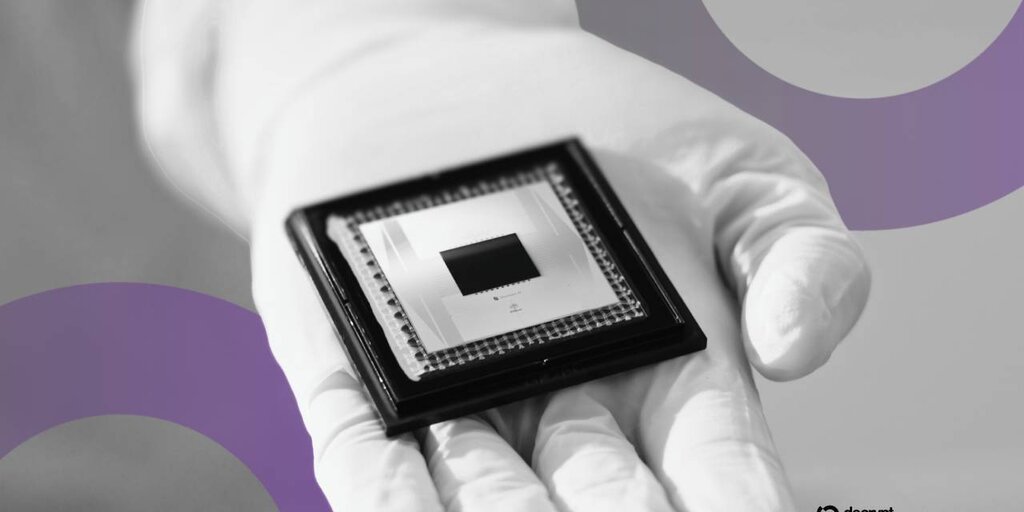
IonQ has unveiled its Superion 256 quantum computer and is taking orders for systems it expects to deliver to customers in 2027. The publicly traded technology company says electronics integrated into its chips will allow it to manufacture more systems at lower costs and expand production.
IonQ said its chipmaking subsidiary, SkyWater, has fabricated the first 256-qubit processors, while teams have trapped the first ions in prototypes at several facilities in the United States. The company’s first chips and prototypes represent progress, although IonQ has not disclosed performance results demonstrating a complete 256-qubit computer.
The Maryland-based company develops quantum computers and provides access to them through cloud services. It also works on quantum networking, sensing, and security technology. In an official announcement, IonQ Chairman and CEO Niccolo de Masi attributed Superion 256 to two acquisitions.
“Superion is the result of two strategic acquisitions coming together to deliver this historic milestone,” de Masi said. “Oxford Ionics enabled IonQ to control natural, trapped-ion qubits using standard electronics, and SkyWater unlocked the ability to manufacture at semiconductor costs and scale.”
A qubit is the basic unit of information in a quantum computer. Whereas a conventional computer bit holds either zero or one, a qubit can be prepared in a combination of those states before measurement. Quantum computers use this property to approach certain calculations differently from conventional machines.
Increasing the number of qubits can support more complex calculations, but qubits are vulnerable to disturbances that cause errors. As a result, the usefulness of a 256-qubit computer depends on how reliably its qubits operate together. IonQ plans to manufacture Superion systems using established chipmaking methods, with integrated electronics controlling the atoms.
“Quantum computing, like classical computing before it, ultimately scales most powerfully on a semiconductor foundation,” de Masi said. “Superion 256 is the first quantum computer platform designed to be built by the hundreds rather than one at a time. Every generation that follows will be designed, fabricated, and packaged similarly—creating unique upgradeability in our Superion platform.”
IonQ said SkyWater reduced its chip design cycle from nine months to two. Superion 256 fits inside a standard server rack and will also be available through IonQ’s cloud. The company pre-sold its first system in early 2026, with deliveries planned for 2027.
IonQ is also developing Superion 10K. The company aims to demonstrate error-resistant computing with that system in 2027 and begin commercial production in 2028.
The announcement comes as researchers debate how soon quantum computers could pose a threat to Bitcoin. A sufficiently powerful machine could use an exposed public key to calculate the secret key required to spend another person’s Bitcoin. Such an attack would require sustained, reliable calculations using error-protected qubits. A 256-qubit machine would not automatically break 256-bit security because those figures measure different things.
Preparations are already underway. Galaxy announced up to $5 million in funding for Bitcoin quantum-security efforts in July, including developer grants, research, and an advisory council.
