Investing $100 a Month in the Stock Market for 30 Years: How the Balance Could Grow
Key Takeaways
- •At an 8% annual return with monthly compounding, $100 monthly contributions totaling $36,000 over 30 years could grow to about $149,036, with roughly $113,036 of that coming from investment growth rather than deposits.
- •Projected balances differ sharply by assumed return, ranging from about $69,405 at 4% to about $226,049 at 10% on monthly deposits.
- •Growth is heavily back-loaded, with the portfolio projected near $18,295 after 10 years and $58,902 after 20 years before reaching $149,036 in year 30, making late-stage market declines particularly costly.
- •Figures cited from Fidelity show the S&P 500 has averaged about 10% annually over its history and 10.4% annualized over the 30 years through December 2025, both above the 8% rate used in the projections.
- •With 2.5% annual inflation, a projected $149,036 balance in 30 years would buy roughly what $71,000 purchases today, while doubling contributions to $200 monthly would raise the 8% projection to about $298,072.
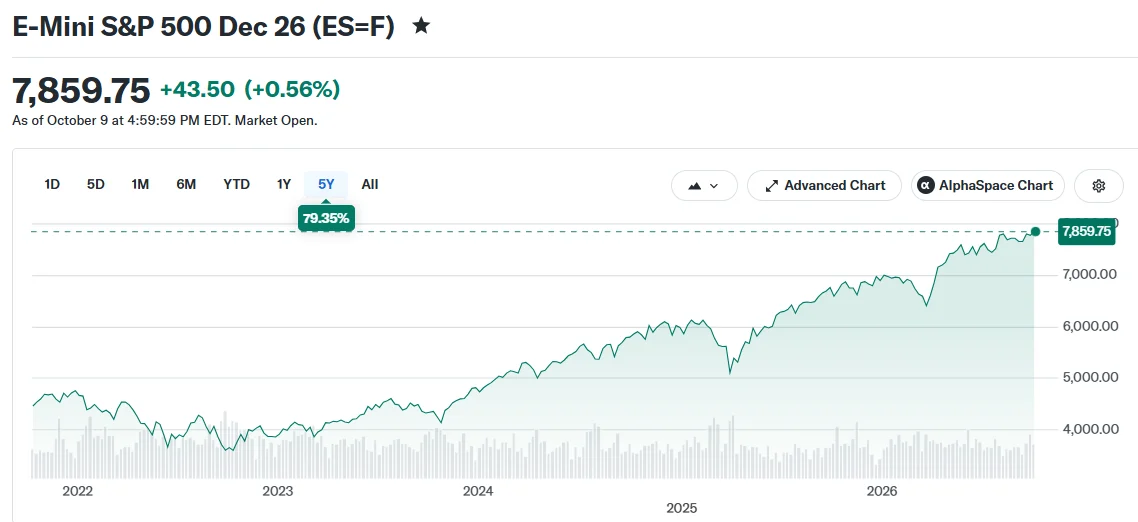
A consistent monthly investing habit can turn a modest outlay into a balance far larger than the money actually contributed. According to an analysis published by CoinCentral, someone who invests $100 every month for 30 years would deposit a total of $36,000, with the final outcome depending on market performance, applicable fees and whether the investor stays in during downturns. Stock prices can swing sharply in a single day, but regular deposits combined with reinvested, compounding returns can accumulate substantially over decades.
How Much Could $100 a Month Grow?
Assuming an 8% annual return with monthly compounding, the $36,000 in contributions would grow to approximately $149,036 over 30 years. Roughly $113,036 of that total would be investment growth rather than deposited money — a sum representing more than three-quarters of the final balance and more than three times the total amount contributed.
The calculation is a projection, not a forecast. It assumes deposits are made at the end of each month, returns remain steady and dividends are reinvested, with no fees or taxes deducted.
The projected balance varies considerably with the assumed rate of return. At 4%, the balance would reach about $69,405. At 6%, it would climb to about $100,452, and at 10%, it would rise to about $226,049. The gap between the 4% and 10% scenarios exceeds $156,000 on identical monthly deposits.
Growth is heavily back-loaded. At an 8% return, the portfolio would stand near $18,295 after 10 years and $58,902 after 20 years before reaching $149,036 in year 30. Reinvested dividends and compounding drive most of the gains in the later years.
Why Real Returns Could Differ
Past results offer context but do not set future returns. According to Fidelity, the S&P 500 has averaged about 10% per year over its history and posted an annualized 10.4% over the 30 years through December 2025 — the most recent historical figure cited in the report. The 8% rate used in the projections sits below both of those historical figures.
One common approach is to route the monthly $100 into a low-cost index fund. A fund that tracks the S&P 500 holds hundreds of large US companies, though it can still fall when the broader market declines.
Monthly investing also means buying more shares when prices are low and fewer when prices are high, a practice known as dollar-cost averaging. The approach does not guarantee a profit or protect against losses.
Timing can matter most near the end of the investment period. A sharp market drop shortly before retirement could reduce the final balance, even if long-term averages look strong. That late-stage vulnerability follows from the back-loaded growth pattern: because most of the gains arrive in the final decade, the same percentage decline late in the period translates into a larger dollar loss than it would earlier.
Inflation also plays a role. If prices rise 2.5% per year, a $149,036 balance in 30 years would buy roughly what $71,000 buys today.
Fees, taxes and changes to the monthly deposit amount would further affect the result. Raising the contribution to $200 per month would double the projected 8% balance to about $298,072.
This article is based on a report by CoinCentral. The post "What Happens If You Invest $100 a Month in the Stock Market for 30 Years?" appeared first on CoinCentral.

