LTIF: African Businesses Urged to Scale Up Production to Benefit From AfCFTA
Key Takeaways
- •Intra-African trade accounts for only 15% to 20% of the continent's total trade, leaving roughly four-fifths of trade flowing with partners outside Africa, according to World Bank figures cited at the forum.
- •The African Continental Free Trade Area, with 54 signatories and trading underway since January 2021, is the world's largest free trade area by number of participating countries, but access to a larger market alone does not give companies the capacity to meet export standards or secure financing.
- •Speakers, including Norebase CEO Adetola Onayemi and investors Fiyin Ogunlesi and Olori Boye-Ajayi, said businesses need predictable trade rules, up-to-date financial records, measurable performance and consistent operations to attract capital and scale cross-border commerce.
- •Ghana's small-scale mining sector faces equipment shortfalls that prevent operators from reaching a sought 99.9% gold recovery rate, prompting a proposed collaboration between Loveworld's innovation team and the Ghana Gold Board on better recovery and refining technology.
- •The Ministry of Commerce of Loveworld Kingdom secured a $1 million boost for an investment fund targeting commercially viable faith-based businesses, with no money disbursed yet and the application process expected to be announced soon.
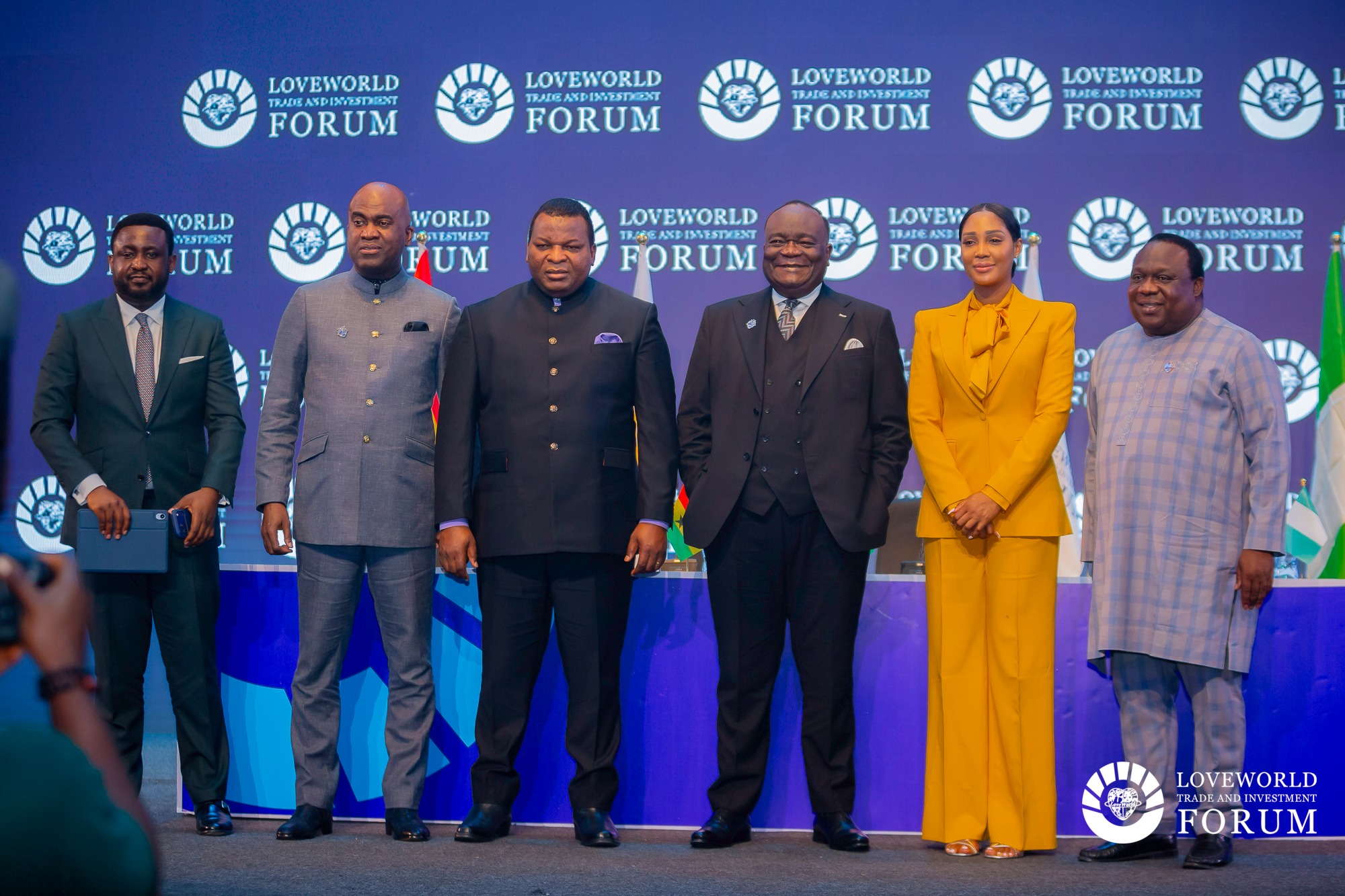
Intra-African trade accounts for between 15% and 20% of the continent's total trade, according to the World Bank. Speakers at the Loveworld Trade & Investment Forum (LTIF) in Accra, Ghana, argued that the gap lies in the capacity of African businesses to produce, finance and deliver goods at scale. That leaves roughly four-fifths of the continent's trade flowing with partners outside Africa — the figure that framed the forum's discussions.
The African Continental Free Trade Area (AfCFTA) is designed to make cross-border trade easier. Trading under the agreement began in January 2021, and with 54 signatories it stands as the world's largest free trade area by number of participating countries. Access to a larger market, however, does not by itself give companies the capacity to meet export standards, secure financing or deliver orders consistently.
The faith-based forum was held on October 6 and 7 at the Ohene Konadu Auditorium, University of Professional Studies, Accra, with organisers putting attendance at more than 2,000.
Production Framed as the Core Challenge
Stephanie Oforka, executive minister of commerce at Loveworld Kingdom and LTIF convener, framed the challenge around production. “Potential itself does not create prosperity. Production actually creates prosperity,” she told delegates.
She argued that African countries must produce more of what they consume and supply what international markets demand, urging African businesses to move “from connections to transactions, from introductions to partnerships, from conversations to commerce.”
What Speakers Say African Businesses Need
Adetola Onayemi, co-founder and chief executive officer of Norebase, stressed the need for predictable trade rules. “Business people don’t care as much about risk. What they care about is predictability,” he explained. He urged African businesses to take advantage of the AfCFTA and engage policymakers to improve the rules governing cross-border trade.
Investors raised a related point. Fiyin Ogunlesi, founder and managing partner of RegalStone Capital, and Olori Boye-Ajayi, managing partner of Borderless Trade & Investment, described what backers look for before committing capital: up-to-date financial records, measurable performance and predictable operations. Their advice to businesses was to be “simple, boring, and predictable.”
Rosalind Oleki, chief executive officer of Love Passion Mines, pointed to equipment limits in Ghana’s small-scale mining sector. Some available gold-recovery equipment could not reach the 99.9% recovery rate operators sought, she noted, adding that small miners also struggle to clear imported excavators and other machinery. Oleki asked Loveworld’s innovation team to work with the Ghana Gold Board on better gold recovery and refining technology. The stakes extend beyond the forum floor: Ghana is one of Africa’s largest gold producers, so equipment shortfalls in small-scale mining bear on one of the country’s key export industries. Whether the proposed collaboration between Loveworld’s innovation team and the Ghana Gold Board takes shape is a thread worth following after the forum.
Kwabena Situ, assurance partner at Deloitte Ghana and head of Deloitte Academy, called for stronger links between finance and industry, describing the task as “connecting capital to production” and “connecting nations to regions” if industrialisation is to happen within a generation.
Bolaji Akinboro, co-founder of Cellulant, approached the issue from the angle of wealth creation. He identified production, investment, trust, consumption, distribution and capital formation as elements that must work together, citing China’s manufacturing-led model as one African businesses can learn from.
$1 Million Business Fund Announced at LTIF
The Ministry of Commerce of Loveworld Kingdom said it secured a $1 million boost for an investment fund targeting faith-based businesses and entrepreneurs within its network. The fund is intended for businesses that show commercial viability and potential to scale, with production capacity and expansion among its priorities.
Businesses from any sector can apply if they meet the fund’s requirements, according to the organisers. No money has been disbursed yet, and the ministry plans to open applications soon — making the announcement of the application process the next milestone to watch for businesses hoping to tap the fund.

