Intesa Sanpaolo Slashes IBIT Holdings by 94%, Triples Staked Ethereum ETF Position
Key Takeaways
- •Intesa Sanpaolo reduced its holdings in BlackRock's iShares Bitcoin Trust by 94% during the second quarter, according to the bank's latest filing.
- •The bank simultaneously tripled its position in a staked Ethereum ETF, indicating a strategic pivot toward yield-generating digital asset products.
- •Staked Ethereum ETFs became available in the U.S. market in 2025 after the SEC permitted funds to incorporate staking components, enabling institutions to earn protocol-level yield without self-custody.
- •The rebalancing reflects a wider institutional trend of adjusting crypto portfolios in response to market conditions, product maturation, and the EU's MiCA regulatory framework.
- •It remains uncertain whether Intesa Sanpaolo's shift toward staked Ethereum signals a durable preference among European banks for yield-bearing crypto instruments over Bitcoin exposure.
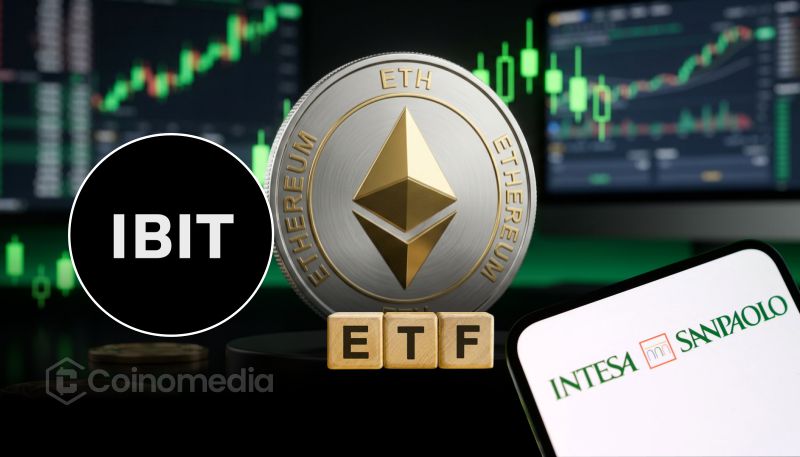
Italy's largest bank, Intesa Sanpaolo, made significant adjustments to its cryptocurrency ETF portfolio during the second quarter, sharply reducing its Bitcoin exposure while increasing its allocation to Ethereum.
According to the bank's latest filing, Intesa Sanpaolo cut its holdings in BlackRock's iShares Bitcoin Trust (IBIT) by 94%. Simultaneously, the bank tripled its position in a staked Ethereum ETF, marking a notable shift in its digital asset investment strategy.
Intesa Sanpaolo had been one of Europe's most crypto-active major banks, having disclosed direct spot Bitcoin purchases in early 2025, a move that drew attention given the traditionally cautious stance of large Eurozone lenders. The latest Q2 rebalancing suggests the bank is not abandoning digital assets but rather refining its approach across different crypto instruments.
The portfolio rebalancing reflects a broader trend among institutional investors who continue to adjust their crypto holdings in response to evolving market conditions, the maturation of regulated crypto investment vehicles, and the European Union's Markets in Crypto-Assets (MiCA) framework that now governs much of the region's digital asset activity.
Ethereum Attracts Institutional Interest Through Staking Rewards
The bank's expanded position in a staked Ethereum ETF points to growing institutional interest in Ethereum's yield-generating capabilities. Unlike traditional spot Bitcoin ETFs, staked Ethereum ETFs can deliver additional returns by distributing staking rewards to holders. This income component makes them appealing to investors seeking yield alongside price exposure.
Staked Ethereum ETFs gained traction in the U.S. market in 2025 after the SEC permitted funds to incorporate staking components, giving institutions a regulated pathway to earn protocol-level yield without self-custody.
The 94% reduction in IBIT holdings, meanwhile, may represent a strategic portfolio reallocation rather than a broader loss of confidence in Bitcoin as an asset class.
LATEST: Italy's largest bank, Intesa Sanpaolo, cut its IBIT holdings by 94% while tripling its staked ETH ETF position in Q2. pic.twitter.com/Lh5rCQFwoM — Cointelegraph (@Cointelegraph) August 4, 2026
Institutional Crypto Strategies Mature
The Intesa Sanpaolo crypto ETF adjustment highlights the increasing sophistication of institutional digital asset investing. As the range of regulated crypto investment products continues to expand, major financial institutions are refining their portfolios based on considerations including market outlook, yield opportunities, and diversification goals.
The move also comes amid a wider reset in institutional Bitcoin ETF positioning, with several large holders having adjusted or partially trimmed spot Bitcoin ETF allocations since the products' first full year of trading. Whether Intesa Sanpaolo's shift toward staked Ethereum signals a durable preference for yield-bearing crypto products among European banks remains an open question that subsequent filings may clarify.
Market participants will be monitoring whether other banks and asset managers follow with similar reallocations between Bitcoin- and Ethereum-focused products in the quarters ahead.

