Intel, IBM, Oracle, Cisco, LonQ Join Growing Opposition to OKX-ICE Tokenized Stock Platform
Key Takeaways
- •Intel, IBM, Oracle, Cisco, and LonQ have filed objections against OKXICE, a proposed platform enabling 24/7 on-chain trading of tokenized U.S. stocks.
- •Under the SEC's notification framework, listed companies can block third-party tokenized versions of their shares by raising objections during a 30-day period.
- •The new objections follow earlier pushback from Microsoft, Alphabet, Qualcomm, Intuit, Goldman Sachs, and Wells Fargo, extending resistance across major U.S. technology and financial firms.
- •The objection notices filed by the companies do not specify the reasons for their opposition.
- •Because each filing blocks tokenized listings of the filer's shares, the breadth of objections will shape how much of the U.S. listed market a tokenized trading venue could cover.
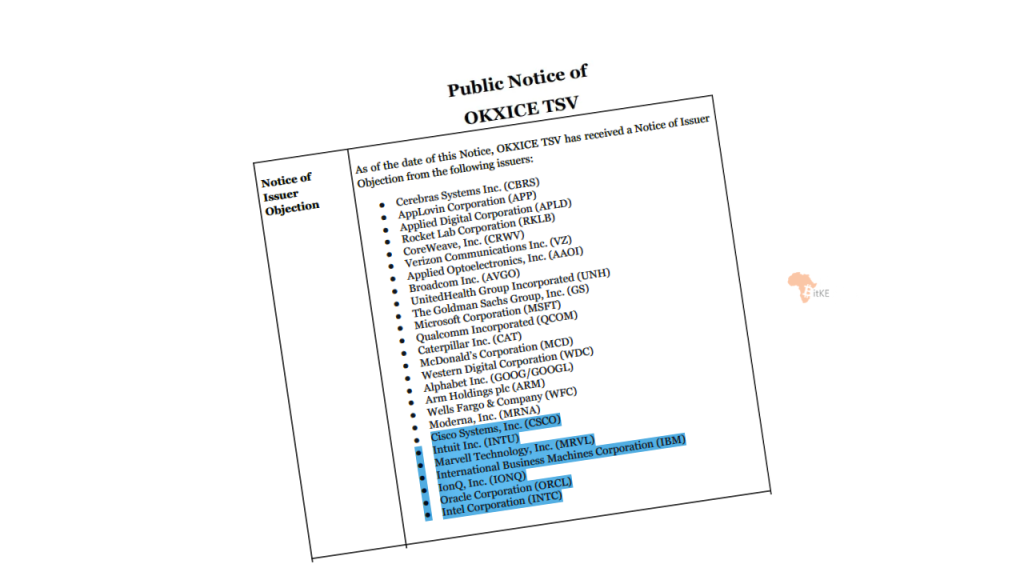
A widening group of major U.S. corporations — including Intel, IBM, Oracle, Cisco, and LonQ — has filed objections against OKXICE, a proposed platform that aims to enable around-the-clock, on-chain trading of tokenized U.S. stocks.
Under the relevant U.S. Securities and Exchange Commission (SEC) framework, companies can block third-party tokenized listings of their shares by raising objections during a 30-day notification period. The latest objections add to mounting resistance from companies including Microsoft, Alphabet, Qualcomm, Intuit, Goldman Sachs, and Wells Fargo, among others. BitcoinKE has documented the earlier rounds of opposition from Microsoft, Alphabet, Qualcomm, and Goldman Sachs as well as a subsequent wave of pushback.
The objection notices do not specify the reasons for the companies' opposition.
The growing resistance highlights a central challenge for tokenized securities. Proponents argue that tokenization could enable extended trading hours and faster settlement, but the model must still address issuers' rights and regulatory protections. Because the framework ties each filing to a block on tokenized listings of the filer's shares, the breadth of the objections directly shapes how much of the U.S. listed market an around-the-clock tokenized trading venue could offer.
Background
Tokenized stocks are blockchain-based representations of traditional listed equities, designed to trade continuously rather than only during standard exchange sessions. The OKXICE platform — also referred to as OKX-ICE and named in connection with crypto exchange OKX and Intercontinental Exchange (ICE), the parent company of the New York Stock Exchange — proposes to let investors trade tokenized versions of U.S.-listed shares on-chain at any time.
Under the SEC notification framework cited in the report, the 30-day window provides listed issuers with an explicit mechanism to block third-party tokenized versions of their stock. The accumulating objections — now spanning some of the largest names in U.S. technology and finance — mark a notable obstacle for the tokenized securities push. Additional filings in subsequent notification windows would extend that list, making the pace of new objections a measure of how far the resistance reaches across U.S. listed markets. BitcoinKE has separately examined why major U.S.-listed companies are opposing New York Stock Exchange tokenization plans.
Source: BitcoinKE

