Intel Announces $15 Billion Stock Offering as Big Tech Capitalizes on AI-Driven Share Price Surge
Key Takeaways
- •Intel's proposed $15 billion stock offering could reach $17.25 billion if underwriters fully exercise their option for additional shares.
- •At the post-announcement share price of $98, the offering would add approximately 176 million shares, increasing Intel's total outstanding count by 19% year-over-year.
- •Intel's stock has surged 380% over the past 12 months amid the AI investment boom, allowing the company to raise capital at elevated valuations.
- •The share issuance reverses Intel's historical buyback approach, under which the company spent $94 billion on repurchases between 2008 and the first quarter of 2021.
- •Major technology firms including Alphabet, Oracle, Amazon, and Meta have similarly halted buyback programs and turned to equity issuance to help fund AI infrastructure development.
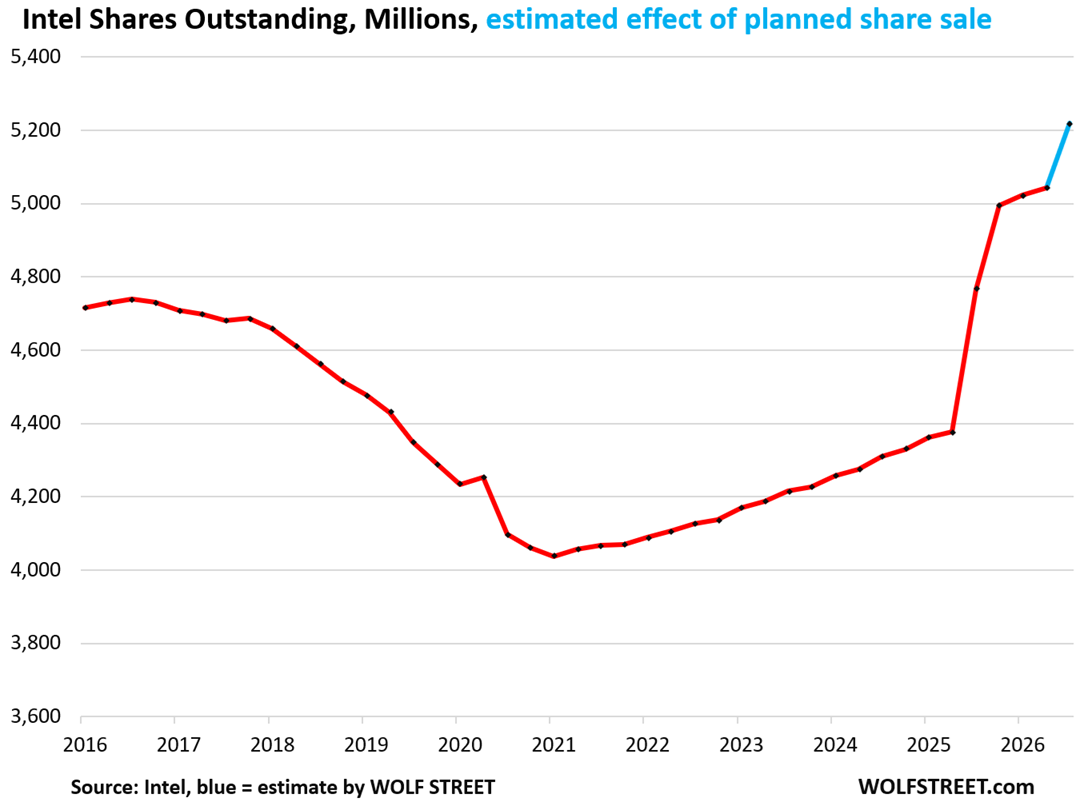
Intel has announced plans for a $15 billion common stock offering, with underwriters receiving an option for an additional $2.25 billion, potentially bringing the total to $17.25 billion in share sales.
According to the SEC filing, the number of shares to be sold has not yet been specified and remains unpriced. However, at the share price of $98 immediately following the announcement, the total offering would amount to approximately 176 million additional shares. This would bring Intel's total share count to 5.22 billion, representing a 19% increase from a year ago.
Intel's stock has surged 380% over the past 12 months, driven by the AI investment boom. The company is now the latest major technology firm to sell shares at elevated valuations, underscoring how sharply higher market values are giving companies more room to raise capital when spending needs are rising.
The move marks a stark reversal from Intel's historical approach to capital management. Between 2008 and the first quarter of 2021, the company spent $94 billion on share buybacks before discontinuing the practice. The SEC filing and press release outline the company's stated rationale.
In its press release, Intel stated: "Intel intends to use the net proceeds from the offering for general corporate purposes, which may include, but are not limited to, capital expenditures and working capital."
The company added: "The offering is intended to further enable Intel to pursue the growth opportunities ahead while maintaining a strong balance sheet and its commitment to an investment-grade rating."
Intel's share count trajectory illustrates a broader shift. From 2017 through Q1 2021, the count declined due to buybacks. It subsequently rose as stock compensation packages and stock-funded acquisitions were no longer offset by repurchases. In 2025, Intel completed a major share sale to the government, and the current offering would further increase the outstanding share total.
The strategy of pivoting from buybacks to share issuance has been adopted across the technology sector. Alphabet, Oracle, Amazon, and Meta have also halted share repurchase programs. This shift has become a primary funding mechanism for the substantial capital requirements of building AI infrastructure, including semiconductor fabrication plants and the exponential surge in data center construction costs. For investors and operators alike, the practical issue is less the headline size of any one deal than the steady accumulation of financing tied to long-lived infrastructure that takes time to build and bring online.
Additional funding sources for AI infrastructure development include large-scale bond sales, existing balance sheet cash, and operating cash flow.
The broader economic effect of these capital-raising activities is notable. Companies selling equity at high prices — from early-stage startups through to IPOs — along with substantial debt issuance, are channeling significant quantities of cash from investors onto corporate balance sheets. These funds are subsequently deployed into the real economy through compensation, data center and factory construction, and other expenditures, where they circulate further.
This process is not new, but the current scale is significant. Major corporations are announcing large capital-raising deals in rapid succession. While this flow of capital from investors through Corporate America into the real economy persists, it serves as a stimulus for economic activity, demand, and inflationary pressures. A key indicator to monitor will be when this flow begins to diminish — though that has not yet occurred.
