Inside Cheonan Correctional Institution: Korea's Only Prison Dedicated to Foreign Inmates
Key Takeaways
- •Cheonan Correctional Institution became the world's first prison designated for foreign inmates in 2010 and, as of August, houses about 500 foreign nationals from 51 countries plus roughly 920 Korean inmates.
- •The facility operates Korea's only prison International Affairs division, whose staff translate documents for inmates on trial, relay concerns, contact embassies, and arrange visits in a dedicated embassy meeting room.
- •Unlike other Korean prisons serving only Korean food, Cheonan provides Korean, Western, and Islamic menus, guarantees prayer time on request with prayer carpets, and holds weekly services for several faiths, though religious holidays are not observed.
- •Most inmates work in contracted workshops making products such as nail clippers, car steering wheels, and mechanical pencil leads, and one life-sentenced inmate has saved as much as 40 million won ($28,240).
- •Korean language and culture programs taught partly by outside instructors have reached more than 1,400 foreign inmates to date.
Editor's note: This is the first of a three-part series exploring Cheonan Correctional Institution, the Korean prison with the largest known foreign inmate population and the only jail facility with a dedicated international affairs division.
CHEONAN, South Chungcheong Province — A roughly 30-minute drive from Cheonan-Asan Station leads to a remote, little-visited area. After surrendering all electronic devices and passing through a security check, visitors navigate a maze-like building and pass through seven or eight heavy steel doors to step inside Cheonan Correctional Institution — Korea's only prison tasked with handling foreign inmates.
The facility became the world's first correctional institute designated for foreign inmates in 2010, after the number of foreign nationals in Korea, and crimes among them, rose through the 2000s. As of August, it houses about 500 inmates from 51 countries alongside some 920 Korean nationals.
Overcrowding has led foreign nationals to be distributed across multiple prisons, including Daejeon and Yeoju in Gyeonggi Province, but the Cheonan prison is the only one mainly tasked with handling them, complete with an International Affairs division. That setup has made it a rare institutional response to a long-running challenge in a country where the foreign inmate population is spread unevenly across the prison system.
Language and daily life
Communication at the facility runs through a small multilingual team. About 10 staff members speak various languages — including English, Chinese, Russian, Thai, Mongolian and Arabic — helping inmates with personal concerns or legal matters. For other languages, staff turn to inmates with stronger Korean skills or use translation apps to fill the gap.
When this reporter walked through the corridors at about 11:30 a.m., younger-looking inmates, several bearing tattoos, were pushing meal carts. The meals reflect the prison's broader efforts to accommodate cultural and religious diversity. Unlike other Korean prisons, which serve only Korean food, Cheonan offers three separate menus — Korean, foreign (Western) and Islamic, the last of which excludes pork and other prohibited items.
Prayer time is guaranteed whenever inmates ask for it, with prayer carpets brought in on request. Christian, Buddhist, Catholic, Jehovah's Witness and Orthodox services are each held once a week, though religious holidays are not observed.
Differing prayer schedules can lead to friction, particularly when inmates pray during sleeping hours. In another case, an inmate raised religious objections to a fellow inmate's magazine that showed some exposed skin.
Life inside the cells
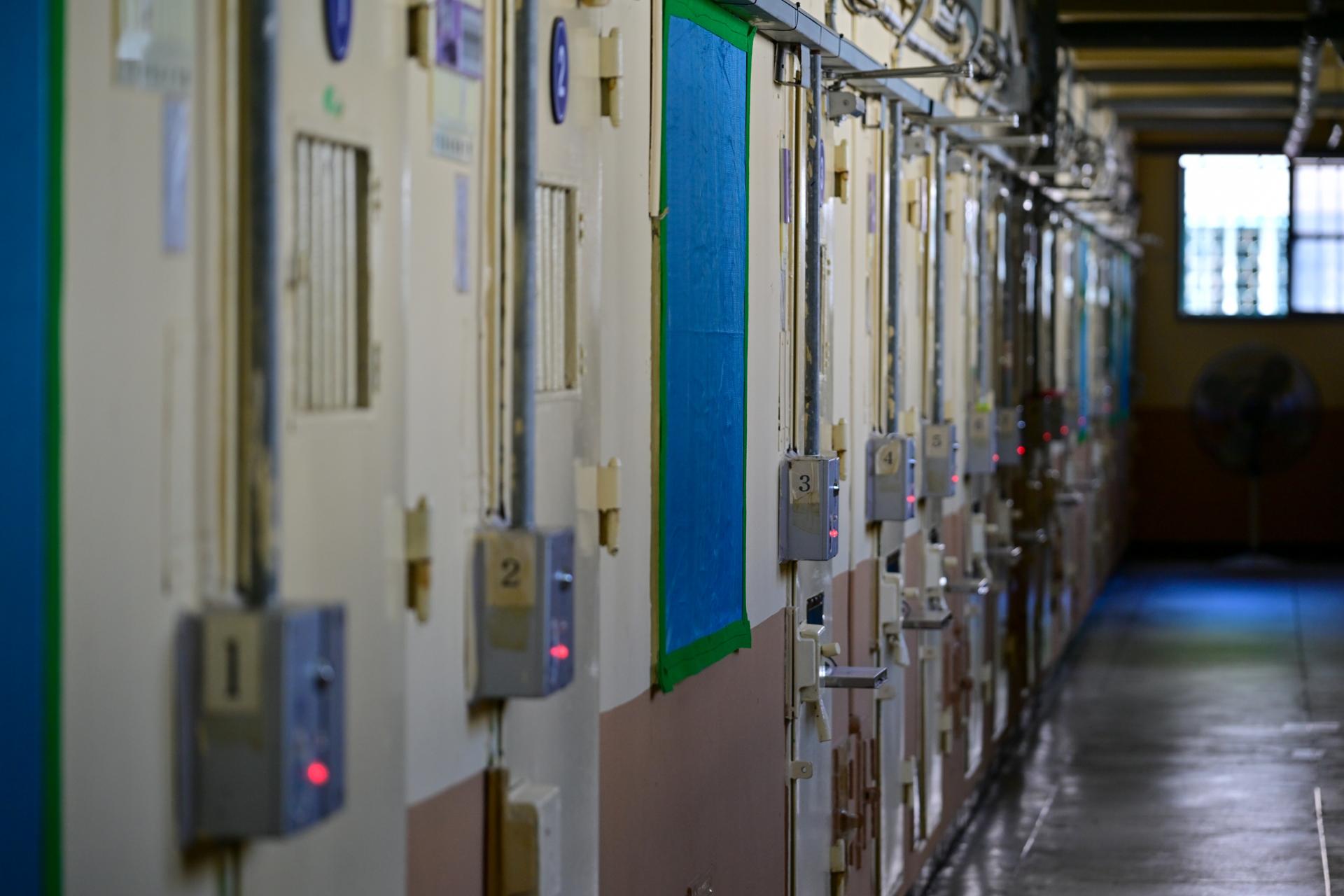
Down the hall, cells were left empty as the inmates were out on work assignments. Each cell normally holds three inmates in 9.9 square meters, or two in 6.48 square meters, with 13 such cells on each floor. The cells were cleaner than expected, and a separate library-like space held comic books and other reading material.
The cells are grouped into separate buildings based on nationality, gender, conviction status and whether inmates work or are in poor health. Those convicted of serious offenses, such as drug crimes or being members of gangs, are often kept apart from other inmates to aid rehabilitation.
Work and wages
Most inmates are required to work unless there are special circumstances. Under contract with private companies, the prison's workshops make goods including nail clippers, car steering wheels and mechanical pencil leads.
In return, inmates are paid based on hours worked or output, money they can save or spend on items such as snacks. For inmates from lower-income countries, the earnings can amount to a small fortune, prompting some to want to keep working through break times. One inmate serving a life sentence has saved as much as 40 million won ($28,240), and some put their wages toward their children's school tuition.
Among the prison's work sites, Workshop Area 1 has 303 inmates from 38 countries. In one of its units, which produces automotive gears, 30 inmates from 12 countries work from 8:30 a.m. to 4 p.m., speaking among themselves in a mix of English and Chinese.
But work is not all the inmates do. They can also take classes in calligraphy and painting, as well as Korean language and culture programs. Outside instructors teach Hangeul, the Korean alphabet, to about 30 inmates a year, and the programs have reached more than 1,400 foreign inmates to date.
The International Affairs division
The prison's International Affairs division further sets it apart from others in Korea. Its staffers assist foreign inmates facing trial by translating documents, listening to concerns, contacting embassies and arranging visits that can take place in a dedicated embassy meeting room.
That support becomes especially critical in cases like one inmate who refused food for 10 days. Language and cultural barriers can make it hard for prison staff to communicate deeply with such inmates, so embassy officials were given a chance to step in to bridge the gap.
Contact with embassies is one of several ways foreign inmates stay connected to the outside world. Inmates can also call families from phone booths in the exercise yard or hold video visits through remote systems, yet international mail remains the most common form of contact.

