inDrive Denies Abandoning Its Price-Bidding Model, Says 'One Click' Simply Skips Fare Negotiations
Key Takeaways
- •inDrive says its price-bidding system remains fully intact, with the new "One Click" feature serving as an optional faster alternative for riders in a hurry.
- •Users on Ride and Comfort can continue to negotiate fares directly with drivers, while One Click lets them skip the negotiation process entirely.
- •The company's clarification followed social media discussion about the disappearance of the option that previously allowed riders to set their own fares for basic rides.
- •One Click fares reportedly run roughly 40 to 50 percent higher than recommended fares in the basic ride category, with pricing determined by inDrive itself.
- •Amid rising vehicle operating costs and driver dissatisfaction, the feature may help inDrive retain frustrated drivers, though a full abandonment of the bidding model is considered unlikely.
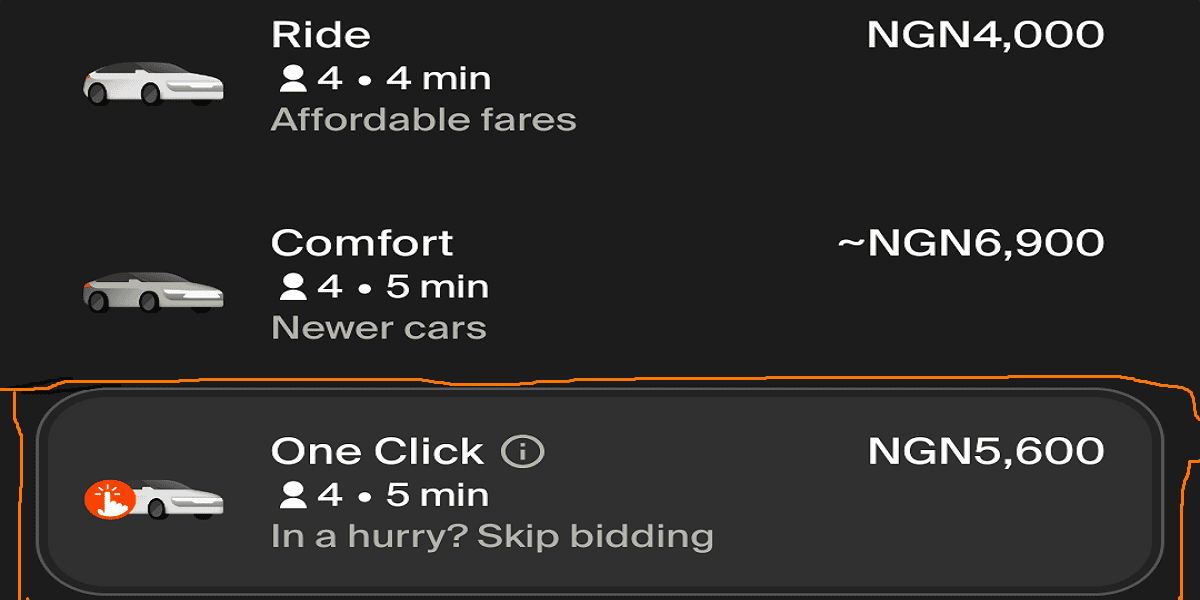
Ride-hailing app inDrive has rejected suggestions that it has done away with its signature price-bidding model, saying a newly added feature merely gives riders a faster alternative rather than replacing fare negotiations altogether.
In remarks to Technext, a company spokesperson said the bidding system remains fully intact, and that the only change is a new "One Click" option that lets time-pressed riders bypass the bargaining process.
"Our model is the same. We didn't change overnight. We just introduced the One Click option, which lets you skip bidding if you are in a hurry. You can still click on Ride to negotiate your fare and agree on a price with your driver. The same applies to Comfort, where you can also negotiate and get newer car models. The main thing you need to know is that you now get the best of both worlds," the company said.
According to inDrive, users on Ride and Comfort can continue to negotiate fares with drivers, or tap One Click to skip the negotiation entirely. The company clarified that it quietly rolled out the feature so that riders in a hurry can avoid what it described as the time-consuming bidding process.
The clarification follows discussion on social media, where users noticed changes in the app — in particular, the disappearance of the bold option that previously allowed riders requesting basic rides to set their own fares. Under the earlier flow, the app suggested a fare but gave riders a field to raise or lower the figure, effectively letting them make their own offer.
That offer was shown to every driver near the rider, who could either accept it or send a counteroffer. Riders would then review the counteroffers alongside bids from drivers who accepted their proposed fare, and pick the option they preferred.
Questions Around inDrive's Model
The debate over inDrive's model comes in the context of its stated long-term commitment to Nigeria following Uber's exit from the Nigerian market.
At the time, the company voiced strong confidence in its bidding model, describing it as the main reason it could compete and operate effectively in emerging markets. It stressed that the model is built around affordability — a key consideration for consumers in markets such as Nigeria — and explained that the final fare is determined directly between driver and passenger, giving both sides greater control and letting them settle on a price that works for them.
"Unlike traditional ride-hailing platforms, we do not use algorithms to set ride prices," the company said.
That stance points to the broader industry baseline: conventional ride-hailing apps set fares upfront with algorithms, the very practice inDrive has positioned itself against.
According to the Technext report, however, One Click may put that claim to the test. The option removes bidding altogether and leaves pricing to inDrive itself. One Click fares run roughly 40 to 50 per cent higher than the recommended fares in the basic ride category, which places them within — and sometimes above — the range that bidding would typically land on.
The report notes that amid the current difficult economic conditions, in which vehicle operating costs have surged, drivers have grown increasingly unhappy with the app. Against that backdrop, One Click may represent inDrive's attempt to blend conventional ride-hailing with its bidding model, allowing drivers to earn more without being exposed to riders who tend to bid below acceptable levels.
If the approach works, the report concludes, it could help the company retain frustrated drivers — though a shift that would see the bidding model discarded altogether remains unlikely. With the company insisting both options remain open, the clearest signs to watch will be in the app itself: whether the fare-setting field riders flagged as missing reappears in the basic ride flow, and whether the negotiate option stays where the company says it is.

