India Commits Over $2 Billion to Small Modular Reactors; Saudi Arabia Advances Civilian Nuclear Program with U.S. Agreements
Key Takeaways
- •India plans to spend more than $2 billion to develop at least five small modular reactors by 2033.
- •India aims to increase its nuclear power capacity from 8.8 GW to 100 GW by 2047.
- •The United States and Saudi Arabia signed agreements that could lay the groundwork for a Saudi civilian nuclear power program.
- •Sprott Physical Uranium Trust increased its uranium oxide holdings to 81.5 million lb. after buying 50,000 lb. this week.
- •The uranium spot price rose by 10¢ on Wednesday to $85.70 per lb.
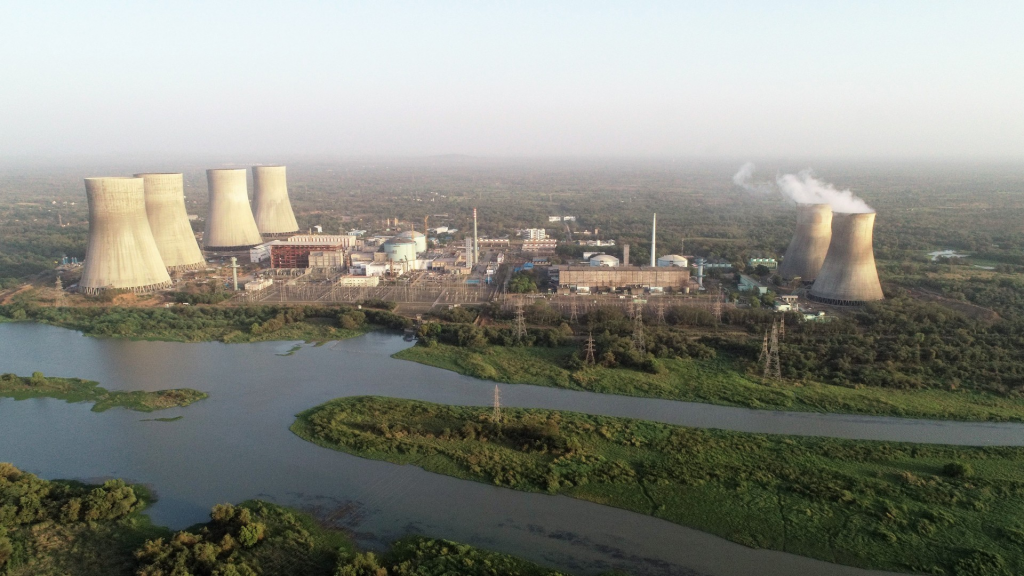
Nuclear power continued to gain global traction this week as India and Saudi Arabia each moved forward with significant initiatives in the sector. The Sprott Physical Uranium Trust (TSX: U.U for USD; U.UN for CAD) also purchased 50,000 lb. of uranium oxide amid a modest rise in the spot price.
India Allocates $2 Billion for SMR Development
India is earmarking more than $2 billion to construct at least five small modular reactors (SMRs) by 2033, Atomic Energy Minister Jitendra Singh announced Wednesday, as reported by India's Economic Times. The initiative forms part of a broader strategy to expand the country's nuclear capacity 11-fold, reaching 100 gigawatts (GW) by 2047, up from the current 8.8 GW.
SMRs are designed to be factory-built and transported to sites, a model intended to reduce construction timelines and costs compared with conventional large-scale reactors. The technology is still in early commercial deployment globally, with only a handful of units operational worldwide, making India's commitment one of the larger national SMR programs announced to date.
Three SMR designs are under development by the Mumbai-based Bhabha Atomic Research Centre, Singh said. These include reactors with 220-megawatt and 55-MW capacity, along with a gas-cooled reactor producing less than 5 MW that would serve as a heat source for hydrogen production.
The announcement follows a recent statement by India's state-owned NTPC that it is exploring financing options for overseas uranium mines to secure fuel for its ambitious nuclear development plans. India's domestic uranium reserves are reportedly of medium tonnage and low grade. The country's access to international nuclear fuel markets was facilitated by the 2005 U.S.-India civil nuclear agreement, which ended decades of nuclear trade restrictions stemming from India's non-membership in the Nuclear Non-Proliferation Treaty.
India has been actively securing international uranium supply agreements. In March, the country signed a $2.6-billion (US$1.9-billion) deal with Cameco (TSX: CCO; NYSE: CCJ) for uranium ore concentrate. In February, Kazatomprom (LSE: KAP), the world's largest uranium producer, agreed to supply a significant volume of output to India.
More countries are pursuing nuclear energy as an alternative to fossil fuels and to meet rising electricity demand from growing economies and data-intensive AI infrastructure.
The uranium spot price gained 10¢ on Wednesday to reach $85.70 per lb., extending a months-long period of stability following a volatile first quarter in which prices briefly exceeded $100 per pound.
U.S.-Saudi Nuclear Cooperation Agreements
Saudi Arabia and the United States signed agreements this week that could establish the foundation for a Saudi civilian nuclear power program. The kingdom could potentially build standard AP1000 commercial nuclear reactors under the arrangement, BMO Capital Markets noted in a research note Thursday. The AP1000 is a pressurized water reactor designed by U.S.-based Westinghouse Electric Company; four units are currently operational at plants in China, and two each are under construction in the United States and China.
"These agreements reflect our two nations' shared commitment to strengthening U.S.-Saudi commercial relations, delivering prosperity at home and security to our allies abroad," U.S. Energy Secretary Chris Wright said in a Department of Energy release. "These agreements uphold the highest standards of nuclear safety and non-proliferation, while relying on the world's best nuclear technology and scientists, designed right here in the United States."
The nuclear cooperation deal is intended to provide American companies access to Saudi Arabia's nuclear energy program, according to the DOE. U.S. nuclear exports are governed by Section 123 of the Atomic Energy Act, which requires a bilateral agreement for peaceful nuclear cooperation before major components and fuel can be transferred.
The United Arab Emirates and Iran are the only Middle Eastern countries currently operating nuclear power plants, according to the International Atomic Energy Agency. The UAE's Barakah plant, which began commercial operation in 2021, was the first nuclear facility in the Arab world. Nuclear reactors are also under construction in Egypt and Turkey.
Sprott Continues Uranium Accumulation
Sprott's 50,000-lb. purchase of uranium oxide (U₃O₈) on Wednesday brings the trust's total holdings to 81.5 million lb., BMO noted, marking a year of sustained accumulation by the physical uranium fund. In February, the trust acquired 250,000 lb. of U₃O₈ — its largest single purchase since the fund's inception in 2021. The trust's steady purchases serve as a barometer of investor appetite for physical uranium exposure amid the supply-demand dynamics driving new national nuclear programs.

