India's Internet Freedom Foundation Challenges Government Order to Remove BitChat Repositories from GitHub
Key Takeaways
- •India’s cybercrime agency ordered GitHub to block access to three BitChat-related repositories within three hours.
- •IFF says the order relied on Section 79(3)(b) of the IT Act rather than India’s regular website-blocking procedure under the IT Rules.
- •BitChat sends encrypted messages between nearby devices over Bluetooth without requiring internet access or centralized servers.
- •IFF argues the directive did not identify specific unlawful material in the repositories and instead targeted BitChat’s technical architecture.
- •The dispute could influence how governments regulate decentralized and offline-capable open-source software hosted on platforms such as GitHub.
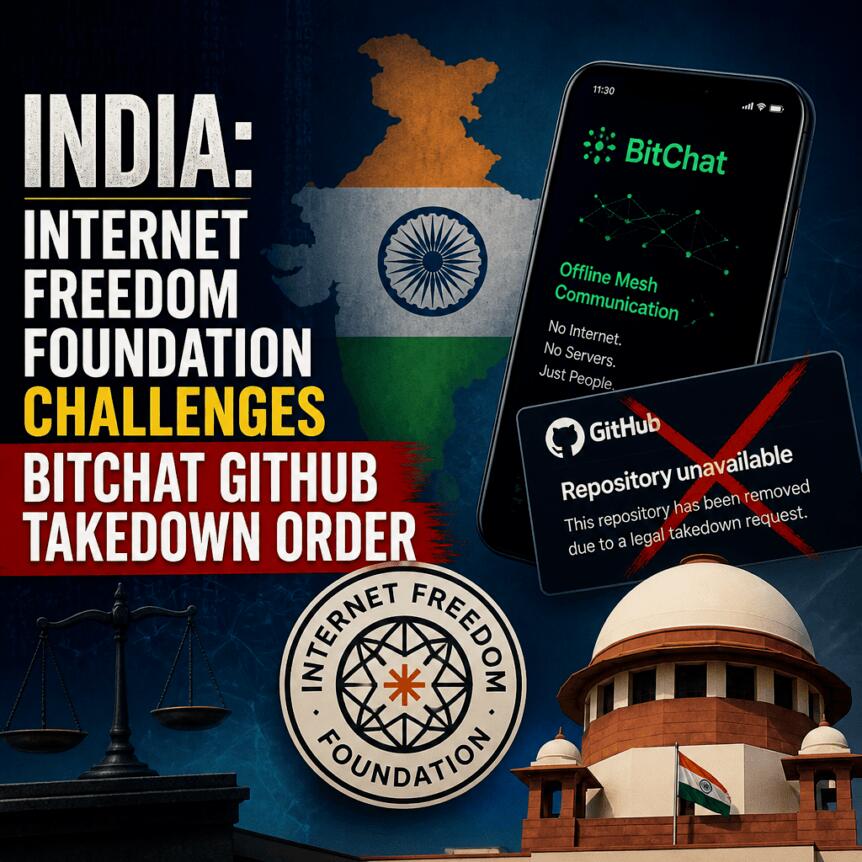
India's Internet Freedom Foundation (IFF) has publicly challenged a government directive requiring GitHub to block access to multiple repositories tied to BitChat, the decentralized messaging app associated with Jack Dorsey. The digital rights organization contends that the takedown order circumvents procedural safeguards embedded in India's established website-blocking framework and should be withdrawn.
The dispute surfaced after India's cybercrime agency instructed GitHub to disable access to three BitChat repositories within three hours, asserting that the decentralized messaging platform could be used to bypass internet shutdowns, evade lawful surveillance, and facilitate unlawful activity. The case is notable for targeting source code hosted on GitHub, the world's largest open-source development platform, rather than a live website or app store listing—raising questions about how India's content-blocking powers extend to code repositories maintained by global developers.
Legal Basis Under Dispute
In a statement posted on X, IFF said the government issued its order under Section 79(3)(b) of India's Information Technology Act, rather than through the country's standard website-blocking procedure under the IT Rules. Section 79(3)(b) strips intermediaries of their legal safe harbor if they fail to act expeditiously after receiving actual knowledge of unlawful activity, effectively pressuring platforms to comply or risk liability. IFF argues that this distinction is significant because the conventional route—governed by India's Information Technology Rules—requires review by an inter-ministerial committee and carries formal procedural protections that Section 79(3)(b) does not.
The foundation's central argument is that the government leveraged an enforcement mechanism designed for rapid platform action, effectively bypassing the oversight built into India's website-blocking process. IFF has called on authorities to withdraw the notice and to publish all takedown orders issued under the same provision, raising what it characterizes as a broader transparency and accountability concern that extends beyond the BitChat case.
What the Cybercrime Agency Alleged
The cybercrime agency's directive expressed concern that BitChat's decentralized nature could enable communication during internet disruptions, potentially undermining government-ordered shutdowns and lawful monitoring efforts. India has consistently ranked first globally in the number of documented internet shutdowns, according to tracking by digital rights organizations including Access Now, making the regulation of circumvention tools a recurring policy flashpoint.
IFF countered this rationale on two grounds. First, the organization noted that the order failed to identify any specific unlawful material contained within the repositories. Second, IFF argued that the reasoning effectively treated BitChat's architectural design choices—particularly its capacity to relay messages without internet connectivity—as sufficient justification for removal on their own.
In IFF's assessment, this approach risks expanding enforcement beyond content-based restrictions into what amounts to architecture-based suppression, a shift with potentially far-reaching implications for software developers and open-source ecosystems.
BitChat's Decentralized Architecture
BitChat is described as a decentralized messaging application that transmits encrypted messages between nearby devices via Bluetooth, rather than relying on internet connectivity or centralized servers. This design is intended to maintain communication capabilities when conventional networking infrastructure is unavailable.
IFF highlighted this same feature as the primary source of the government's concern, noting that the decentralized model—specifically its offline and proximity-based functionality—was cited as the basis for the takedown rather than any identifiable illegal content within the repositories.
The distinction carries practical policy weight. If a messaging platform faces removal primarily because it can operate during network outages, the boundary between lawful restrictions on specific content and broader restrictions on tools that enable communication during shutdowns becomes a central regulatory question.
Adoption During Periods of Unrest
BitChat's public profile has risen in tandem with episodes of civil unrest and connectivity disruptions. Cointelegraph previously reported on the app's July 2025 launch, describing a decentralized framework capable of supporting local messaging when standard internet routes are disrupted.
Since its launch, BitChat has reportedly seen increased adoption in multiple countries during periods of significant disruption. According to earlier reporting, usage rose during events including protests, natural disasters, and internet shutdowns in countries such as Madagascar, Nepal, Uganda, Jamaica, and Iran.
This pattern—increased installations coinciding with connectivity disruptions—illustrates why a case involving GitHub repositories can rapidly become a focal point for wider debates over censorship, shutdown circumvention, and the role of open-source software during emergencies.
Unresolved Questions
Authorities have not yet clarified how Section 79(3)(b) will be applied in cases involving open-source code with offline or decentralized capabilities. IFF's demand to disclose all takedown orders issued under that provision signals that further legal and procedural scrutiny is likely.
Key questions remain regarding whether GitHub will permanently comply with the order, whether the affected repositories will be restored, and whether any judicial or regulatory process will follow to test IFF's constitutional arguments. The outcome could set a precedent for how governments worldwide regulate access to decentralized and offline-capable software hosted on open-source platforms.

