India Orders GitHub to Remove Jack Dorsey's Bitchat Code Repositories Amid Protests
Key Takeaways
- •India's I4C issued a takedown notice to GitHub demanding removal of three Bitchat repositories within three hours, citing IT Act provisions that remove intermediary safe harbor protections.
- •Bitchat routes messages over Bluetooth mesh networks without internet, servers, or accounts, making traditional wiretaps and data requests impossible for authorities.
- •The takedown order coincides with large-scale youth protests in Delhi over exam-paper leaks, where internet shutdowns have driven demonstrators to use offline communication tools like Bitchat.
- •China previously ordered Bitchat removed from Apple's App Store in April, making India the second government to take action against Dorsey's messaging app.
- •Within hours of India's order, Bitchat's code was mirrored to GitLawb, a decentralized platform, illustrating the difficulty of suppressing open-source projects through takedown demands.
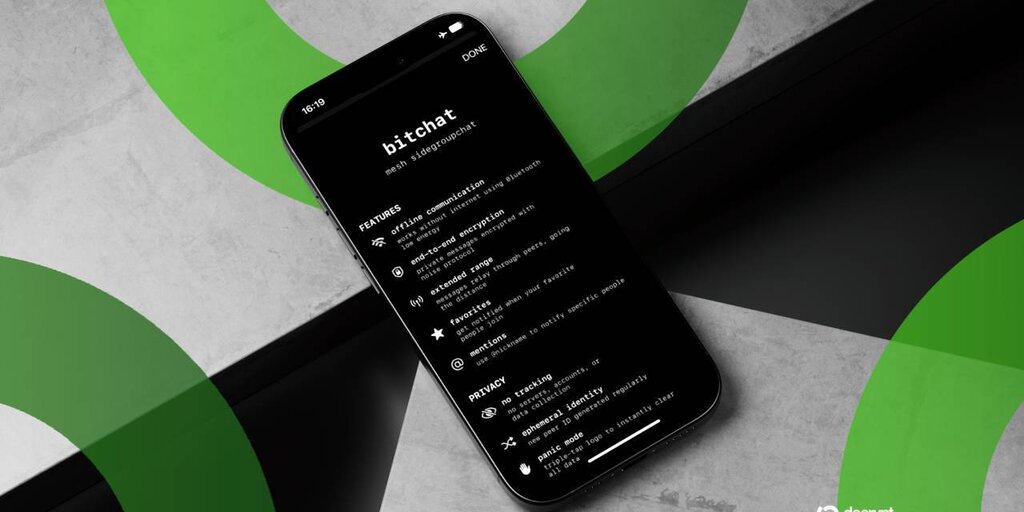
India's cybercrime agency has ordered GitHub to take down the source code for Bitchat, the decentralized messaging application built by Jack Dorsey, giving the Microsoft-owned platform just three hours to comply.
The notice, issued Thursday by the Indian Cyber Crime Coordination Centre (I4C) under the Ministry of Home Affairs, named three repositories under the "permissionlesstech" account: the main Bitchat project, its Android build, and the Android releases page. The order invoked Section 79(3)(b) of the IT Act, 2000 and Rule 3(1)(d) of the 2021 IT Rules, instructing GitHub to "remove and disable access" to the code without vitiating any evidence. Section 79(3)(b) strips online intermediaries of their legal safe harbor if they fail to act on actual knowledge of unlawful activity—a provision the government has increasingly used to pressure platforms hosting content it deems problematic.
Bitchat routes messages directly between nearby phones over Bluetooth mesh networks, requiring no internet connection, servers, phone numbers, or accounts. I4C said this design "significantly impedes lawful interception, attribution, and investigation." The agency warned the app could be exploited during "public disorder, riots, terrorism, organized crime, or internet shutdowns," and cited provisions of both the IT Act and the Bharatiya Nyaya Sanhita, India's criminal code. The objection goes to the core of the app's architecture: because Bitchat stores no data centrally, there is nothing for authorities to compel through traditional wiretap or data-request mechanisms.
Dorsey, the former Twitter chief and Block CEO, published the notice on X, writing: "the government of india does not like technologies like bitchat and wants it taken down."
the government of india does not like technologies like bitchat and wants it taken down pic.twitter.com/gjzMg1NGCi
— jack (@jack) July 24, 2026
The Bitchat Community account responded that "Governments that fear people talking without permission will always go after the tools that make it possible." The Internet Freedom Foundation condemned the order as "unconstitutional and authoritarian," arguing it named no unlawful content and bypassed India's established blocking procedures. Digital rights groups have separately challenged the 2021 IT Rules in court, arguing their takedown powers lack adequate safeguards.
'Cockroach' Protests Provide Backdrop
The takedown order comes as India contends with a youth-led protest movement over exam-paper leaks. Tens of thousands have rallied in Delhi behind the satirically named Cockroach Janta Party (CJP), and Prime Minister Narendra Modi has vowed to establish fast-track courts for officials accused of rigging exams. With mobile internet service cut around Parliament and the Jantar Mantar protest site, demonstrators turned to offline communication tools such as Bitchat. India has recorded more internet shutdowns than any other country in recent years, according to digital rights tracker Access Now, making tools that bypass connectivity constraints especially pertinent during civil unrest.
Not the First State Action
India is not the first government to move against the app. China ordered it pulled from Apple's App Store in April, echoing Beijing's 2023 ban on Dorsey's Nostr-based Damus. Removing an app from a store limits distribution, while removing the source code represents an attempt to kill a project outright—though open-source code can be freely copied and mirrored. The move also places Microsoft in an increasingly familiar position for U.S. tech companies operating in India: balancing compliance with local law against free-expression expectations from global users.
Indeed, just hours after India's crackdown, Bitchat repositories were mirrored to GitLawb, a decentralized code collaboration platform. Days earlier, Dorsey's Block launched Buzz, a decentralized platform pitched as a way to reduce its own reliance on GitHub.
Microsoft has not publicly stated whether it met the three-hour compliance deadline.

