India Reportedly Requests GitHub to Remove Jack Dorsey's Bitchat Repository
Key Takeaways
- •India has reportedly requested GitHub to remove Jack Dorsey's Bitchat repository, but no enforcement or actual takedown has been confirmed.
- •The request concerns a source-code repository rather than a finished application, which affects not only public access to the code but also existing forks and developer copies.
- •Jack Dorsey previously clashed with Indian authorities during his tenure as Twitter CEO, when he alleged that India threatened legal action against Twitter staff over content takedown orders.
- •GitHub operates a notice-and-takedown framework primarily for DMCA copyright claims but also processes and discloses government-directed removal requests through transparency reporting.
- •The outcome of the reported request remains uncertain and could result in platform review, a challenge, or no action at all.
India Reportedly Requests GitHub to Remove Jack Dorsey's Bitchat Repository
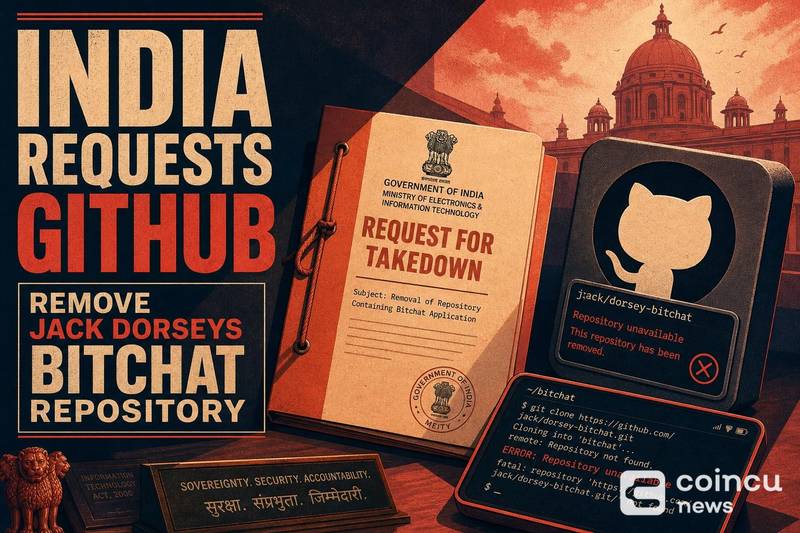
India has reportedly asked GitHub to remove the Bitchat code repository linked to Jack Dorsey, bringing the open-source project into the center of a new platform-governance dispute. As of now, the request has not been confirmed as enforced, and details regarding its scope and legal basis remain limited.
The reported development involves three named parties: Indian authorities making the request, GitHub as the code-hosting platform, and Jack Dorsey, the public figure associated with Bitchat. Dorsey has referenced the project through his own channels, including a post on X. Coverage of the request has circulated across social media platforms. The specific actions India is asking GitHub to take have not been independently verified.
What makes the situation particularly notable is that it concerns a source-code repository rather than a consumer-facing application listing or a social media account. The Bitchat repository on GitHub hosts the project's underlying code, and additional information about the project is available on its public website.
Why a Code Repository, Not an App, Is the Sensitive Point
Removing a repository is fundamentally different from removing a finished application. A repository contains source code, commit history, forks, and developer discussions. Consequently, a takedown can affect not only public access to the code itself but also the copies that other developers have already made.
This is why code-hosting takedown requests tend to attract significant attention from the open-source community. When the artifact in question is raw code rather than a packaged product, questions about who can read, copy, or continue the work become immediate. GitHub, which is owned by Microsoft, operates a documented notice-and-takedown framework primarily tied to DMCA copyright claims, but it also receives and processes government-directed removal requests, which it has periodically disclosed in transparency reporting.
Request, Review, or Removal: The Distinction Matters
GitHub is a global code-hosting platform that can receive legal or government removal demands. A request from a national authority introduces both compliance obligations and free-speech governance questions. How a platform weighs these competing demands has been a recurring source of tension between governments and hosting services.
For Dorsey specifically, this is not the first time his projects have intersected with Indian government content demands. During his tenure as CEO of Twitter, Dorsey publicly stated that India had threatened legal action against Twitter staff over content takedown orders, an assertion Indian officials disputed at the time. That prior history adds a layer of familiarity to the current situation, even though the present request concerns a different platform and a different type of content.
It is important to distinguish among three stages: a request has been reported, but there is no confirmation of a formal review outcome or an actual removal. Treating a reported request as a completed takedown would overstate what the available evidence currently supports.
Why the Crypto and Open-Source Audience Is Watching
Repository access issues touch directly on the decentralization and open-source debates that cryptocurrency and blockchain communities follow closely. The same audiences that track India's on-chain activity — including market conditions behind the USDT premium in India rising above 8.5% — tend to monitor how developer tools and code access are governed within the country.
India's broader technology footprint is also expanding, reflected by growing infrastructure interest in the region. The country's regulatory framework for digital content and platforms has expanded in recent years, including the 2021 Information Technology Rules that formalized government authority to order removal of online content, a mechanism that has drawn scrutiny from civil liberties groups. However, any direct token-market impact from this particular repository request remains unclear. The more concrete near-term question is how the developer community will respond.
Key Questions
Has GitHub removed the repository? There is no confirmation that the repository has been taken down. The reporting describes a request, not a completed removal.
What is Bitchat? Based on its public repository and website, Bitchat is an open-source project linked to Jack Dorsey. Further technical details have not been confirmed in the current reporting.
What could happen next? A reported request could proceed to platform review, be challenged, or lapse without action. Any of these outcomes would change the status of the repository, and none has been confirmed at this time.

