Incheon's 19-Year Reforestation Initiative in Mongolia to Be Showcased at UN Desertification Conference
Key Takeaways
- •Incheon citizens raised 335 million won in 2008 to begin planting trees on degraded land in Mongolia.
- •The project has restored 157 hectares of barren land and planted more than 250,000 drought-resistant trees across several Mongolian sites.
- •The initiative secured 15-year land-use rights, built nurseries, drilled wells and installed fencing to improve sapling survival.
- •Project leaders say the sapling survival rate has reached 78%, and the trees have absorbed more than 1,600 tons of carbon dioxide.
- •Officials plan to present the "Incheon Forest of Hope" as a benchmark for municipal climate action, with a third phase under review after the second phase ends in 2027.
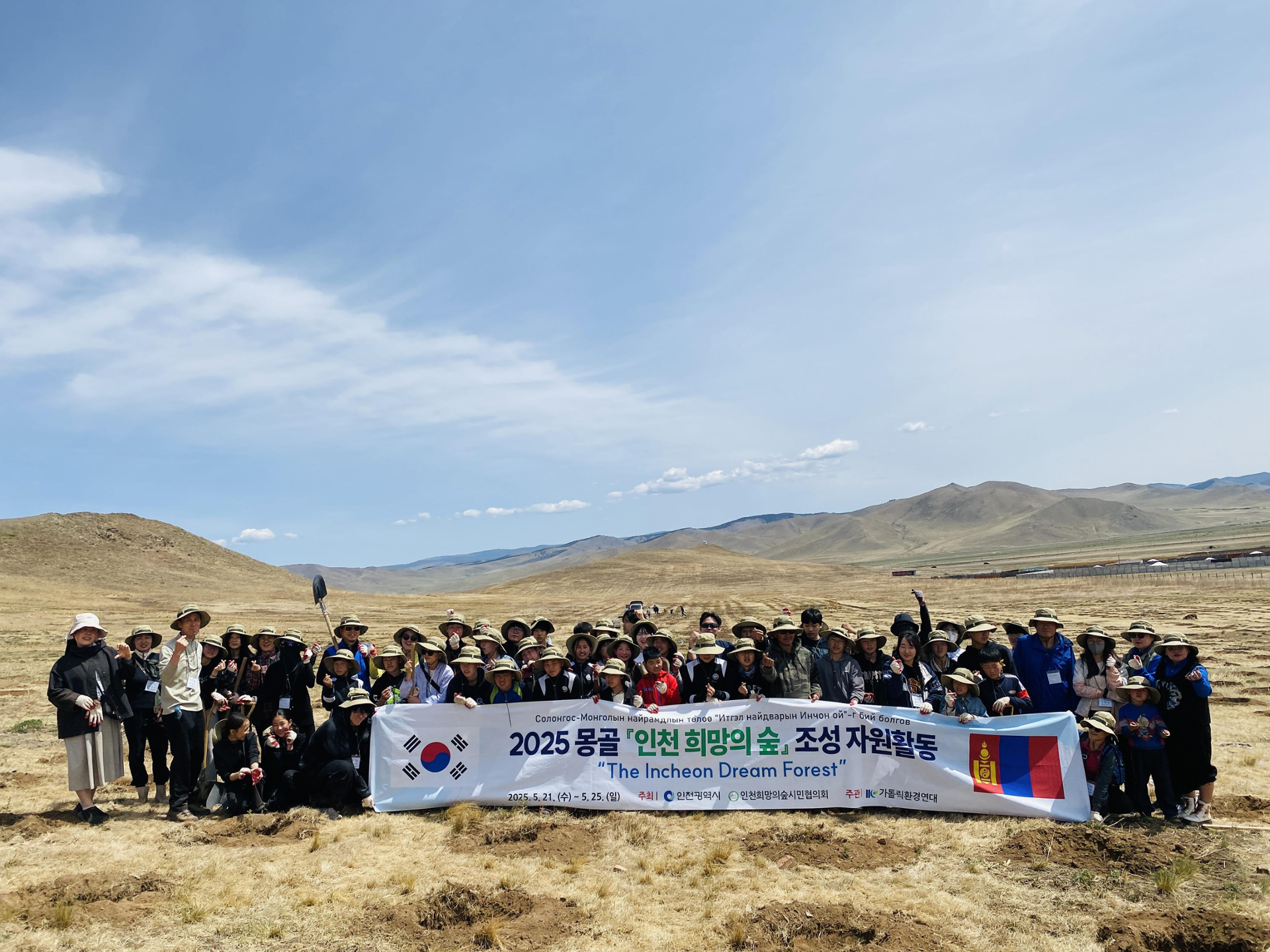
For nearly two decades, residents of Incheon — an industrial port city on South Korea's west coast — endured toxic yellow dust storms sweeping in each spring from the Gobi Desert. These storms, which carry fine particulate matter across the Korean peninsula, have been linked to respiratory illness and disrupted economic activity throughout Northeast Asia, making them a regional public health concern rather than a purely environmental one. Rather than settling for routine air quality alerts, local civic groups opted to address the transboundary pollution at its source, hundreds of miles away.
In 2008, Incheon citizens raised 335 million won ($250,000) to plant saplings on Mongolia's severely degraded steppes. Mongolia is among the countries most affected by desertification worldwide, with a majority of its territory experiencing some degree of land degradation, driven by overgrazing, climate change, and shifting precipitation patterns. That grassroots fundraising effort has since grown into one of East Asia's most ambitious transnational environmental partnerships.
Incheon officials announced Tuesday that the "Incheon Forest of Hope" initiative will be presented as a global benchmark for municipal climate action at the 17th Conference of the Parties to the United Nations Convention to Combat Desertification (UNCCD), the international body established in 1994 as one of the three Rio Conventions alongside those governing climate change and biodiversity.
Transforming Barren Land
Over the past 19 years, the initiative has converted 157 hectares of barren land — an area equivalent to 220 soccer fields — into a thriving green belt. More than 250,000 drought-resistant trees, including Scots pine, Siberian larch, and elm, have been planted across multiple sites in Mongolia, among them Bayannuur, Dashinchilen, and Songino Khairkhan.
The project's durability stems from infrastructure built specifically for long-term plant survival. Incheon secured 15-year land-use rights from Ulaanbaatar, established local nurseries, drilled wells, and erected protective fencing to prevent livestock from grazing on young saplings. These measures have yielded an exceptionally high sapling survival rate of 78 percent — a figure that stands out in a field where survival rates often fall below 50 percent. The trees are estimated to have absorbed more than 1,600 tons of carbon dioxide to date.
A Community-Driven Alternative
Large-scale forestation programs have frequently been hampered by low survival rates and top-down implementation challenges. China's "Great Green Wall," launched in 1978 to hold back the Gobi Desert, and the African Union's 8,000-kilometer "Great Green Wall" across the Sahel both illustrate the enormous effort required to combat desertification at scale.
Incheon's initiative, by contrast, demonstrates a smaller-scale alternative: a city-to-city, community-driven model in which municipal governments, local residents, and youth collaborate directly to sustain ecological stewardship. Nearly 800 volunteers and municipal officials from both countries have traveled to the planting sites over the years to work alongside local Mongolian residents.
As Incheon prepares to conclude its second phase in 2027, project leaders are already evaluating and planning for a third phase.
"The Incheon Forest of Hope shows how a single tree planted by a citizen can mature into a municipal policy and ultimately grow into a model for international climate diplomacy," said Yoon Eun-joo, head of Incheon's Environmental Safety Division. "Cities do not have to wait for national governments to lead the fight against global climate disruption."
Source: The Korea Times

