IMF Chief Kristalina Georgieva Warns Stablecoins Could Reshape Cross-Border Payments While Posing Risks to Emerging Markets
Key Takeaways
- •IMF chief Kristalina Georgieva said stablecoins could reduce costs for large-value cross-border payments while creating risks for emerging markets.
- •Georgieva identified currency substitution and exchange-rate instability as key potential risks from wider stablecoin adoption in emerging economies.
- •Most of the largest stablecoins by market capitalization are denominated in US dollars.
- •The United States enacted a federal stablecoin framework in 2025, and the EU's Markets in Crypto-Assets regulation took full effect that year.
- •The IMF has contributed to the G20 cross-border payments roadmap, which aims to make international transfers faster, cheaper and more transparent by 2027.
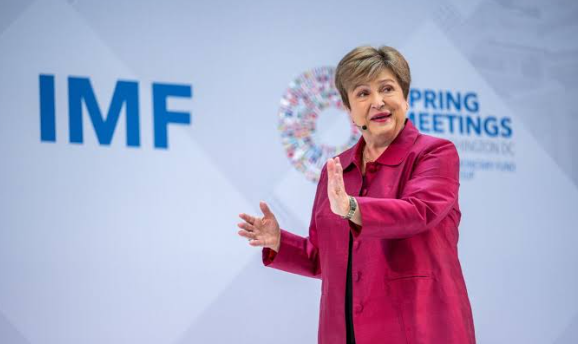
International Monetary Fund chief Kristalina Georgieva said stablecoins could reduce the cost of large-value cross-border payments while also creating risks for emerging markets, including currency substitution and exchange-rate instability, according to information shared by @CoinMarketCap on X.
Georgieva's comments highlight the competing effects of stablecoins as financial institutions and policymakers assess their growing role in international payments. While the digital assets could make certain transactions more efficient, their wider adoption could also affect monetary systems in countries where local currencies are less dominant. The remarks underscore the challenge for policymakers seeking to capture potential benefits from stablecoins while managing risks to financial and monetary stability. The IMF has been engaged in this area for several years, publishing analyses on digital money and crypto assets and contributing to the G20 cross-border payments roadmap, an international initiative aimed at making cross-border transfers faster, cheaper and more transparent by 2027.
Stablecoins Could Lower Cross-Border Payment Costs
Stablecoins are digital assets designed to maintain a stable value, typically by being linked to a traditional currency or another reference asset. Most of the largest stablecoins by market capitalization are denominated in US dollars. Their structure allows them to operate on blockchain networks while maintaining a relatively stable price compared with more volatile cryptocurrencies.
According to Georgieva, stablecoins could make large-value cross-border payments cheaper. International transfers can involve multiple financial institutions, settlement systems and currencies, creating costs and delays for participants. Blockchain-based payment infrastructure can allow transactions to be recorded and transferred digitally, potentially reducing some of the intermediaries involved in moving funds across borders. The cost of traditional cross-border payments has long been a focus of international policy work: the World Bank has documented that global average remittance fees remain well above the United Nations Sustainable Development Goal target of 3 percent.
The potential cost reductions have made stablecoins an area of interest for financial institutions and policymakers examining the future of global payment systems. However, Georgieva's comments indicate that lower transaction costs are only one part of the broader policy discussion. Stablecoin regulation has advanced unevenly across jurisdictions: the United States enacted a federal stablecoin framework in 2025, while the European Union's Markets in Crypto-Assets regulation, which took full effect that year, includes reserve and issuer requirements for stablecoins.
Currency Substitution Raises Concerns
One of the risks identified by the IMF chief is currency substitution, particularly in emerging markets. Currency substitution occurs when individuals or businesses increasingly use a foreign currency or another form of money instead of their domestic currency. If stablecoins become widely used for payments and savings, their adoption could potentially alter how people and businesses hold and transfer value.
The concern echoes a long-studied phenomenon in which residents of economies with high inflation or weak currencies shift savings into foreign money, such as dollar usage in some Latin American and Balkan economies. Dollar-linked stablecoins could offer a digitally accessible version of that shift.
For emerging markets, this could create additional challenges for monetary authorities. Greater use of stablecoins could reduce reliance on domestic currencies in some transactions, depending on how the assets are structured and adopted. The extent of that effect would depend on factors including regulatory frameworks, consumer behavior and the availability of stablecoin-based payment services. Georgieva's remarks identify currency substitution as a potential risk that policymakers will need to consider.
Exchange-Rate Stability Remains a Key Issue
Georgieva also warned that stablecoins could contribute to exchange-rate instability in emerging markets. Exchange rates determine the value of one currency relative to another and can be affected by capital movements, monetary policy, market expectations and broader economic conditions. Increased use of stablecoins could introduce another channel through which funds move between currencies and jurisdictions.
For emerging-market economies, exchange-rate stability can be particularly important because sharp currency movements can affect imports, exports, inflation and financial conditions. The IMF has therefore continued to examine how developments in digital finance could interact with existing monetary and financial systems, including through its work with national authorities on central bank digital currencies and its monitoring of capital flow dynamics.
Policymakers Face a Balance Between Innovation and Stability
Georgieva's assessment presents stablecoins as a technology with both potential benefits and risks. Their ability to facilitate large-value international payments at lower costs could improve aspects of cross-border financial activity, while wider adoption could create challenges for countries seeking to maintain monetary and exchange-rate stability.
The competing considerations are particularly relevant as stablecoins become more closely connected with traditional financial infrastructure. For policymakers, the issue is not limited to whether stablecoins can provide faster or cheaper payments. Their growing use also raises questions about monetary sovereignty, financial stability and the interaction between digital assets and national currencies.
According to @CoinMarketCap, Georgieva said stablecoins could make large-value cross-border payments cheaper but warned that they could also contribute to currency substitution and exchange-rate instability in emerging markets. Her comments add to the international policy debate over how stablecoins should be integrated into the financial system while limiting potential risks to emerging-market economies.
