From Boyhood Radios to Rural Broadband: Vuyani Jarana's Mission to Connect South Africa's Townships
Key Takeaways
- •Ilitha Telecommunications aims to connect 600,000 homes, supported by R500 million ($30.4 million) in funding from Absa Corporate and Investment Banking and a R420 million ($25.5 million) investment from Meridiam secured in 2025.
- •Over 18 months, the company expanded into 27 township and peri-urban communities across South Africa's Eastern Cape and KwaZulu-Natal provinces.
- •Ilitha's nomadic broadband model keeps customers with an active pass connected across participating homes, and households are asked to leave routers switched on so others can benefit from the network.
- •The company is exploring curriculum-aligned educational content for Grade 1 to Grade 12 learners and is working with virtual healthcare provider TruMD to enable on-demand doctor consultations.
- •CEO Vuyani Jarana has called on government and development finance institutions to use schools, clinics, hospitals and police stations as anchor customers to justify fibre investment in underserved areas.
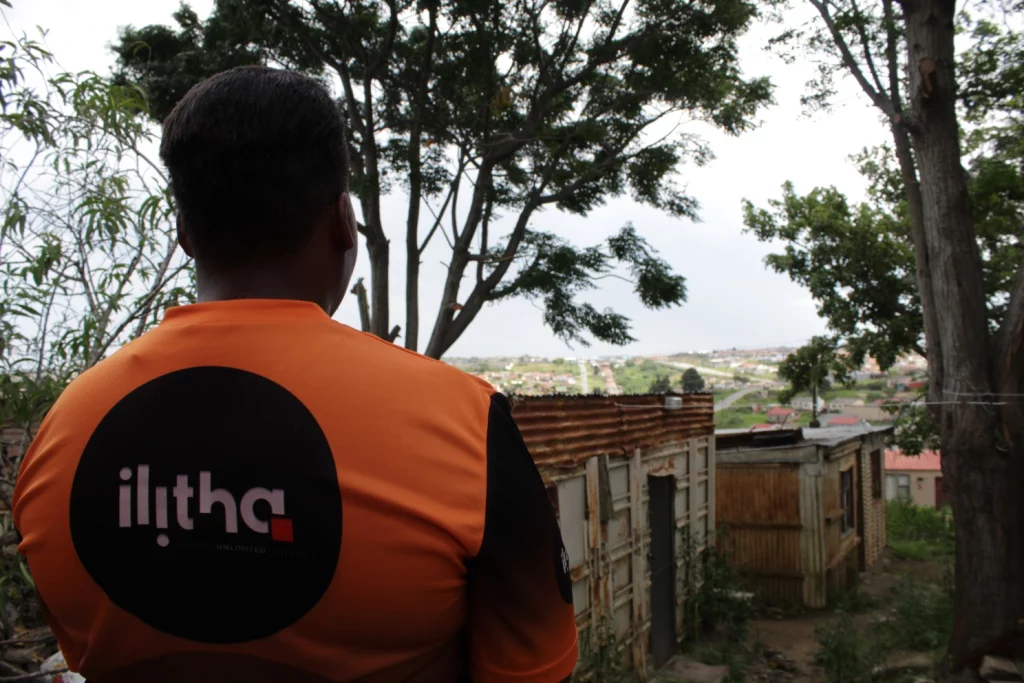
Vuyani Jarana, chief executive officer of Ilitha Telecoms, is bringing affordable broadband to underserved townships and rural communities in South Africa. Townships — residential areas historically designated for Black South Africans under apartheid — remain among the areas of the country least served by fixed broadband infrastructure. In a conversation with Phathisani Moyo, he explains why connecting homes is only the beginning — and how education, healthcare and local enterprise could turn internet access into lasting economic opportunity.
A childhood fascination with the invisible
As a boy growing up in South Africa's Eastern Cape province, Jarana was captivated by the voices coming out of a radio. He and his friends wondered how people could speak from inside a box, so they would open discarded sets and try to repair them.
“We wanted to understand how it worked, even though there were no people inside it,” recalls the chief executive officer of Ilitha Telecommunications, a township and rural broadband provider founded in 2019.
Television held a similar pull. One household in his village owned a television and a generator, turning its lounge into an informal cinema where children gathered after football matches to watch films. The room often descended into chaos as the children took over the entire space, Jarana told TechCabal in an interview on Monday.
Today, the former Vodacom executive — whose former employer is a mobile network connecting millions of people across Africa — is building broadband networks for communities much like the one where he grew up. Ilitha aims to connect 600,000 homes, backed by R500 million ($30.4 million) in funding from Absa Corporate and Investment Banking (CIB). In 2025, the company also secured a R420 million ($25.5 million) investment from Meridiam, a European sustainable infrastructure investor, to expand high-speed fibre access to at least 500,000 low-income homes. Fibre rollouts are capital-intensive — a network must reach a community before the first household pays — which is what makes backing from a bank and an infrastructure investor significant for a smaller player like Ilitha.
For Jarana, the objective is not simply to provide internet access, but to make broadband useful enough that people will invest in it, improve their lives and build businesses around it. That means understanding how people live, not just laying fibre and installing routers.
A career he did not plan
Telecommunications was not Jarana's first choice. He had been accepted to study medicine and chemical engineering, but his plans changed when his father died while he was sitting his final high school examinations. As the youngest child in a household left without a breadwinner, he felt responsible for helping support his family.
“I decided not to go straight to university,” he said. “Instead, I looked for a job that would train me while paying me.”
He began his career as a trainee technician at Transkei Post and Telecommunications, a former telecoms operator in the Transkei — one of the apartheid-era homelands that were reintegrated into South Africa in 1994 — in an arrangement that combined formal training with practical work. The organisation paid for his studies, allowing him to earn an income while continuing his education part-time. He later joined Vodacom, moving into strategic and leadership roles, before taking up a position at South African Airways (SAA), the national flag carrier.
His engineering background taught him to break problems into manageable parts. Corporate life taught him that a company's assessment of its own performance can differ sharply from customer's experience.
“When you work on the operations side, it is easy to look at your own standards and assume that you are doing well,” he said. “But when you manage customer experience, you begin to see the gaps.”
A company can invest in infrastructure and design service standards, yet customers judge it on whether the connection works when needed, whether the price is affordable and whether the service is reliable. That distinction would shape Ilitha's approach to underserved communities, where simply offering a cheaper version of a product designed for wealthier households may not be enough.
Building for the way people live
After leaving SAA, Jarana returned to a opportunity he had considered before joining the airline. He brought colleagues together to address a gap in the telecommunications industry: demand for broadband was growing, but many township and rural households lacked access to reliable, high-capacity connections. It is a gap with a wider backdrop: in South Africa, fixed-fibre investment has in recent years been concentrated largely in metropolitan areas and higher-income suburbs.
The Covid-19 pandemic exposed the problem. As work, education and everyday services moved online, some households found their connections too slow or unreliable to support even a Microsoft Teams call.
Pricing presented another barrier. Traditional mobile data models often reward customers who sign long-term contracts or buy large bundles upfront, while those with less money to spend can end up paying more per gigabyte and have fewer options for reliable broadband.
Ilitha was built around a different proposition: affordable, dependable connectivity designed around how people actually use their homes and neighbourhoods.
Over 18 months, the company expanded into 27 township and peri-urban communities across the Eastern Cape and KwaZulu-Natal provinces. The Absa funding will support its next growth phase, but Jarana says expansion must remain financially sustainable.
“We have an ambition to connect 600,000 homes within a defined period, but we must do it through financially practical phases that bring more households online within the right commercial structure,” he said.
Each community has different population densities, connection costs and infrastructure requirements. Jarana cautioned that expanding too quickly without a viable business model could leave the company with an expensive network it cannot maintain.
“There is growing interest in the township market, and some entrants may approach it as a land grab,” he said. “As a smaller player, we are comfortable choosing the areas where we believe we can build a strong proposition.”
For Ilitha, success depends on whether customers can use the service consistently and whether the economics work for both the household and the business.
The neighbourhood is part of the network
One answer is Ilitha's nomadic broadband model, which keeps customers with an active pass connected across participating homes rather than tying access to a single address.
“A nomadic service builds on that neighbourhood effect and also allows us to address some of the needs usually associated with mobile broadband,” Jarana explained.
The model reflects how people move between neighbours' homes and spend time within their communities. Instead of treating broadband as a service confined to one household, Ilitha allows its network to serve customers across participating homes.
Prepaid connectivity presents a separate challenge. A household may not be able to recharge every week, even though its router remains part of the installed infrastructure. Ilitha asks customers to keep their routers switched on so that others can benefit from the network — an approach that helps the company recover infrastructure costs while extending the network's usefulness.
Affordability alone, however, does not guarantee regular use. Customers also need reasons to keep paying for the service.
“If someone only uses the internet for WhatsApp and a few other basic activities, many products can meet that need,” Jarana said. “But when a household uses broadband for streaming films and television, educational content for children, or security cameras, the value of a high-capacity connection becomes much clearer.”
Such activities encourage customers to recharge regularly, and they explain why Ilitha wants to build services around connectivity rather than simply sell internet access.
“We have come to see use cases as part of the social contract between us and our customers,” he said.
What happens after the router is installed
Jarana wants Ilitha to support services that create jobs and widen access to opportunities that are often easier to find in wealthier communities.
Education is a priority. Children in township and rural households hold ambitions similar to those of their peers elsewhere, but many lack access to additional learning support, and online tutoring can be expensive even as unemployed teachers and graduates look for work. Ilitha is exploring partnerships to provide curriculum-aligned content for learners from Grade 1 to Grade 12, alongside platforms that could help teachers operate as independent service providers.
“Children in these communities have the same aspirations as children anywhere else,” Jarana said. “They want to become doctors, engineers, scientists, presidents and company leaders. They should not have to rely on chance to get the coaching and support they need.”
Healthcare is another potential application. Ilitha says it is working with TruMD, a South African virtual healthcare provider, to enable on-demand doctor consultations. The broader idea is to make broadband a gateway to useful services while creating opportunities for local businesses and skilled workers.
Building the network itself has required close coordination between local businesses and larger contractors. Jarana said Ilitha initially considered outsourcing more construction work but learned that connecting homes at scale requires continued involvement in the communities where it operates.
“You cannot outsource the work and walk away,” he told TechCabal.
The next challenge is maintaining the network efficiently. Ilitha is developing digital-twin capabilities — virtual models that mirror physical equipment and its live behaviour — to monitor routers, assess network performance and identify why devices go offline. Such tools could help reduce maintenance costs as the business grows.
Jarana insists that social impact must go hand in hand with commercial discipline. “It is not charity,” he said. “If pricing and delivery are designed properly, people are willing and able to pay for a service that is accessible and useful, while the business can still make a margin.”
Connectivity cannot stop at the town boundary
Jarana believes rural connectivity requires greater infrastructure investment that allows smaller internet service providers and local entrepreneurs to reach communities that are expensive to serve. Satellite services could help where fibre is unavailable, provided prices are affordable; Ilitha views them as potential enablers rather than direct competitors.
He called on government and development finance institutions to help drive digital transformation by using schools, clinics, hospitals and police stations as anchor customers for fibre networks. Their demand, he argued, could help justify the initial investment while the same infrastructure serves surrounding households and businesses.
“A young person or locally owned business should be able to use that infrastructure to connect 200 or 500 homes and build a viable local business,” Jarana said. The missing pieces in many areas, he added, are the underlying infrastructure and financing models that make such businesses possible.
The near-term indicators for Ilitha's model will be practical ones: the pace at which committed funding converts into connected homes through the financially practical phases Jarana describes, and whether partnerships around education and healthcare move from exploration into services people use daily.
He applies the same thinking to education. South Africa's universities cannot accommodate every high school graduate, and building more campuses will not be enough. Online learning could widen access, but only if students have reliable connectivity and quality teaching rather than a digital reproduction of the emergency arrangements used during the pandemic.
“If we do not act now, we will face the same questions in 10 or 15 years about what opportunities are available to the children coming through the system,” he said. “We need to start building those opportunities today.”

