The Strategy of Public Retaliation Trump Is Using Against His Critics
Key Takeaways
- •Federal agents from Homeland Security Investigations searched Rep. Ilhan Omar's Washington home reportedly for refugee paperwork completed by her late father, and she has not been charged with a crime.
- •Trump denounced Omar as 'totally crooked' at a Youngstown, Ohio rally the same day as the search, while the crowd chanted 'deport.'
- •Reuters reporting cited in the article says a cross-agency task force has coordinated retribution against at least 470 targets, including 128 fired federal workers and 112 revoked security clearances.
- •The article connects the Omar search to a broader pattern of actions involving James Comey, Letitia James, Lisa Cook, journalists Don Lemon and Georgia Fort, and threats against federal judges.
- •Courts have so far resisted several of these actions, with grand juries declining to indict Letitia James and the Supreme Court blocking Trump's attempt to fire Lisa Cook.
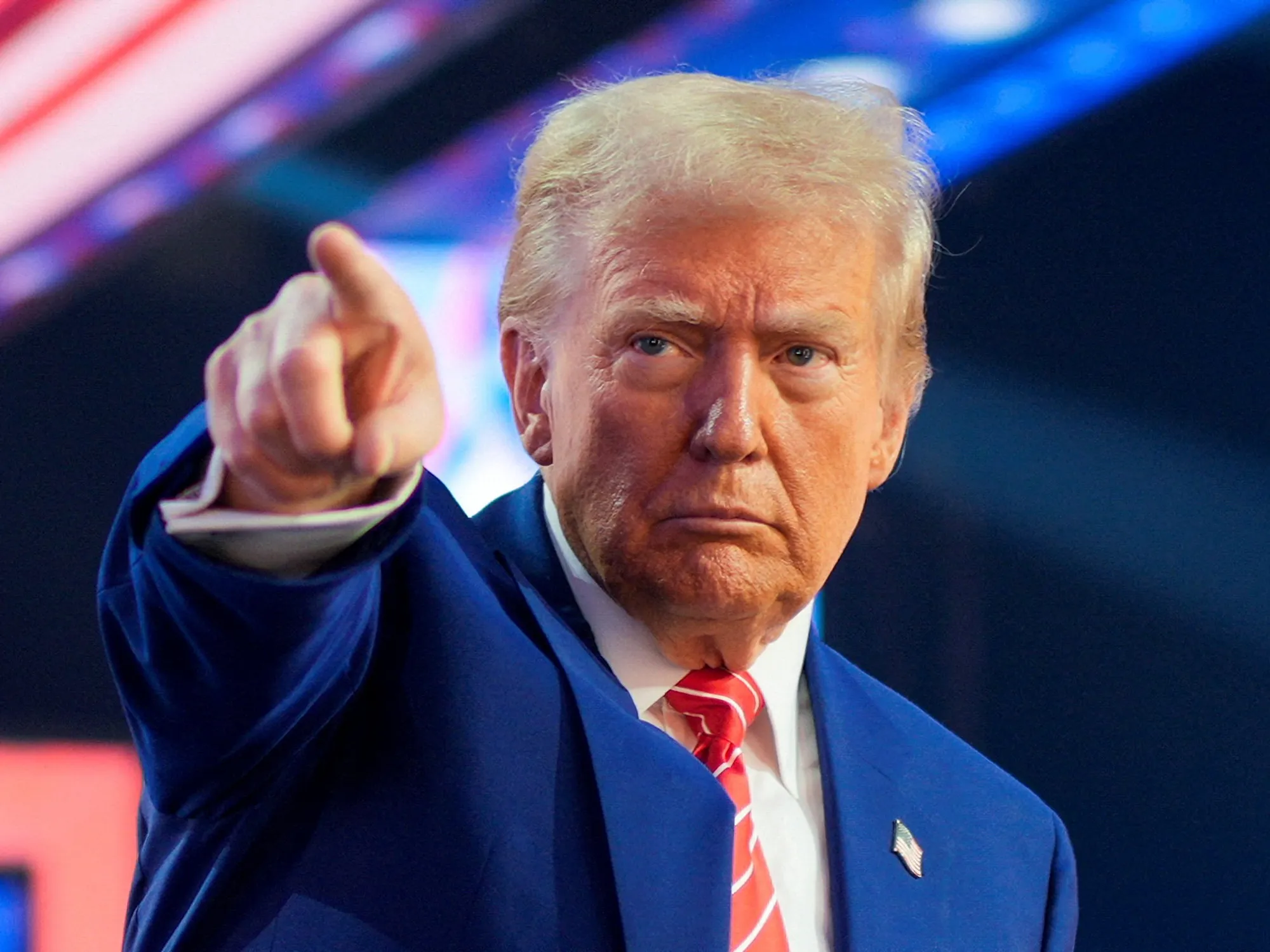
The early stages of authoritarian repression do not always involve tanks in the streets. More often, a government targets a small number of people publicly and visibly, sending a warning to everyone else. The raid on Rep. Ilhan Omar’s home, along with other actions described in this article, is presented as an example of that strategy.
The method has a long history. On March 14, 1757, King George II ordered Admiral John Byng executed by firing squad on the quarterdeck of HMS Monarch in Portsmouth harbor after Byng lost a battle off the coast of Minorca. Two years later, Voltaire incorporated the episode into Candide, in which a sailor asks why Byng was executed. The answer was: “In this country, it is good to kill an admiral from time to time, to encourage the others . Pour encourager les autres .”
The logic is straightforward: choose a few people, make examples of them and spread fear across the wider population. It can influence public behavior without the expense of maintaining an army of secret policen
The article argues that President Donald Trump has used this approach since taking office and employed it again against a member of Congress three weeks before an election. Reports said Homeland Security Investigations, a division of U.S. Immigration and Customs Enforcement, searched Ilhan Omar’s home in Washington for paperwork her late father completed when she was a child refugee. Omar has not been charged with a crime, and ICE has not explained the purpose of the search. Reports on the search included NBC News and CBS News.
That afternoon, Trump called Omar “totally crooked.” Later that night, at a rally in Youngstown, Ohio, he described the country she came from as “one of the worst countries anywhere on the planet” while the crowd chanted “deport.” NBC News reported on Trump’s comments.
The article says the administration had apparently been seeking ways to target Omar since March. In an interview with a right-wing podcaster, Vice President JD Vance said Omar had “definitely committed immigration fraud” and said Stephen Miller was considering “how do you go after her, how do you investigate her, how do you build a case.” Fox News reported on Vance’s claim.
Miles Taylor, a former chief of staff at the Department of Homeland Security, previously told the article’s writer on a radio and television program that when Trump targeted him, James Comey and others, the raid itself was the punishment. A conviction or even a trial is not necessary to inflict financial and emotional damage or frighten colleagues into silence. Subpoenas, threatening letters from lawyers and searches can produce hundreds of thousands of dollars in legal bills and months of anxiety.
The article describes this as an increasingly routine practice, extending from prominent public figures to a single mother of two in New Jersey. Joanne Carducci, who posts as JoJoFromJerz on Substack, wrote last month that lawyers for the president and first lady spent the first half of the year sending her letters demanding a retraction, an apology and money over her online criticism of Melania Trump. In her account, published on Substack, Carducci described worrying about her children, home and livelihood. The article argues that many other writers and commentators may have received similar threats but never disclosed them, particularly when confidentiality was demanded.
The article lists several other cases it associates with the same pattern:
- James Comey has been indicted twice, most recently over a photograph of seashells posted on social media. Six months after he was charged, he had not been arraigned and was not expected to appear until January of the following year. The Justice Department also fired his daughter from her position as a federal prosecutor in Manhattan. MS NOW reported on the delayed arraignment.
- Letitia James, the New York attorney general who secured a fraud conviction against Trump, was indicted on mortgage-fraud charges in October. After the case was dismissed in November, Deputy Attorney General Todd Blanche brought the same case before two additional grand juries over two weeks; neither indicted her. The article says Federal Housing Finance Agency Director Bill Pulte is now pursuing action against her. Reports on the grand-jury proceedings appeared at NBC News and NBC News.
- Lisa Cook, the first Black woman to serve as a Federal Reserve governor, remained in office after the Supreme Court blocked Trump’s attempt to fire her. The article says Trump later signed an order requiring her to appear at a closed-door hearing on November 5, two days after the election. Law & Commentary reported on the dispute.
- Senator Adam Schiff had to establish a legal-defense fund — a vehicle that lets officeholders cover legal costs through private donations — to address the consequences of actions directed at him.
- Cassidy Hutchinson, who was 25 when she testified before the January 6 committee, is being pursued by the Justice Department’s Civil Rights Division, according to the article.
- After Trump targeted former CIA Director John Brennan, a public critic of the president, two prosecutors quit in succession. The case was then staffed with military lawyers and a former clerk to Judge Aileen Cannon.
- Davey Hearn, a three-time Olympian, was arrested after touching the Reflecting Pool, which Trump had hired a donor and friend to repaint. Jeanine Pirro, the federal prosecutor for the District of Columbia, indicted Hearn on a felony carrying a potential 10-year sentence. His lawyers later asked inspectors general to investigate what they called a “nightmare.” ABC News reported on the indictment, and NBC News reported on the request for an investigation.
The article says the press has faced similar treatment. Don Lemon and Georgia Fort, two Black journalists, were arrested in January at Attorney General Pam Bondi’s direction while covering a protest at a St. Paul church. A federal magistrate had previously declined to sign the warrant, citing a lack of probable cause. Prosecutors later acknowledged that the sworn allegation that the journalists were “chanting with agitators” was false, but their motions to dismiss remained pending and their legal bills continued to grow. Coverage appeared at Minnesota Reformer and Yahoo News.
Trump also pursued George Stephanopoulos and ABC, which paid $16 million to settle the matter. The article says Trump subsequently turned his attention, with the involvement of Brendan Carr, the chairman of the Federal Communications Commission, toward ABC’s Jimmy Kimmel. As of Friday, the Justice Department had issued antitrust demands to all five television networks after they briefly suspended pool coverage following the White House’s ban on CNN. A congressional statement on the issue is available from Rep. Brad Friedman’s office, while NBC News reported on the Justice Department inquiry.
The article cites Reuters reporting that the Trump administration established a cross-agency task force, meeting since May of the previous year, to coordinate punishment of perceived enemies. Reuters’ Pulitzer Prize-winning reporting counted at least 470 targets of retribution by the previous November, including 128 federal workers who were fired and 112 security clearances that were revoked. The nonprofit Protect Democracy maintains a broader retaliatory-action tracker. The article’s source is Alternet.
The strategy, the article argues, is not historically new. After the Reichstag fire in 1933, Adolf Hitler opened the Dachau detention facility and imprisoned several thousand left-wing commentators, politicians and journalists, including Carl von Ossietzky, who was later awarded the Nobel Peace Prize. Joseph Stalin used the 1934 murder of Sergei Kirov as a pretext for show trials intended to intimidate party officials and newspaper editors who might oppose him.
In 2003, during the early years of what later became Vladimir Putin’s dictatorship, Putin imprisoned one billionaire oligarch, Mikhail Khodorkovsky, after which other oligarchs fell into line. When some media outlets challenged Putin, journalist Anna Politkovskaya was shot dead in the elevator of her apartment building, and the article says the Russian press stopped speaking out. Background references include the Reichstag Fire Decree, Carl von Ossietzky and Anna Politkovskaya.
The article also compares the situation with Senator Joe McCarthy’s anti-communist campaign. McCarthy did not succeed in sending people to prison for being communists, but, according to the article, he and chief counsel Roy Cohn publicly destroyed the careers of several people, causing thousands of teachers, screenwriters, diplomats and union organizers to remain silent. The writer discusses that history in The Last American President, available through Amazon, and in the PBS program Under Threat.
The writer recalls experiencing a less severe version of the same pressure while working as a reporter and morning news anchor at WITL-AM/FM in Lansing in the late 1960s and early 1970s, when it was the leading station in Michigan’s capital. A state police officer and a federal agent came to the newsroom and said they were about to make a mass arrest at a house occupied by young people who had stopped paying federal taxes to protest the Vietnam War. They asked the newsroom not to report the arrests because they did not want to encourage the movement.
After the officers left, the writer and the news director argued for several hours. The news director ultimately decided not to publish the story. No explicit threat was made, but the writer says that two men with badges and the power to make life difficult had asked for a favor, and the newsroom complied. The experience remained with the writer for more than 50 years.
The article argues that if a polite request could influence a newsroom in 1970, a pre-dawn search of a congresswoman’s home could affect every reporter, prosecutor, professor and civil servant watching the news.
Federal judges, described as one of the few forces capable of stopping Trump, have also faced threats. The U.S. Marshals Service recorded 564 threats against federal judges in fiscal year 2025. In Rhode Island, U.S. District Judge John McConnell was called a “monster” and a “lunatic” by Trump and his allies after blocking a funding freeze. Marshals told McConnell they had identified at least six credible death threats.
U.S. District Judge Esther Salas has warned colleagues about the consequences of political rhetoric. In 2020, her 20-year-old son, Daniel, opened the door of the family’s New Jersey home to a Trump supporter wearing a delivery uniform. The man had written that Salas was a “lazy and incompetent Latina judge appointed by Obama” before shooting Daniel dead. Coverage of the attack appeared at TheGrio.
The article concludes that the objective of such intimidation is a quiet country: one in which a prosecutor does not pursue a powerful donor, a reporter does not publish a story, a professor does not sign a letter, a grand juror avoids an inconvenient case and a judge considers the safety of her family before ruling.
It also says the courts have so far resisted. Three Virginia grand juries declined to indict Letitia James. A Minnesota magistrate refused to sign the warrant for Don Lemon. Judges in Alexandria rebuked prosecutors from the bench. Career lawyers in Florida left a grand-conspiracy case rather than attach their names to it. The Supreme Court ruled that Trump could not fire Lisa Cook at will. In the weeks ahead, several already-scheduled moments will test that resistance: Lisa Cook’s closed-door hearing on November 5, Comey’s expected arraignment in January and the still-pending motions to dismiss in the Don Lemon and Georgia Fort case.
The article warns, however, that historical examples show courts can eventually weaken after legislatures and much of the press have been intimidated. It concludes that, in the writer’s view, the only way to prevent that outcome is for Democrats to regain control of Congress and use subpoena power to investigate and expose what the article calls a fascist scheme.

