Idaho emerges as ground zero in a 'spiritual battle' between right and far right
Key Takeaways
- •Wall Street Journal correspondent Robbie Gramer reports that Idaho's central political contest is between the right and the far right within the GOP, rather than between Democrats and Republicans.
- •Idaho's recent population boom, driven mostly by arrivals from other Republican-leaning states, has made the state's politics more conservative.
- •The Idaho Freedom Foundation has targeted lawmakers it considers insufficiently conservative, and State Rep. Jack Nelsen was censured by his own party after being singled out by the group.
- •Hard-line anti-immigration policies have created labor shortages for Idaho's dairy and ranching industry, which generates about $4 billion annually, and moderate voters removed four hardliners in this year's GOP primaries.
- •Far-right legislator Clint Hostetler, who describes the conflict as a 'spiritual battle' against forces including 'extreme leftist Marxists' and 'woke corporations,' is running for reelection in a race seen as a test of the GOP's internal struggle.
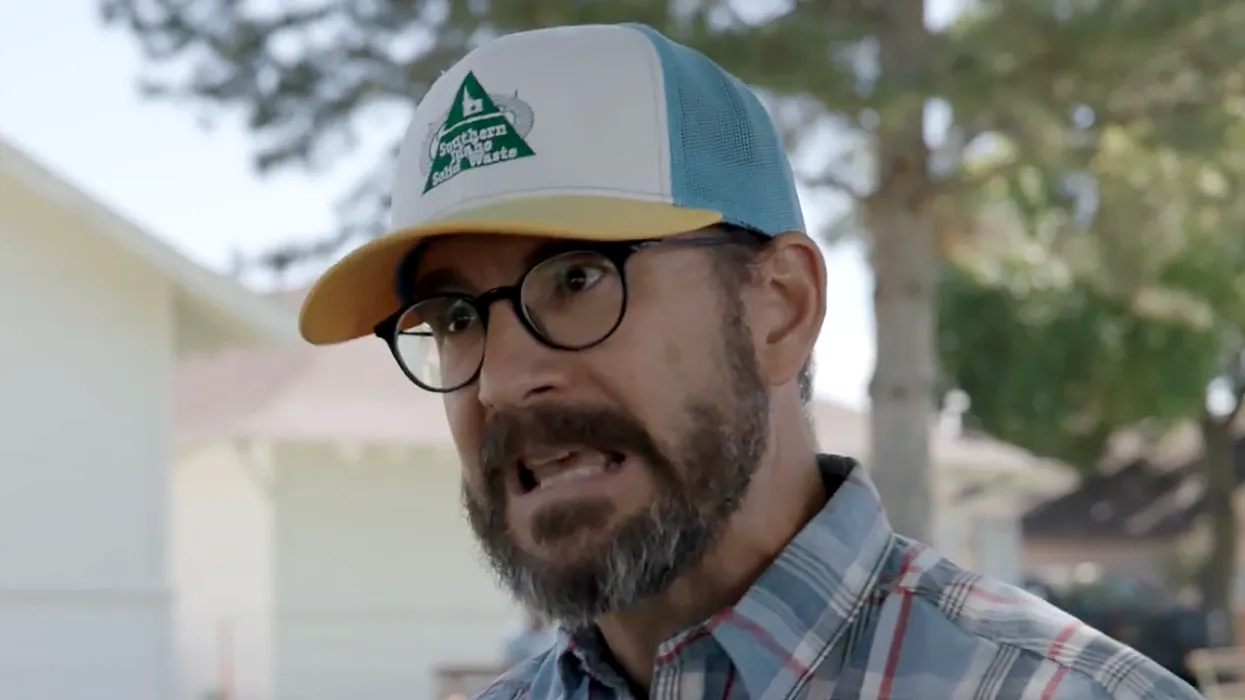
A Wall Street Journal series that sends reporters back to their home states to take the political pulse of Americans outside New York and Washington, D.C. has landed in Idaho, where correspondent Robbie Gramer found the state's defining contest is not between Democrats and Republicans, but between the right and the far right.
"Idaho, deeply Republican and mostly rural, is about the furthest you could get from a battleground state," Gramer wrote in his report.
Idaho has seen a population boom in recent years, but most of the growth has come from states that were already red, and its politics have only grown more conservative as a result. The central debate among Idaho Republicans, Gramer found, is whether to stick with the traditional GOP values the state has long lived under or to go full MAGA.
"The states are where the battle has to rage," said Clint Hostetler, one of those far-right Republicans, who is running for reelection in the state legislature. Hostetler, a transplant from northern California, believes the state is in the throes of a "spiritual battle."
"We're in a spiritual battle that manifests itself politically and socially like never before," he said.
Asked by Gramer who they are fighting, Hostetler listed the "extreme leftist Marxist," "Satan" and "woke corporations."
"We have to realize there is somebody working against us at certain levels," Hostetler said.
Figures like Hostetler leave some longtime Republicans feeling "politically homeless." State Rep. Jack Nelsen admitted it is "tough" being a Republican in Idaho today. "I haven't even signed the Republican platform," he said.
Speaking with Gramer while fishing, Nelsen described himself as more of a Ronald Reagan Republican who believes in "business and excellent education." He blames "political refugees" coming into Idaho and trying to force their ideas on his party and his state.
"They're very active politically and very much to the right," Nelsen said. "The rest of Idaho, the old 'leave people alone and respect them for what they believe whether you agree with it or not,' that's kind of gone by the wayside."
Nelsen has faced backlash from his own party since the Freedom Foundation, a far-right lobbying group, began trying to take down lawmakers it did not consider conservative enough. Gramer highlighted a clip of an Idaho Freedom Foundation video from Nov. 2025 claiming that the state is somehow "under threat always from becoming the next blue state."
Such fears have little grounding in history: the last time Idaho voted for a Democrat for president was Lyndon B. Johnson in 1964. Before that, the state supported Harry Truman and Franklin D. Roosevelt in the 1930s and 40s, but apart from Johnson, Idaho has not gone blue in a presidential race in 78 years.
Nelsen was censured — a formal rebuke — by his own party after the Idaho Freedom Foundation targeted him. The group declined to comment, telling Gramer that it does not speak to the media. Its policy agenda, however, is now having a major impact on the state's biggest business. Idaho's industry, spanning both dairy and ranching, generates around $4 billion every year, but under far-right anti-immigration policies, producers cannot find labor. Dairy and ranching both depend on manual labor, which is why immigration policy has become a bottom-line concern for producers rather than an abstract political debate.
Dairy farmer David Silva said a legislator in his district lost her seat after taking such a hard anti-immigration line that it began causing problems for local farmers and ranchers. More moderate voters, meanwhile, kicked out four hardliners in GOP primaries this year because of the harm they inflicted on the cattle industry.
The GOP's internal battle in Idaho will likely grow worse as more far-right Republicans continue moving to the state. The newcomers keep arguing that Idaho could somehow go far-left, while residents with generations of roots in the state prefer a more socially libertarian policy approach married to capitalism. Hostetler's own reelection campaign now stands as one of the next tests of that intra-party struggle.
This article is based on reporting originally published by Alternet.

