DNC Accuses ICE of Circumventing Court Order by Producing Press Clippings in FOIA Dispute Over Polling Place Plans
Key Takeaways
- •ICE released 576 pages of already-public press clippings containing no internal agency deliberations as its first production in response to the DNC's FOIA lawsuit.
- •Federal Judge Beryl A. Howell ordered ICE to produce at least 1,000 pages per month starting in July, after the agency had not released a single responsive page since the DNC's October 2025 request.
- •The DNC's FOIA request explicitly instructs ICE to exclude stand-alone news articles and press clippings that do not contain discussion by agency officials.
- •Homeland Security Secretary Markwayne Mullin and Acting Attorney General Todd Blanche have signaled openness to deploying agents to polling places, and DHS has not ruled out arrests at polling locations.
- •ICE agents have reportedly entered active polling places in Texas, California, and New York during recent elections.
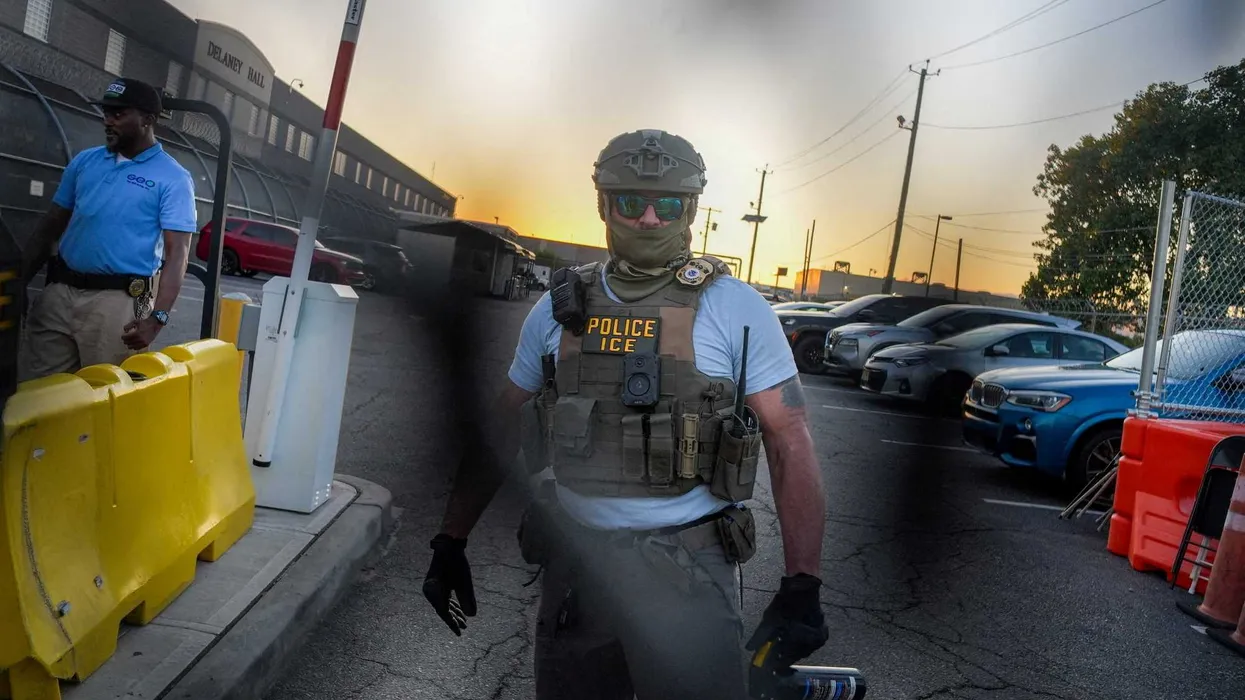
Nearly ten months after Democrats demanded records detailing U.S. Immigration and Customs Enforcement's plans for deploying agents to polling places, the agency has produced 576 pages of press clippings — documents that were already publicly accessible and contained no internal agency deliberations.
The document production came in response to a Freedom of Information Act lawsuit filed by the Democratic National Committee. FOIA, enacted in 1966, is the primary legal mechanism through which the public and political organizations can compel federal agencies to disclose internal records, though disputes over what qualifies as responsive — and how quickly it must be produced — are routinely litigated in federal court. The batch represents ICE's attempt to comply with an order issued last month by Judge Beryl A. Howell, who directed the agency to produce at least 1,000 pages per month.
In a joint status report submitted to the court late Friday, the DNC argued that by handing over a stack of news clippings compiled for the Department of Homeland Security's "daily briefing," ICE "has circumvented the court's orders" and is concealing its plans from the public. The DNC noted that its FOIA request specifically instructs ICE to exclude stand-alone news articles and press clippings that do not contain discussion by agency officials.
Assistant U.S. Attorney Andrew Vaden told the court he was calling "ICE's attention to the proviso," but rejected the DNC's charge that the agency is "queuing… nonresponsive documents before responsive ones" to hide its plans. ICE did not immediately respond to an email seeking comment.
ICE has repeatedly frustrated efforts to uncover internal discussions, despite public statements by Homeland Security Secretary Markwayne Mullin and Acting Attorney General Todd Blanche indicating openness to deploying agents to polling places. The presence of federal law enforcement at polling places has historically raised concerns under the Voting Rights Act of 1965, which prohibits voter intimidation, and civil rights groups have long monitored such deployments. A statement from Homeland Security to Raw Story last month went further, saying the government would not rule out arrests at polling places in response to "an active public safety threat."
The hundreds of pages of clippings delivered as ICE's first production followed the agency's decision to give itself an extra week beyond the monthly quota set by Howell. Noting that ICE had not produced "a single page of responsive materials" in response to the DNC's October 2025 request — with the 2026 midterm elections less than four months away — Howell's July 13 order directed ICE "to immediately begin processing" responsive materials "at a rate of at least 1,000 pages per month, including the month of July."
The government informed the court last month that ICE was setting August 7 as a deadline "so as to include a greater number of responsive, non-exempt records" in its first production.
The document release also follows ICE's claim in early June that it had zero responsive records, which prompted Democrats to accuse the agency of "a remarkable lack of diligence." The DNC subsequently flagged news reports about the presence of ICE agents at polling places in Texas and California during primary elections in May and June, respectively, as well as Mullin's testimony during his Senate confirmation hearing.
"Shockingly, ICE agents also entered an active polling place in New York to confront a poll worker over a month-old Instagram post addressing the killing of Renee Good," DNC lawyers said in a filing challenging the government's position.

