ICE Bars Employees From Using Meta Smart Glasses on Duty
Key Takeaways
- •ICE policy requires agents to use only agency-issued recording equipment, and personal devices are not allowed while on duty.
- •Reports in March 2026 said ICE and Border Patrol personnel were seen wearing Ray-Ban Meta smart glasses during enforcement actions and protests.
- •The glasses can record video and are designed to look like ordinary eyewear, which raises concerns about covert filming and facial recognition use.
- •DHS requested $7.5 million in April 2026 to research smart glasses built specifically for law enforcement use.
- •Other sectors, including healthcare and aviation, have also imposed limits on personal recording devices for privacy and security reasons.
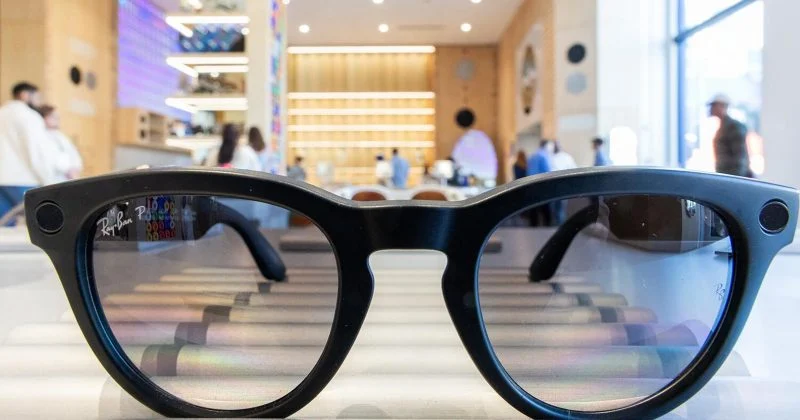
US Immigration and Customs Enforcement (ICE) has instructed its workforce to leave the Meta Ray-Ban smart glasses at home. The agency's policy prohibits employees from using personal recording devices while on duty, and AI-equipped sunglasses capable of quietly snapping photos and streaming video fall squarely within that category.
The restriction itself is not new. ICE's body-worn camera guidelines have long required agents to use only agency-issued equipment, a standard designed to keep evidence chains clean and prevent unauthorized surveillance. Those rules grew out of a department-wide body-camera policy DHS issued in 2021, which ICE implemented as it gradually equipped agents with the devices in the years that followed.
The gap between policy and practice
Despite the official prohibition, reports from March 2026 documented ICE and US Border Patrol personnel wearing Ray-Ban Meta smart glasses during immigration enforcement operations and at protests. The sightings created an awkward contradiction: the agency says agents may wear only non-recording sunglasses on duty, yet its own personnel were spotted wearing glasses with a built-in camera, AI features, and a small indicator light that signals when the device is recording.
Meta and its manufacturing partner EssilorLuxottica designed the glasses to look almost indistinguishable from regular Ray-Bans. The recording light is tiny. Unless a person is standing close and knows what to look for, they would have no idea they were being filmed. That design choice has already been stress-tested: in 2024, university students demonstrated a system that paired the glasses with facial-recognition services to identify strangers in real time, showing how easily the device can be turned into a covert identification tool.
The policy violation also raises questions about where recorded data ends up. Agency-issued body cameras feed into controlled evidence management systems with audit trails. A personal pair of Meta glasses routes data through Meta's servers, governed by consumer privacy terms written for people filming their dogs, not for federal enforcement actions.
DHS wants its own version
While ICE is telling agents to ditch consumer smart glasses, the Department of Homeland Security (DHS) is clearly interested in the underlying technology. DHS requested $7.5 million in April 2026 for research and development on smart glasses tailored specifically for law enforcement use.
A purpose-built device could, in theory, address the chain-of-custody and data-storage concerns that make consumer glasses problematic. It could also be designed with access controls, encryption standards, and audit logging that meet federal evidence requirements. The open questions from here are whether that funding request survives the budget process, whether it produces a device federal agencies actually adopt, and whether other DHS components follow ICE in writing explicit rules for personal smart glasses.
A broader trend in workplace tech restrictions
ICE is not alone in wrestling with this issue. Healthcare organizations have been implementing similar bans on personal recording devices, driven by patient privacy regulations such as HIPAA. Aviation companies have restricted the devices as well, citing confidentiality concerns around proprietary operations and security protocols.
Meta's Ray-Ban smart glasses, which launched as a consumer product developed in partnership with EssilorLuxottica, were designed for everyday use: taking hands-free photos, getting AI-powered answers to visual questions, and livestreaming to social media. They have also been a commercial success, with executives saying millions of pairs have sold, and EssilorLuxottica has outlined plans to expand production capacity to tens of millions of units annually by the end of the decade. That trajectory is precisely why employers across sectors are now being forced to write policies for a device that looks like ordinary eyewear.
The ban is not a rejection of smart glasses as a concept. It is a rejection of their uncontrolled, unaccountable deployment.

