Hyundai-Posco's $5.8 Billion Louisiana Steel Mill Project Clears Financing Hurdle
Key Takeaways
- •The Port of South Louisiana will hold a public hearing on Wednesday on issuing up to $400 million in bonds to build docks, cargo terminals, and conveyor systems for the Hyundai-Posco Louisiana Steel mill.
- •A Louisiana state court dismissed a lawsuit that had postponed the hearing as premature, allowing the financing process to resume ahead of a potential commission vote on final approval.
- •The $5.8 billion electric arc furnace facility targets commercial operations by 2029 and will produce 2.7 million tons of steel annually, including 1.8 million tons of automotive sheet and 900,000 tons of general-purpose sheet.
- •Domestically produced steel from the mill would shield buyers from the 50 percent US tariff on imported steel, supplying Hyundai Motor Group and other North American automakers with localized automotive steel.
- •Hyundai Steel has already secured buyers for 1.4 million tons of the mill's automotive sheet output, and the group aims to expand its customer base to high-tech sectors including rocket builders, AI data centers, and power generation projects.
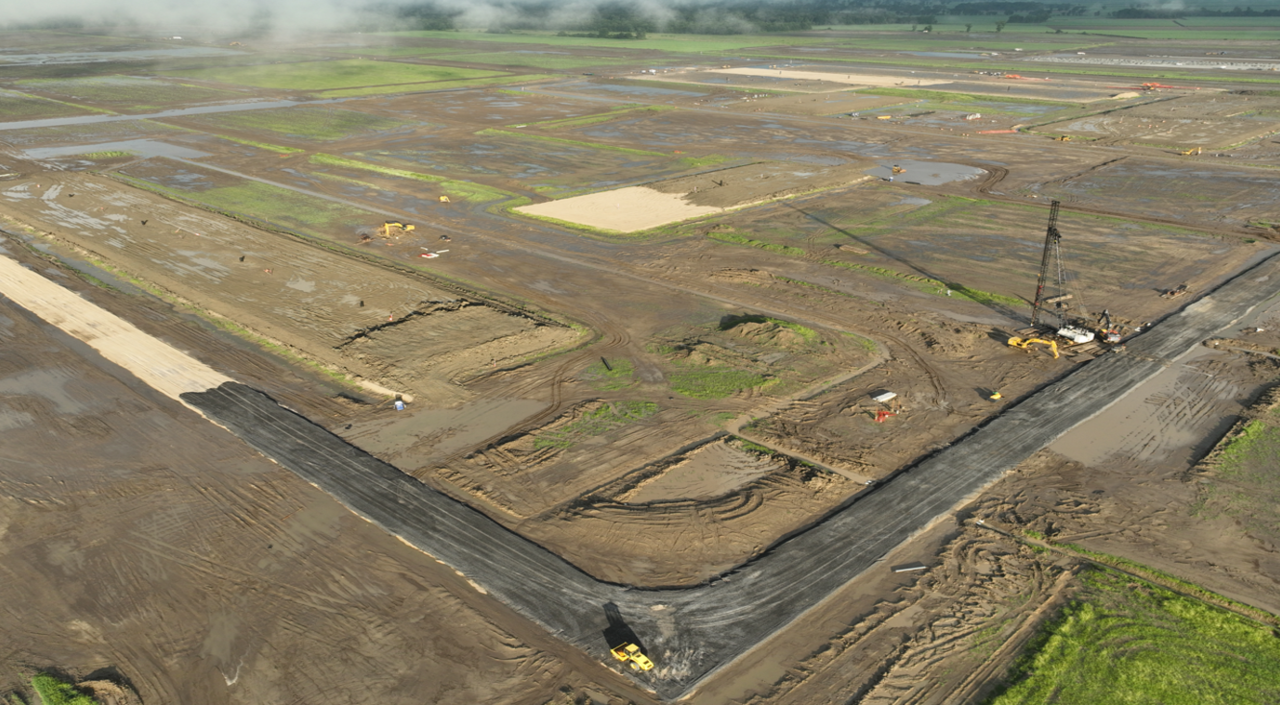
Hyundai Steel and Posco's $5.8 billion electric arc furnace project in Louisiana has cleared a major hurdle, as the Port of South Louisiana moved to revive a $400 million financing program that had been stalled by environmental litigation. With the funding back on track, the South Korean steelmakers are expected to accelerate construction of their US production base — a strategic foothold designed to circumvent the 50 percent tariff the United States imposes on imported steel — with commercial operations targeted for 2029.
Port financing back on track
According to media reports on Sunday, the Port of South Louisiana will hold a public hearing at a special port commission meeting on Wednesday on issuing up to $400 million in bonds to build port facilities for Hyundai-Posco Louisiana Steel. Bond issues of this kind are a standard financing mechanism for large public infrastructure projects in the United States.
The hearing was originally set for the commission's regular meeting on Nov. 17, but residents and environmental groups filed a lawsuit alleging that the port authority failed to properly notify the public before issuing the bond. On Nov. 16, a Louisiana state court granted a temporary restraining order and the hearing was postponed. A day later, the court dismissed the case as premature, noting that the commission had not yet given the bonds final approval. The port authority rescheduled the hearing one week after the dismissal. The outcome of Wednesday's hearing — and any subsequent commission vote — will determine whether the financing moves to final approval.
"This ruling reinforces what we have maintained throughout this process: the Port of South Louisiana acted properly and in accordance with its responsibilities," said Julia Fisher-Cormier, executive director of the Port of South Louisiana, in a statement. "This is great news for Louisiana and allows us to take the next step with this historic project."
The $400 million port bond is part of an up to $900 million bond package approved by the Louisiana State Bond Commission in September, with the remaining $500 million allocated for the mill's production facilities.
A strategic gateway on the Mississippi
Industry watchers say the port is central to the mill's raw material supply chain and production cost competitiveness. According to data released by Louisiana Economic Development last year, Hyundai-Posco Louisiana Steel plans to import roughly 3.6 million tons of iron ore annually once the plant comes online. The iron ore, sourced from countries such as Brazil, will be used to produce direct reduced iron, while the steel scrap fed into the electric arc furnace alongside the DRI will be procured locally in the United States.
The DRI-electric arc furnace route differs from the blast furnace process that has long dominated global steelmaking: instead of smelting iron ore in coke-fired furnaces, it converts ore into a solid, iron-rich feedstock that is melted together with scrap in electricity-powered furnaces.
The $400 million in funding will be used to construct docks, cargo terminals and conveyor belt systems capable of berthing large vessels along the Mississippi River, supporting the unloading and transport of massive iron ore shipments to the mill.
Louisiana also offers a key logistical advantage for the steel mill: the port can accommodate 70,000-ton Panamax-class vessels, and its proximity to major US rail networks is expected to slash freight costs for both incoming raw materials and outbound finished steel. For raw-material-intensive industries such as steel, direct access to a navigable waterway is a major siting consideration, since ocean-going vessels can deliver cargo close to the plant itself.
Targeting a 2029 start
Once fully operational by 2029, the plant will serve as a major buffer against the 50 percent US steel tariff, providing a localized supply of automotive steel for Hyundai Motor Group and other automakers across North America. Because the tariff is levied on steel as it crosses the US border, metal produced domestically offers automakers a route around those added costs — a factor that carmakers with large US manufacturing footprints now weigh heavily in supply planning.
The facility, on a 7.37 million-square-meter site, will produce 2.7 million tons of steel annually — 1.8 million tons of automotive sheet and 900,000 tons of general-purpose sheet.
Kim Hyoung-jin, head of Hyundai Steel's North American business, said during a September press briefing that the company has already secured buyers for 1.4 million tons of the mill's total automotive steel sheet output — including 800,000 tons for Hyundai Motor and Kia's US plants and 600,000 tons for Posco — leaving roughly 400,000 tons of automotive sheet capacity yet to be placed with customers ahead of the planned start-up.
Looking beyond vehicles, Hyundai Motor Group Executive Chair Euisun Chung has previously stated that steel from the Louisiana facility should naturally be incorporated into the group's Atlas humanoid robot. Chung added that the company also aims to expand its high-tech customer base to rocket builders such as SpaceX, as well as AI data centers and power generation projects.
Source: Korea Herald

