Hyundai Motor union launches first full-day strike in 10 years
Key Takeaways
- •Friday's walkout was Hyundai Motor's first full-day strike since 2016, halting both shifts for about 16 hours at the Ulsan, Asan, and Jeonju plants with roughly 39,000 union members participating.
- •Industry officials estimate that 120 hours of accumulated strikes have cost about 55,200 vehicles in output, equivalent to more than 2.3 trillion won, or $1.66 billion, in lost potential sales.
- •The 16th bargaining session ended without progress, and union chief Lee Jong-cheol said members will return to talks only when the company presents an improved proposal, with four-hour partial strikes planned for Monday and Tuesday.
- •The union rejected the company's July offer of an 89,000-won monthly base pay increase, a 350 percent performance bonus, 10 million won in cash, and 15 shares per employee, instead demanding a 149,600-won raise and a bonus equal to 30 percent of 2025 net profit.
- •Beyond pay, the dispute covers AI-related employment guarantees, a fully fixed monthly salary system, a 4.5-day workweek, annual bonuses raised to 800 percent of base pay, and a retirement age of up to 65.
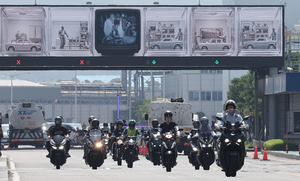
Hyundai Motor’s labor union launched a full-day strike on Friday, halting production at the company’s major plants in South Korea as wage negotiations remain deadlocked.
The walkout breaks a nearly 10-year pause in full-day industrial action at the automaker: it is the first since 2016 in which members of the Hyundai Motor branch of the Korea Metal Workers’ Union have carried out an eight-hour, full-day strike on each shift. The escalation has raised concerns that prolonged labor disruptions could affect the automaker’s effort to revive domestic sales with new models in the second half.
Production at Hyundai Motor’s plants in Ulsan, Asan in South Chungcheong Province and Jeonju in North Jeolla Province was suspended for the entire day Friday. Workers on the morning shift, which normally begins at 6:45 a.m., did not report for work, and employees scheduled for the afternoon shift starting at 3:30 p.m. were also set to stay off work.
With both shifts striking for eight hours, production lines were expected to remain idle for a total of 16 hours. About 39,000 union members, including production and office workers, are taking part.
The union has carried out a series of partial strikes lasting two to six hours since wage talks began on May 6. Friday’s action brought the union’s cumulative strike time this year across two shifts to 120 hours.
Industry officials estimate the strikes have cost the company about 55,200 vehicles in output, based on Hyundai Motor’s hourly production of about 460 vehicles — a figure that corresponds to the 120 hours of accumulated strike time at that rate. That figure amounts to more than 2.3 trillion won, or $1.66 billion, in lost potential sales.
The disruption could widen further, with the union planning four-hour partial strikes on Monday and Tuesday.
Labor and management resumed negotiations for the 16th bargaining session on Monday after a break of more than 40 days following their failure to reach an agreement in the previous round. The latest talks again ended without progress.
“We will return to negotiations only when the company comes up with an improved proposal,” union chief Lee Jong-cheol said, leaving unclear when formal talks will resume.
The two sides remain divided on key issues, including the reinstatement of dismissed workers and an extension of the retirement age.
At the 15th bargaining session in July, the company offered an 89,000-won increase in monthly base pay, a performance bonus equal to 350 percent of monthly base pay, 10 million won in cash and 15 Hyundai Motor shares per employee. The union rejected the offer.
The union is demanding a 149,600-won increase in monthly base pay — about 68 percent more than the increase the company has put on the table — excluding regular seniority-based raises, and a performance bonus equivalent to 30 percent of the company’s 2025 net profit. It is also seeking guarantees on employment and working conditions related to the growing use of artificial intelligence, a demand that extends the dispute beyond pay into how AI adoption affects jobs at the automaker.
Other demands include the introduction of a fully fixed monthly salary system, an increase in annual bonuses to 800 percent of monthly base salary from the current 75 percent, a 4-and-a-half-day workweek and an extension of the retirement age to as high as 65, in line with the eligibility age for the national pension.

