Hut 8 Wins Poolin's Texas Data Centers With $140 Million Bid as AI Reprices Mining Power
Key Takeaways
- •Hut 8 won the bankruptcy auction for Poolin's Pyote and Tarbush sites in Texas with a $140 million bid, with approval pending at a September 29 hearing before the U.S. Bankruptcy Court for the District of New Jersey.
- •Hut 8's second-quarter disclosures show 949 MW of contracted IT capacity, $26.6 billion in estimated base-term contract value, projected average annual net operating income above $1.75 billion, and $7.5 billion in secured investment-grade financing.
- •CoinShares reports fully leased AI facilities in Northern Virginia recently sold for about $27 million per MW, while some energized but unlisted miner capacity is valued at less than $3 million per MW, reflecting a market premium on grid access.
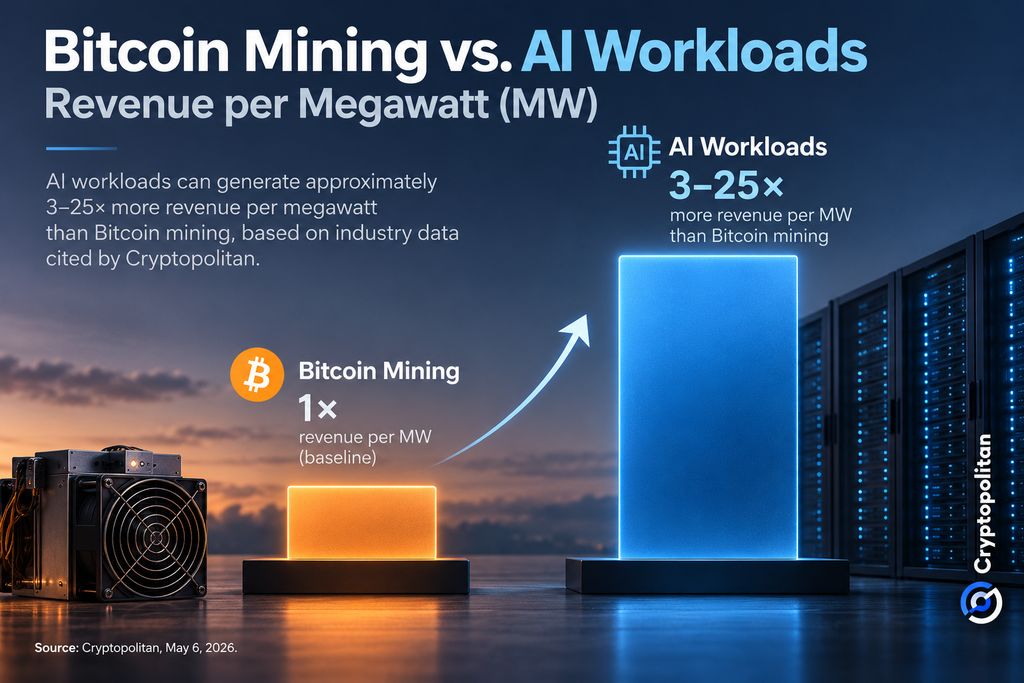
- •Converting mining infrastructure to AI-grade capacity costs an estimated $8 million to $15 million per MW, yet AI workloads can generate three to twenty-five times more revenue per MW than Bitcoin mining.
- •Texas Governor Greg Abbott directed the TCEQ on September 21 to halt data-center permits until ERCOT completes an audit, adding regulatory scrutiny to projects such as Hut 8's Poolin acquisition.
Hut 8 has won the bankruptcy auction for Poolin's two failed Texas data center sites with a $140 million bid, according to Poolin's bankruptcy records.
The transaction still requires approval from the U.S. Bankruptcy Court for the District of New Jersey, where a hearing on the sale is scheduled for September 29.
The value of the deal extends well beyond the land itself. Hut 8 already controls approximately 1.5 gigawatts of deployed power capacity in Texas across sites in operation or under development, and adding Poolin's Pyote and Tarbush assets would enlarge an already significant footprint. The timing matters: connectivity to the power grid has come to be regarded as one of the most important components of both AI infrastructure and Bitcoin mining.
Hut 8's power-first bet is already paying off
Hut 8's second-quarter disclosures show the strategy gaining traction. The company announced 949 MW of contracted IT capacity, an estimated value of $26.6 billion in base-term contracts, projected average annual net operating income of more than $1.75 billion, and $7.5 billion in investment-grade financing secured so far.
That represents a significant departure from Hut 8's earlier focus on miner-centric operations. Cryptopolitan reported in May that the company's first Beacon Point AI lease, covering 352 MW, was valued at $9.8 billion, driving its stock up nearly 32% in a single day. The plan now is clear: secure power first, then direct it toward whichever workload offers the better economics. The Poolin bid applies that playbook to distressed assets, acquiring capacity already tied to the Texas grid rather than building it from the ground up.
Why an energized site now costs more than a permit
CoinShares' Q2 report details why ready access to power has become so valuable. More than 225 restrictions on data center development have been introduced across 30 states, and 151 remain in effect. While the U.S. interconnection queue holds over 2,600 GW of capacity, data centers account for 87% of ERCOT's large-load queue, totaling 410 GW.
A report by CBRE highlights the same supply squeeze, finding that available capacity in North America's four largest data center markets has fallen to its lowest level on record, with Northern Virginia posting just 0.3% vacancy in the first three months of the year.
That scarcity makes an already energized site far more valuable. CoinShares notes that three fully leased AI facilities in Northern Virginia recently sold for about $27 million per MW, while some listed miners' energized but unleased capacity is valued at less than $3 million per MW. The gap helps explain the appeal of Poolin's Texas assets: the market is increasingly placing a premium on grid access and the potential to repurpose sites for higher-value workloads, not merely on the mining equipment they contain.
The math steering capital away from mining
Converting mining infrastructure to AI-grade capacity is expensive. CoinShares estimates costs of roughly $8 million to $15 million per MW, compared with $0.7 million to $1 million per MW for mining infrastructure. The revenue upside, however, provides the justification. Industry data reported by Cryptopolitan indicates AI workloads can generate three to twenty-five times greater revenue per MW than Bitcoin mining, and CoinShares' model estimates AI operations could earn about $1.5 million in annual profit per MW, versus only $0.5 million for mining.
Mining itself endured a difficult second quarter. Bitcoin ended June at $58,400, while listed miners faced a weighted-average ex-tax cash cost of about $75,500 per coin, leaving the sector below cash breakeven overall. Conditions improved by mid-August, however, as Bitcoin recovered and a stronger hash price pushed most operators back above cash breakeven, according to CoinShares.
makes the pivot toward AI about more than escaping a weak Bitcoin market. For miners, the bigger opportunity lies in turning scarce power into contracted compute revenue that could deliver steadier and potentially higher returns.
Texas is watching the grid
Hut 8 said on August 10 that it welcomed Texas scrutiny focused on grid reliability, local resources, and community impacts.
On September 21, Governor Greg Abbott went further, directing the Texas Commission on Environmental Quality to halt data-center permits until ERCOT completes an audit, alongside reviews of grid and water impacts. For the Poolin transaction itself, the next milestone remains the September 29 sale hearing before the New Jersey bankruptcy court.
The pressure is global. The IEA expects data-center electricity demand to roughly double from 485 TWh in 2025 to 950 TWh in 2030, while PwC projects $31.6 trillion in global data-center capital spending through 2050.
Hut 8's $140 million Poolin bid is therefore more than a bankruptcy purchase. It is one transaction in a much larger repricing of power, grid connections, and sites that can be converted into compute capacity.
Source: Cryptopolitan

