Senator Jon Husted Urges Senate Passage of the CLARITY Act for Digital Asset Regulation
Key Takeaways
- •The House passed the Digital Asset Market Clarity Act on June 1, 2026, and the bill is now awaiting Senate action.
- •The proposal would give the CFTC primary oversight of spot digital commodity markets while preserving a limited role for the SEC.
- •The bill includes a possible exemption from certain SEC registration requirements for blockchain projects that are sufficiently decentralized.
- •Galaxy Research lowered its estimate of the bill's chance of passing in 2026 from 50% to 30% because of the difficulty of securing 60 Senate votes.
- •If approved, the legislation could provide clearer U.S. crypto regulations and support the development of regulated trading venues.
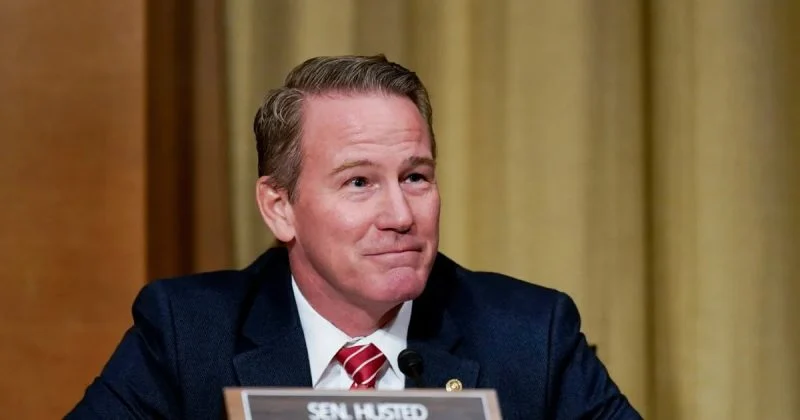
Senator Jon Husted (R-OH) has called on the Senate to advance the Digital Asset Market Clarity Act, publicly endorsing the legislation on July 28 in an effort to resolve the long-standing jurisdictional overlap between the Commodity Futures Trading Commission (CFTC) and the Securities and Exchange Commission (SEC) over digital assets. That ambiguity has driven costly compliance disputes, SEC enforcement actions against major crypto platforms, and decisions by some firms to scale back or relocate U.S. operations.
The House of Representatives has already passed H.R. 3633 on June 1, 2026, and the bill currently awaits action on the Senate calendar. However, securing passage in the upper chamber remains a significant challenge, as the 60-vote threshold required to overcome procedural hurdles has historically made even broadly supported legislation difficult to move forward.
What the CLARITY Act Would Do
Representative French Hill introduced the CLARITY Act on May 29, 2025, with the aim of clarifying which federal regulator has authority over digital asset markets. Under the current framework, both the SEC and CFTC assert overlapping jurisdiction, creating uncertainty for crypto companies operating in the United States. The SEC has largely relied on enforcement actions rather than issuing tailored crypto-specific rules, which has intensified industry calls for Congress to draw a clear regulatory boundary.
The legislation would grant the CFTC primary oversight of spot digital commodity markets—a function the agency does not traditionally perform, as its mandate has historically covered derivatives rather than spot trading—while preserving a defined, limited regulatory role for the SEC. Among its notable provisions, the bill includes a potential exemption for blockchain projects that have achieved a sufficient level of decentralization, allowing them to seek relief from certain SEC registration requirements.
Husted's Prior Digital Asset Efforts and Senate Dynamics
Senator Husted has been active on digital asset policy beyond the CLARITY Act. On March 27, 2026, he endorsed Senator John Boozman's Digital Commodity Intermediaries Act, a related bill that cleared the Senate Agriculture Committee on February 2, 2026, by a narrow 12-11 vote. That slim margin underscores the difficulty of advancing crypto legislation even at the committee level, where members regularly handle commodity regulation. The Agriculture Committee's jurisdiction over the CFTC makes it a key gatekeeper for any legislation expanding the agency's authority.
The full Senate floor poses an even greater challenge given filibuster rules and the complex procedural environment.
Passage Prospects and Analyst Assessments
Galaxy Research recently revised its estimate of the CLARITY Act's chances of passing in 2026 downward from 50% to 30%. The adjustment reflects the difficulty of assembling a 60-vote coalition, particularly on an issue as politically charged as digital asset regulation. The bill also competes for floor attention with other crypto-related measures introduced across both chambers, which has at times fragmented legislative focus.
The Senate has a limited legislative window before the August recess, and the calendar is already congested with competing priorities. Each week of delay reduces the time available for the bill to reach a floor vote in 2026.
Potential Market Implications
If enacted, the CLARITY Act could establish a clearer regulatory pathway for CFTC oversight of spot digital commodity markets, potentially enabling the creation of regulated trading venues that institutional participants have been seeking. The European Union's Markets in Crypto-Assets (MiCA) regulation, which began phasing into effect in 2024, has already provided firms in that region with a comprehensive rulebook, adding competitive pressure for the United States to produce comparable clarity.
The exemption mechanism for sufficiently decentralized blockchains could also influence how projects structure their development and token distribution strategies.
However, Galaxy Research's downgrade to a 30% probability estimate suggests that near-term regulatory clarity remains uncertain. Market participants and industry observers are closely watching two key indicators: whether Senate leadership schedules floor time before the August recess, and whether bipartisan co-sponsors step forward to help close the gap toward the 60 votes needed for passage.

