HUFS Institute of Middle East Studies Selected for Humanities Korea Grants 3.0 Research Project
Key Takeaways
- •The HUFS Institute of Middle East Studies will receive 12 billion won ($8.8 million) in funding from the National Research Foundation of Korea over six years.
- •The project is conducted by a consortium including Myongji University, Dankook University, and Busan University of Foreign Studies research institutes.
- •The research aims to develop a Korean model of Middle Eastern humanities that moves beyond Western-centric frameworks.
- •The project will proceed in two phases, first examining historical factors and then analyzing contemporary geopolitical developments from a Korean perspective.
- •The initiative also includes public outreach programs and scholar training to support long-term Korea–Middle East cooperation.
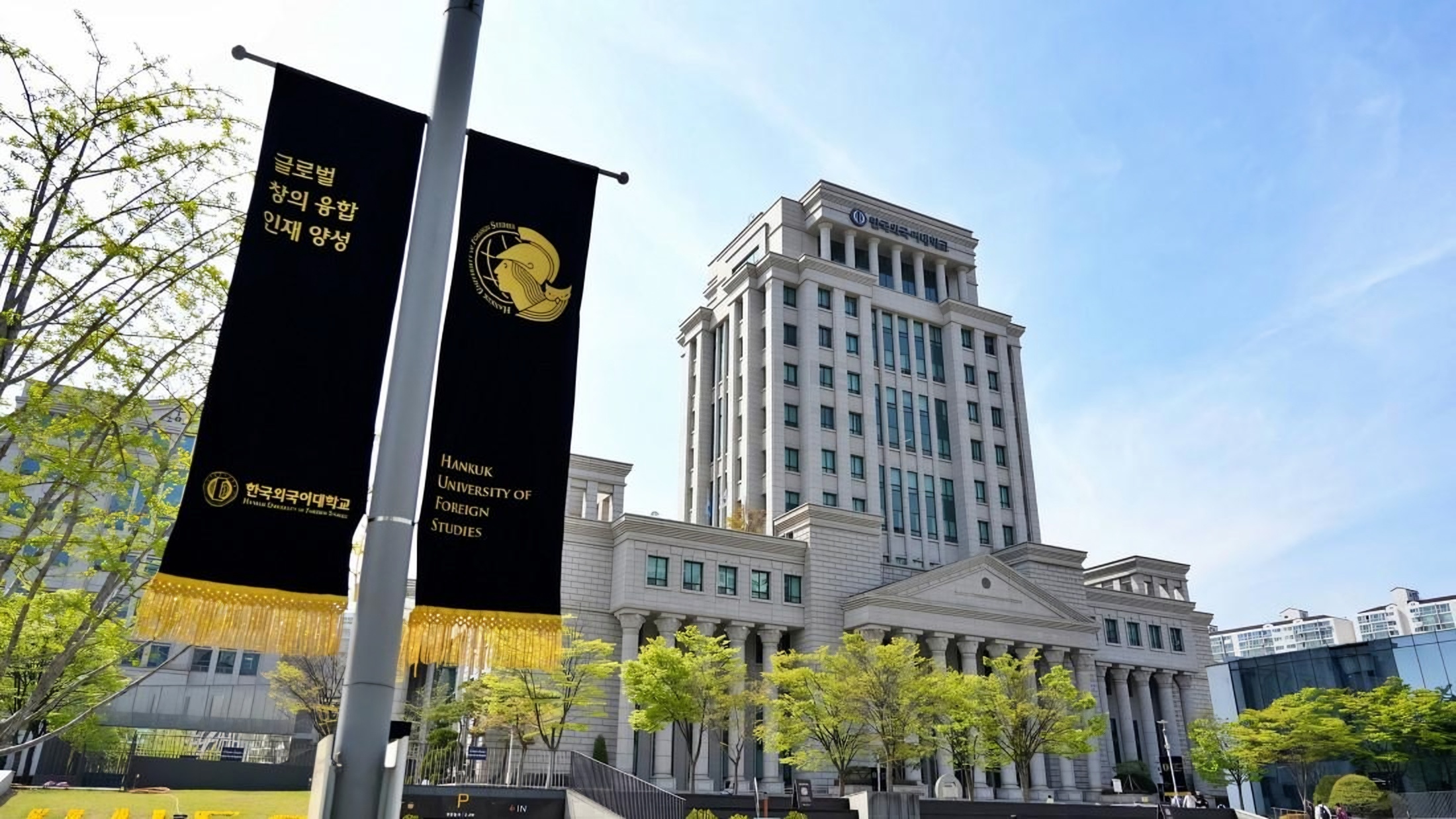
The Institute of Middle East Studies at Hankuk University of Foreign Studies (HUFS) has been selected to carry out a joint research project under the government-led Humanities Korea Grants 3.0 program, the university announced Wednesday.
The Humanities Korea initiative, administered by the National Research Foundation of Korea under the Ministry of Education, is one of the country's flagship funding programs for humanities research, supporting large-scale, multi-year projects at university research institutes.
Under the selection, the institute will receive 12 billion won ($8.8 million) in research funding from the National Research Foundation of Korea over the next six years to conduct joint research with leading Middle East studies institutions in Korea.
The HUFS institute formed a consortium with three partner institutions: the Institute of Middle Eastern Affairs at Myongji University, the GCC Institute at Dankook University, and the Institute of Mediterranean Studies at Busan University of Foreign Studies.
The consortium was chosen for the Humanities Korea Grants 3.0 program under the research agenda "Building K-Middle Eastern Humanities for a Transformed Era: Reinterpreting Social Dynamics in the Middle East and Its Contemporary Adaptations."
The project aims to provide an in-depth examination of changes in Middle Eastern societies and the mechanisms driving them. It is also designed to develop a Korean model of Middle Eastern humanities — one that reflects Korea's distinctive perspective and moves beyond conventional Western-centric frameworks.
The research will proceed in two phases. In the first phase, the project will examine the historical factors behind changes in Middle Eastern societies from a diachronic perspective, laying the theoretical and academic foundation for the research. In the second phase, building on these findings, it will analyze contemporary geopolitical developments and key issues in the Middle East from a synchronic perspective through a Korean lens.
The project will expand the academic scope of Middle East studies through five joint research subprojects involving the four participating research institutes. It will also focus on nurturing and supporting the next generation of scholars who will carry the research forward.
Beyond academia, the project plans to enhance public understanding of the Middle East in Korea and establish a sustainable foundation for Korea–Middle East cooperation through a range of public outreach programs, including public lectures and cultural events. The emphasis on outreach reflects the region's significance to Korea as a long-standing partner in construction, plant engineering, trade and energy.
Established in 1976, the Institute of Middle East Studies is a leading research institution specializing in the Middle East, having conducted a wide range of research projects covering the region's politics, economy, society, and culture. HUFS, founded in 1954 as a foreign language college, is widely known for its specialization in area studies and less commonly taught languages.
From 2020 to 2026, the institute carried out a project under the Research Institute Grants program funded by the National Research Foundation of Korea. Based on its research achievements under that program, the institute was selected as one of the 50 outstanding achievements in the Ministry of Education's 2023 academic and research support programs.
The new grant extends that record, providing funding through the early 2030s, during which the consortium plans to publish its findings and train successor scholars — a pipeline that will shape the next generation of Korean Middle East expertise.
Source: The Korea Times
