Rep. Jared Huffman Warns Trump and MAGA Are Reshaping America into a Christian Nationalist Society
Key Takeaways
- •Representative Jared Huffman stated that the House January 6 committee found a clear link between Christian nationalism and the Capitol attack but intentionally omitted it from the final 845-page report.
- •Huffman alleged that former Representative Adam Kinzinger worried that including the material would allow outlets like Fox News to discredit the entire report, and that draft materials were ultimately destroyed or suppressed.
- •Huffman accused House Speaker Mike Johnson of effectively embedding Christian nationalism into American political life through initiatives such as relocating the Congressional Prayer Breakfast to Statuary Hall and establishing a National Gathering for Prayer and Repentance.
- •Polling by the Public Religion Research Institute indicates that supporters of Christian nationalist views constitute a significant portion of the Republican base, reinforcing the political relevance of Huffman's warnings.
- •Scholars note that key American founders enshrined secular governance in the Constitution through the prohibition on religious tests for office and the First Amendment's Establishment Clause.
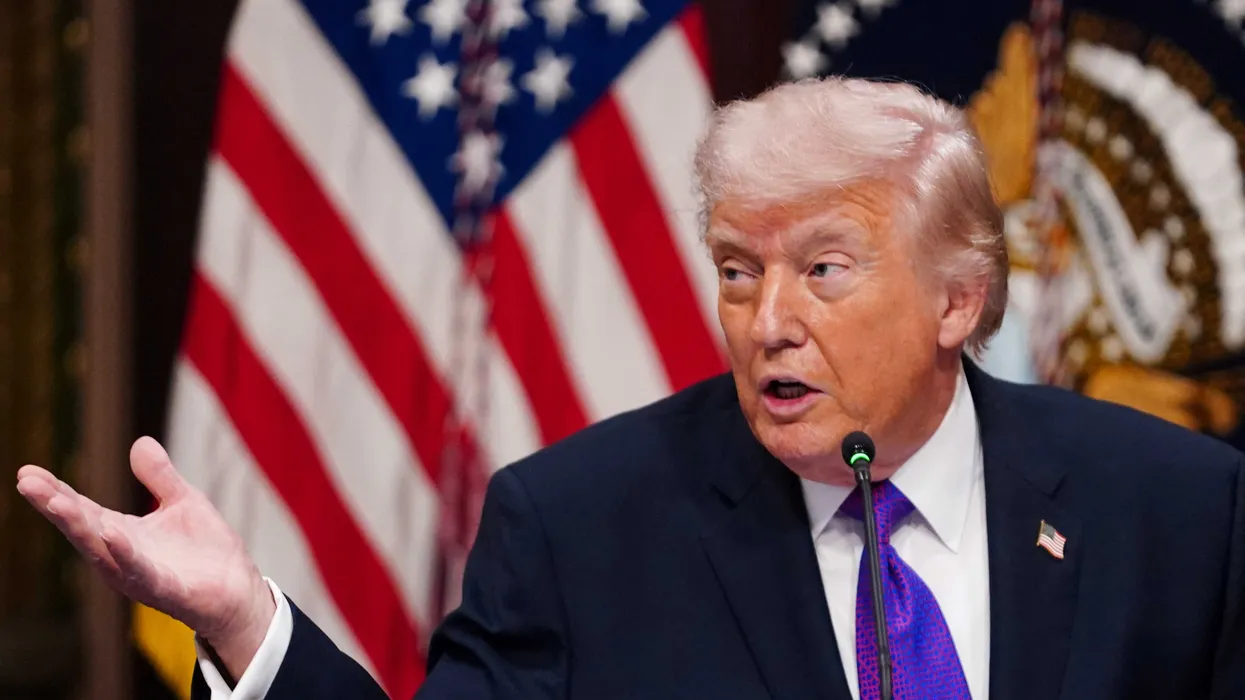
Representative Jared Huffman (D-CA), the only member of Congress to openly identify as non-religious and a co-founder of the Congressional Freethought Caucus, has warned that President Donald Trump and his MAGA movement are steering the United States toward becoming a Christian nationalist society. He further alleged that some prominent anti-Trump figures collaborated with MAGA allies to suppress findings that would have underscored this threat.
In an interview with The New York Times' Annie Karni published Sunday, Huffman revealed that the House January 6 committee identified a clear connection between Christian nationalism and the Capitol insurrection but deliberately chose not to highlight it in their final report. Scholars and watchdog groups have documented extensive Christian nationalist imagery among January 6 rioters, including crosses erected on the Mall, prayer rallies preceding the attack, and signs blending Christian language with political grievances, making the omission a notable gap in the committee's 845-page final report.
"Former Representative Adam Kinzinger, Republican of Illinois [and a member of the Jan. 6 committee], was very cleareyed that Fox News would jump on this and try to use it to disparage the entire report," Huffman said. "But he suggested that with enough of a disclaimer — and by explaining that telling this story is important, doing it in a way that's clear you're not trashing Christianity, you're just being honest about the radicalization and mobilization and the ethos of this riot — there was a way to do that."
Huffman indicated that the material was ultimately suppressed. "It's deep-sixed. Drafts were not kept. That's another mystery here. I don't know if that was the chaos of rushing to finish this report or if there was a deliberate, 'don't leave incomplete work product' edict. Nobody had copies," he said. (The New York Times)
Speaker Mike Johnson Accused of Advancing Christian Nationalism
Huffman turned to House Speaker Mike Johnson, arguing that despite Johnson's widely noted struggles as a legislative leader, the Louisiana Republican has been remarkably effective at embedding Christian nationalism into the fabric of American political life. Johnson, who before entering Congress worked as a constitutional lawyer for the Alliance Defending Freedom, a conservative Christian legal advocacy organization, has previously stated that his worldview is informed by the Bible and that separation of church and state is a "misnomer."
"If you judge him by, 'Has he advanced the cause of Christian nationalism?' he's been wildly successful," Huffman told Karni. "He elevated the Congressional Prayer Breakfast into Statuary Hall; he instituted a new National Gathering for Prayer and Repentance where members go over to the Museum of the Bible and repent for national sins like abortion."
Huffman continued: "He allows a pastor he is close with to bring hundreds of pastors multiple times a year to hear a whitewashed version of American history that is rampant Christian nationalism. People need to understand that as incompetent as he is at governing, he has been powerful and very effective in advancing this Christian nationalist movement."
Pointing to the broader pattern, Huffman referenced Johnson's remarks following the Republican passage of the so-called "Big, Beautiful Bill." "Johnson did an interview in the chapel and claimed he had been down on his knees praying every day. He said the passage of this bill was God's will and God's plan," Huffman said. "There are so many of these things, each of them standing alone might feel like not much. But when you take it together, I feel that the wall of separation is in real trouble." Huffman's invocation of the "wall of separation" echoes the language Thomas Jefferson used in his 1802 letter to the Danbury Baptist Association, a metaphor the Supreme Court has cited repeatedly in First Amendment cases governing the relationship between government and religion.
Broader Reporting on Christian Nationalism Under Trump
Huffman's warnings echo a growing body of reporting on the influence of Christian nationalism during Trump's second presidency. Polling by the Public Religion Research Institute has found that adherents to Christian nationalist views — defined as those who believe the U.S. government should declare the nation a Christian nation — represent a meaningful share of the Republican base, providing a constituency for the policy and rhetorical shifts Huffman describes.
In May, Vox's Christian Paz reported that "the religious right has been ascendant during the second presidency of Donald Trump, and they've harnessed his disdain for rules and norms to blur the lines between church and state."
Paz noted that "inside the White House, the secretary of defense has framed the war in Iran and American military action abroad as sanctioned and guided by God. Outside the government, this alliance between church and state often skirts near the edge of outright idolatry. Conservative pastors are erecting golden statues of Trump (but insisting it does not mirror the infamous golden calf of the Old Testament). They're extending their hands over the president in prayer after comparing him to Jesus and standing by him, with some mild criticism, after he cast himself as an AI-slop Messiah."
In December, it was reported that a high-ranking official in the Office of Planning, Evaluation, and Policy Development displayed a flag associated with both Christian nationalism and the January 6 coup attempt from her office in the Capitol building.
Historical Perspective: Founders Favored Science Over Religion
Speaking to Salon Magazine in March, Dean Caivano, an assistant professor of political theory at Lehigh University and author of "A Politics of All: Thomas Jefferson and Radical Democracy," emphasized that key American founders envisioned a political life guided by science rather than religion. The founders' commitment to secular governance was codified in the Constitution's prohibition on religious tests for public office and, shortly after, the First Amendment's Establishment Clause, which forbids the government from establishing an official religion.
"His 'empire of liberty' offered the potential to dismantle the artificial hierarchies inherited from the past and imbue all aspects of life with the promise of freedom and happiness," Caivano said in 2024. "Although this idealized image of a free and harmonious American society is undeniably marred by the institution and legacy of slavery, overlooking the role of education and science as prerequisites for freedom and equality diminishes our ability to assess the historical and contemporary limits of American democracy critically."

