HTX Genesis Hackathon Concludes After Nearly Three Months, Advancing AI and Web3 Ecosystem Plans
Key Takeaways
- •The HTX Genesis Hackathon attracted more than 200 AI and Web3 projects worldwide and concluded after a multi-stage review process that assessed technical execution, product maturity, real-world utility, and long-term potential.
- •HTX DAO designed the hackathon as the first stage of a long-term ecosystem framework that includes the Genesis Grant and an Ecosystem Collaboration Network to support promising projects beyond the competition.
- •During the event, community members could stake $HTX to receive sHTX and vote on shortlisted projects, connecting token utility directly with project discovery and curation.
- •The hackathon's submission tracks spanned AI trading, AI payments, AI agents, AI wallets, AI infrastructure, developer tools, security, and DeFi applications.
- •HTX DAO plans to expand $HTX utility across governance participation, developer building scenarios, real-world applications including AI payments and wallets, and community engagement activities through the Genesis Program.
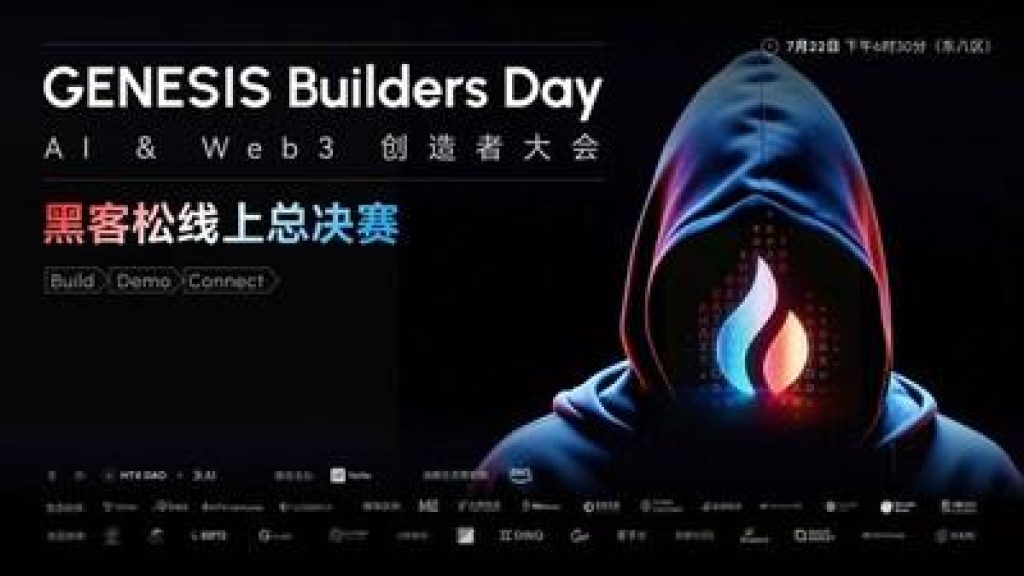
APIA, Samoa, July 24, 2026 /PRNewswire/ — The HTX Genesis Hackathon, co-hosted by HTX DAO and B.AI and organized by TinTinLand, has concluded after nearly three months of competition. The program ran from its launch in Hong Kong through project reviews, Demo Day presentations, and online grand finals, highlighting work by global developers and startups at the intersection of artificial intelligence and Web3.
HTX DAO said the hackathon was not designed as a standalone contest, but as the opening stage of a broader effort to develop a sustainable developer ecosystem. The initiative focuses on project discovery, early-stage funding, ecosystem collaboration, and community governance, while expanding real-world use cases for $HTX as part of the HTX DAO ecosystem. The effort comes as major cryptocurrency exchanges and blockchain platforms increasingly compete to attract developers through structured builder programs, recognizing that long-term ecosystem growth depends on the quality and retention of projects building on their infrastructure rather than on trading volume alone.
More Than 200 Projects Joined the AI × Web3 Competition
The hackathon was launched under the theme “AI × Web3” and attracted more than 200 innovative projects from around the world. The program was built around the view that AI is moving from a productivity tool toward autonomous agents capable of analyzing information, making decisions, and executing complex tasks, while Web3 provides infrastructure for digital identity, asset ownership, value transfer, and open coordination.
According to the announcement, this convergence is creating opportunities for next-generation builders in areas including on-chain asset management, automated trading through AI agents, AI-driven payments, wallets, security, and DeFi applications. The intersection of AI agents and blockchain has drawn growing attention across the crypto sector, with multiple ecosystems launching grant programs and hackathons focused on use cases where smart contracts can serve as execution rails for AI-driven financial activity.
Over the nearly three-month competition, participating teams went through a multi-stage review process that included technical evaluations, live product demonstrations, and final pitch presentations. The judges prioritized technical execution, product maturity, real-world utility, and long-term potential, rather than selecting projects based only on conceptual ideas.
Submissions covered a broad range of tracks, including AI trading, AI payments, AI agents, AI wallets, AI infrastructure, developer tools, security, and DeFi. The projects ranged from end-user applications to foundational tools for developers and the wider ecosystem, demonstrating possible applications for combining AI with on-chain finance, digital asset management, and open collaboration.
From the Hong Kong kickoff to the online grand finals, the hackathon also brought together developers, judges, partners, and community members in a builder-focused program intended to surface early-stage innovations and connect them with the broader ecosystem.
From a Competition to an Ecosystem Framework
HTX DAO said the longer-term value of the hackathon depends on whether promising projects receive continued support after the event ends, allowing teams to develop prototypes into products and projects into ecosystems.
For that reason, the Genesis Hackathon was positioned as a gateway into a developer ecosystem rather than a one-time event. Following the conclusion of the competition, the HTX DAO Genesis Program is expected to build on the projects, talent, and collaborative resources assembled during the hackathon.
The program will use a long-term support framework described as “Hackathon + Genesis Grant + Ecosystem Collaboration Network.” Under this model, the hackathon identifies innovative projects and outstanding builders, providing a venue to validate and present early-stage ideas. The Genesis Grant provides additional support to projects with technical innovation, application potential, and ecosystem value. The Ecosystem Collaboration Network connects technology, community, market, capital, and application scenarios to help projects access resources needed for longer-term development.
HTX DAO said this structure means that a project’s relationship with the organization does not end when awards are distributed. Selected teams may continue to participate in ecosystem collaboration and receive support in areas including product iteration, technical integration, marketing, and community building.
Through this approach, HTX DAO aims to create a growth cycle for builders by discovering projects through hackathons, supporting development through grants, encouraging real-world deployment through the ecosystem network, and bringing new applications and users into the ecosystem.
Community Voting and $HTX Use Cases
As a core part of the HTX DAO ecosystem, $HTX is presented by the organization as deriving value not only from market performance, but also from utility in governance, ecosystem development, and collaborative building.
The HTX Genesis Hackathon introduced a specific use case for $HTX that connected token utility with the developer community. During the event, community members were able to stake $HTX to receive sHTX and vote on shortlisted projects. By combining community input with expert judging, the evaluation process allowed $HTX holders to participate in the discovery and curation of projects rather than only observing the competition.
HTX DAO said the mechanism reflects its long-term vision for governance token empowerment, with $HTX serving not only as a trading asset but also as a participation credential connecting users, developers, project teams, and ecosystem resources. The approach of tying governance tokens to hackathon participation reflects a broader pattern among DAOs and exchange-affiliated ecosystems seeking to demonstrate measurable token utility beyond speculative trading.
The organization said the Genesis Program will seek to expand $HTX utility across several areas of the ecosystem. In governance, the goal is to connect community members directly with ecosystem initiatives and give holders a role in project support and resource distribution. For developers, the program aims to create new building scenarios around grants, hackathons, and ecosystem collaboration. In applications, HTX DAO plans to expand real-world utility for $HTX by embedding it into AI payments, AI wallets, DeFi, and on-chain services. For the community, the program is intended to increase participation through staking, voting, and ecosystem activities, supporting a more sustained co-building relationship.
HTX DAO said token empowerment should be based on real, participatory, and verifiable use cases rather than short-term incentives. It said the value foundation for $HTX is strengthened when developers build on HTX DAO and projects use the ecosystem to create lasting utility.
Developer Teams and Ecosystem Growth
HTX DAO described developers as a central force in turning Web3 ideas into working protocols, applications, tools, and infrastructure. The HTX Genesis Hackathon brought together more than 200 AI and Web3 projects and showcased a range of proposed solutions across the sector.
The event also signals a shift in HTX DAO’s strategy beyond community governance and tokenomics toward the development of a broader developer and application ecosystem. The next phase of the HTX DAO Genesis Program will focus on supporting projects in areas such as AI trading, AI payments, AI agents, AI wallets, AI infrastructure, developer tools, security, and DeFi.
The program is seeking teams with technical expertise, viable products, and a long-term commitment to building in Web3. Some participating projects remain at the prototype stage, while others are working toward market adoption. HTX DAO said building an ecosystem requires time and that it aims to help projects move from early-stage prototypes into scalable, real-world applications through funding, technical support, community engagement, market access, and strategic partnerships.
As additional projects join the Genesis Program, HTX DAO said it aims to support a cycle that includes developer participation, project growth, application launches, user adoption, and ecosystem expansion. The organization said each new project, real-world use case, and community member can contribute to the long-term development of the $HTX ecosystem.
Hackathon Ends, Genesis Program Begins
From its Hong Kong launch and more than 200 project registrations to Demo Day and the online grand finals, the HTX Genesis Hackathon was designed to bring emerging innovation into public view and connect builders with the wider ecosystem.
HTX DAO said the end of the hackathon does not mark the end of the initiative. In the next phase, the organization plans to continue supporting high-potential AI and Web3 projects through the Genesis Grant and Ecosystem Collaboration Network, while exploring additional $HTX utility driven by community engagement, developer building, and real-world adoption.
The organization said a hackathon can discover outstanding projects, but a long-term mechanism is needed to continue supporting innovation. While the HTX Genesis Hackathon has ended, HTX DAO said its ecosystem-building work is continuing.
About HTX DAO
HTX DAO is a decentralized autonomous organization collaboratively built by community members, early contributors, and global advisors. Supported by HTX Exchange and the TRON blockchain ecosystem, HTX DAO says it is committed to building an open governance ecosystem led by users, governed by transparent rules, and driven by efficient collaboration, with the goal of serving as a key engine in advancing decentralized finance, or DeFi.
HTX DAO said it follows the principle of “token holders govern,” aiming to encourage global consensus and participation, align community interests with platform value, and explore a new order in crypto finance.
Contact Information
Website: www.htxdao.com

