HSC Conference Ho Chi Minh City 2026: Session-by-Session Agenda Spans Tokenization, Stablecoins, and AI
Key Takeaways
- •The HSC Conference is scheduled for August 15 at the Hilton Saigon in Ho Chi Minh City.
- •The program will feature panels and keynotes focused on Web3 capital allocation, blockchain infrastructure, liquidity fragmentation, institutional adoption, tokenization, stablecoins, and AI.
- •Speakers include representatives from HashKey Group, Nuvei, Tether, Ondo Finance, Dragon Capital, OpenEden, Ledger, Bybit, 1inch, and other firms.
- •One panel will examine why blockchain pilots have not yet translated into broad production-grade financial infrastructure.
- •The event places special emphasis on Vietnam and Southeast Asia as regional markets become more prominent in global digital finance discussions.
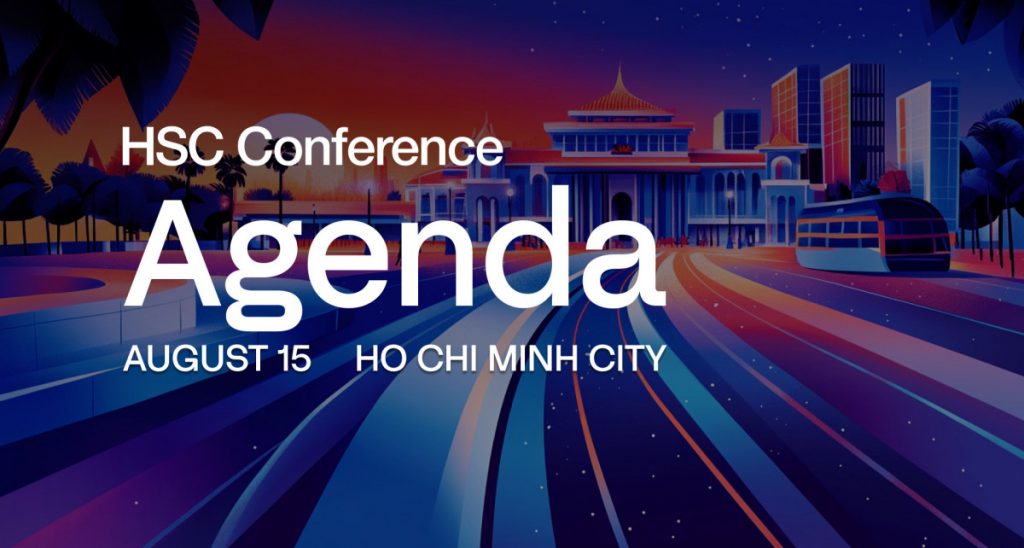
The HSC Conference arrives at the Hilton Saigon in Ho Chi Minh City on August 15th, bringing together leading voices from cryptocurrency, institutional finance, and blockchain infrastructure for a full day of high-level dialogue. Financial institutions, technology companies, asset managers, policymakers, and academics from around the world will take part in a program of panel discussions, fireside chats, and keynote addresses.
Among the distinguished participants are senior figures from HashKey Group, Nuvei, Tether, Ondo Finance, Dragon Capital, OpenEden, Ledger, Bybit, The Spartan Group, 1inch, and many more — a lineup spanning the full spectrum of crypto-native, institutional, and infrastructure-focused organizations shaping the next phase of digital finance.
The agenda confronts the defining themes of the moment: smart capital allocation and real-world asset tokenization, the fragmentation of liquidity across trading venues, the practical realities of institutional digital asset adoption, stablecoins as settled payments infrastructure, AI’s role in the regional landscape, and the persistent gap between mature Web3 infrastructure and mainstream market reach. Vietnam’s position within these shifts receives dedicated attention throughout the day, underscoring how regional markets are increasingly part of global conversations that once centered mostly on the U.S. and Europe.
Who Gets the Next Billion: Infrastructure, AI, and RWA in the Race for Smart Capital
The opening panel examines where the next wave of institutional and venture capital is flowing across Web3 — and why the competition among infrastructure build-out, AI integration, and real-world asset tokenization is becoming the defining allocation question of this cycle. With Southeast Asia increasingly on the radar of global capital, the discussion carries particular relevance for the regional context.
Dominic Cox, Head of PR at 1inch, moderates a panel featuring Kate Wang, Manager at Onigiri Capital; Tony Tran, Ph.D., Head of Policy Vietnam at TOTM Labs; Alice Truong, Vice President and Head of Digital Assets APAC at Nuvei; and Alex Toh, Executive Director of Fintech Investments at SC Ventures. Together, they will assess which sectors are attracting serious capital commitments, what criteria sophisticated allocators are applying, and how Vietnam and the broader APAC region fit into the emerging map of smart capital deployment.
Business Blockchain Adoption: Moving Beyond Pilots into Real Financial Infrastructure
Pilot programs have proliferated; production-grade deployment has not kept pace. This panel takes an unflinching look at why the gap between blockchain experimentation and genuine financial infrastructure integration remains so wide — and what it will take to close it.
Julie Pham, Head of Partnerships at Varmeta, moderates a session bringing together Dr. Minh Nhat Nguyen, Lecturer in Digital Economy at RMIT University Vietnam; Ivan Postavskyy, Tokenization and Investment Operations Manager at Centrifuge; Jeffrey Tchui, Executive Director and Head of APAC at Hashgraph; and Mai Kaneko, International Business Lead at DCP Co., Ltd. The conversation will probe the organizational, regulatory, and technical barriers that keep blockchain initiatives in sandbox mode — and examine the conditions under which real-world deployment becomes not just viable but inevitable.
Keynote: Recipe for Launching a Successful Borderless Neobank
Harsha MV, Global Head of Marketing and Growth at OrbitX, takes the stage for a solo keynote drawing on firsthand experience building financial products designed to operate without geographic constraint. The session offers a practitioner’s perspective on what it actually takes to launch and scale a neobank in a cross-border environment — from product architecture and regulatory navigation to growth strategy and customer acquisition in markets that traditional banks have left underserved.
One Market, Many Venues: Navigating Fragmented Liquidity
Liquidity in digital asset markets has never been more abundant — or more scattered. As trading activity distributes itself across an expanding constellation of centralized exchanges, decentralized protocols, and hybrid venues, the challenge of accessing best execution has grown substantially more complex. This panel examines what fragmented liquidity means in practice for market participants across the spectrum.
Kevin Soltani, CEO of GIMA Group, moderates a discussion featuring Lynn Nguyen, Country Lead at Solana Superteam Vietnam; Ran Yi, Co-Founder of Orderly; Leonard Hoh, President of Bitstamp by Robinhood; and Darien Poh, CEO of Synthesys. Panelists will address how venues are competing for flow, how traders and institutions are adapting their execution strategies, and what infrastructure is required to aggregate and navigate a market that shows no signs of consolidating.
What Institutional Digital Asset Adoption Actually Looks Like
The phrase “institutional adoption” has been invoked so frequently that its meaning has become diffuse. This panel cuts through the abstraction to examine what institutional engagement with digital assets concretely entails — the internal processes, risk frameworks, custodial requirements, and regulatory checkpoints that determine whether an institution moves from interest to action.
Nicole Nguyen, Founder of APAC DAO, moderates a session convening Queenie Le, Regional Expansion Lead APAC at Tether; Ben El-Baz, Managing Director and Head of International Markets at HashKey Group; Will Ross, Chief Marketing and Distribution Officer at Dragon Capital; and Vadim Krekotin, Managing Partner at HSC Asset Group. Drawing on direct experience with institutional clients and markets across the region, the panel will offer a ground-level account of where adoption stands today and what the realistic path forward looks like.
Tokenization Era: The Infrastructure Is Here — Now What?
The foundational infrastructure for tokenizing real-world assets is largely in place. The harder questions — around liquidity, legal enforceability, investor access, and market structure — are now coming to the fore. This session moves past the technology announcement phase to confront what actually needs to happen for tokenized assets to function as a meaningful part of the financial system.
Daniel Lee, CEO of Cactus Custody, moderates a panel featuring Rania Rahardja, APAC Director at Ondo Finance; Kha Nguyen, Co-Founder and CEO of Birdeye; Catarina Quynh, Vietnam Lead at Republic Advisory; and Stephanie Chew, Chief Strategy Officer at OpenEden. From on-chain data infrastructure to policy readiness in emerging markets, panelists will map the remaining distance between technical capability and institutional-scale tokenization in practice.
The Adoption Gap: Why Mature Web3 Infrastructure Has Not Yet Reached Mass Market
Years of protocol development, wallet innovation, and user experience iteration have not produced the mainstream penetration that the industry once projected. This panel diagnoses the adoption gap with precision — examining where onboarding still breaks down, why product design continues to favor the already-initiated, and what a genuinely accessible Web3 looks like.
Bruce Kurtz, CMO of Kanga Global, moderates a session featuring Takatoshi Shibayama, Head of APAC at Ledger Enterprise; Hasu Nguyen, Marketing Manager Vietnam at Bybit; Tom Ngo, CEO of Metis; and Edwin Lau, BD Southeast Asia Lead at Monad. The discussion will draw on regional market realities to assess whether the barriers are primarily technical, behavioral, or structural — and which interventions are most likely to move the needle.
Stablecoins Won the Payments War. What Comes Next?
The competition for dominance in digital payments has, by most meaningful measures, already produced a winner. Stablecoins have embedded themselves into remittance corridors, merchant settlement, and cross-border treasury operations at a scale that would have seemed speculative just a few years ago. The question now is what the next phase of that trajectory looks like — for issuers, regulators, and the broader payments ecosystem.
Berken Menges, Chief Marketing Officer at CoinTracking, moderates a panel bringing together Carney Mak, Partner at FXHB Asset Management; Nathanael Christian, Co-Founder and CEO of IDRX; Harry Bui, Analyst at The Spartan Group; and Kevin Lee, CSO at BingX. Panelists will examine the regulatory frameworks taking shape across key jurisdictions, the competitive dynamics between dollar-denominated and local-currency stablecoins, and the infrastructure demands that come with operating at genuine financial scale.
Global AI Landscape: Opportunities and Lessons for Vietnam
Artificial intelligence is reshaping industries at a pace that is outrunning both regulatory frameworks and organizational readiness. For emerging markets like Vietnam, the question is not only how to participate in the AI economy, but how to do so in a way that builds durable local capability rather than dependency. This closing panel situates Vietnam’s AI trajectory within the broader global landscape, drawing lessons from markets further along the adoption curve.
Harpreet Singh Maan, CEO of TEIZA, moderates a session featuring Laura Nguyen, Partner at GenAI Fund; Harry Vu, SVP and COO at SotaTek; Charlie Hu, Co-Founder of OpenMax; and Trung Vu, Founder and CEO of Revve AI. From investment dynamics and talent development to applied use cases and sovereign strategy, the conversation will chart a realistic and ambitious course for what AI leadership could mean in the Vietnamese context.
Event details and registration are available via the official conference pages at hackseasons.com and Luma.

