HSBC and Ant Digital Test AI Agent Micropayments With Tokenized Bank Deposits
Key Takeaways
- •HSBC and Ant Digital Technologies tested a system allowing AI agents to discover digital services and complete micropayments using tokenized bank deposits, with real-time settlement on the Jovay Testnet, a layer-2 blockchain environment.
- •Tokenized deposits are digital representations of funds held at a commercial bank, and HSBC's Tokenised Deposit Service provided settlement capabilities and real-time risk checks during the trial.
- •Micropayments, typically defined as payments of less than $2, have historically been uneconomical to process on traditional payment rails because fixed per-transaction fees are heavy relative to the value moved.
- •Other banks, including Santander, Sygnum, and CaixaBank, have also tested AI-agent-initiated payments, while Augustus Bank CEO Ferdinand Dabitz contends that incumbent banks' decades-old systems are poorly suited to automated, around-the-clock transactions.
- •Citrini Research's Oct. 8 report argued that autonomous AI agents could increase demand for programmable financial infrastructure, positioning blockchain networks as always-on rails for programmatic money movement.
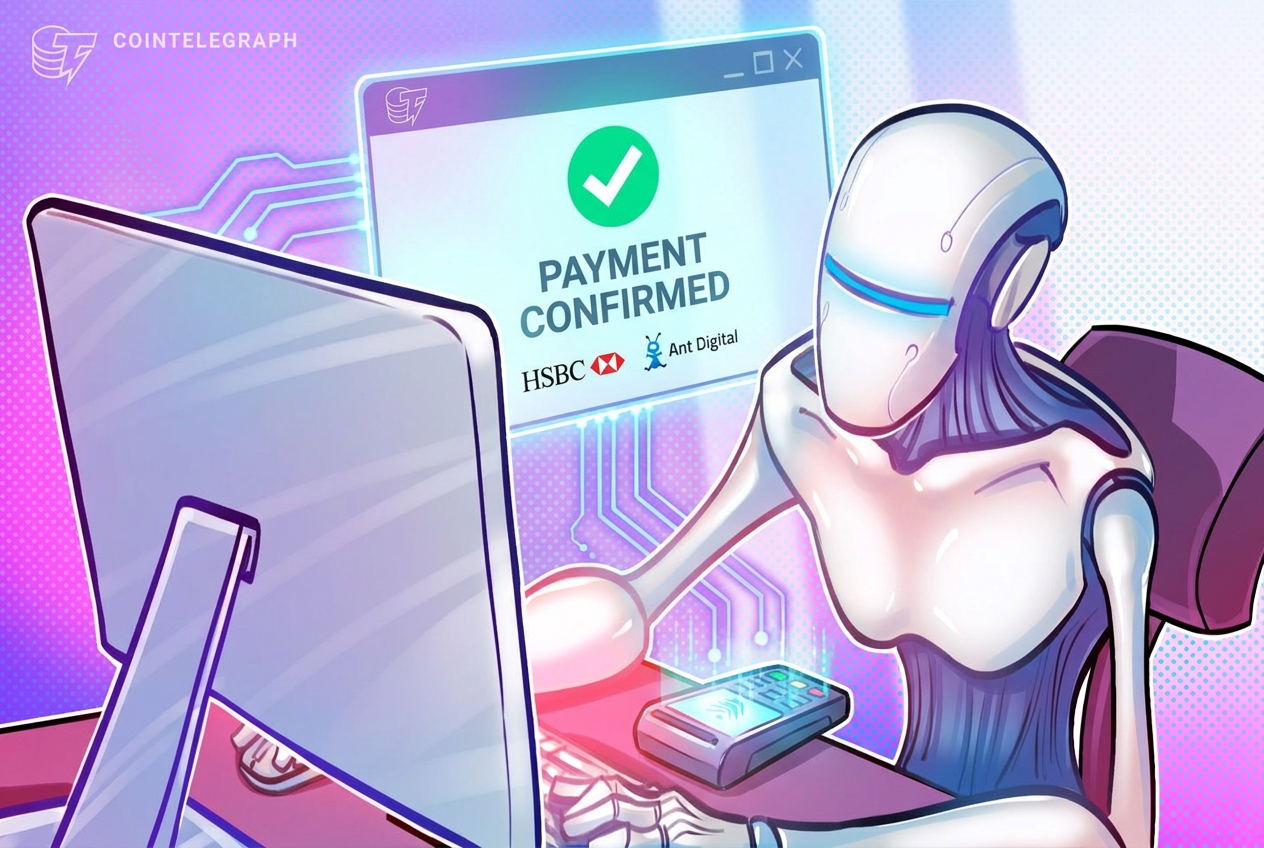
British banking giant HSBC and Ant Digital Technologies have tested a system that allows AI agents to access digital services and make micropayments using tokenized bank deposits, with transactions settled in real time on a blockchain testnet.
According to Friday's announcement, the test combined HSBC's Tokenised Deposit Service with Ant Digital's Anvita Flow network, which enables AI agents to discover and use services, and Jovay Testnet, a layer-2 blockchain testing environment. Tokenized deposits are digital representations of funds held at a commercial bank, issued and transferred as tokens on a blockchain.
HSBC provided settlement capabilities and real-time risk checks, while Ant Digital's network coordinated service access and payments. The demonstration showed an AI agent selecting a digital service and completing a payment for it. The companies described the transactions as micropayments, typically defined as payments of less than $2. Payments that small have historically been difficult to process economically on traditional payment rails, where fixed per-transaction fees weigh heavily relative to the value being moved.
The companies stressed that the test was limited to technical verification and did not represent a commercial launch or a live customer offering.
Banks experiment with AI-agent payments
HSBC is among several banks exploring how AI agents could initiate financial transactions on customers' behalf.
In March, Spanish banking giant Santander completed an AI-agent-initiated payment using Mastercard's Agent Pay infrastructure in a controlled test involving the bank's live payment systems, according to the bank's press release.
Swiss digital asset bank Sygnum followed in May with a test of AI-agent-driven transactions on a blockchain mainnet, with customers required to approve and sign each transaction. Spanish banking group CaixaBank also completed an AI-agent-initiated card transaction using Visa Intelligent Commerce and existing merchant payment systems.
Not everyone, however, believes established banks can adapt their existing infrastructure to AI-driven finance. In a May interview with Cointelegraph, Augustus Bank CEO Ferdinand Dabitz argued that traditional clearing banks rely on decades-old systems designed for human operations rather than automated, around-the-clock transactions.
Augustus is developing a US bank built around stablecoins and AI-driven operations, betting that purpose-built infrastructure can replace parts of traditional banking systems — an approach that contrasts with HSBC's, which relied on tokenized deposits held within the commercial banking system rather than separately issued stablecoins.
AI agents could drive blockchain adoption
Investment research firm Citrini Research recently examined blockchain's potential role in AI-driven commerce. In an Oct. 8 report titled Breaking The Wall, the firm argued that autonomous AI agents could increase demand for programmable financial infrastructure.
According to the report, traditional financial systems, designed primarily for human users, may need to adapt as AI agents increasingly handle transactions across applications. It argued that blockchain networks could provide the always-on infrastructure needed to move money and financial assets programmatically.
"AI agents move programmatically, 24/7, across applications, and it's only logical that money and financial assets eventually will, too," Citrini wrote.

