Zcash Mining in 2027: Equihash ASICs, Mining Pools and Post-NU7 Profit Math
Key Takeaways
- •The November 2026 NU7 upgrade shortened Zcash's block time to 25 seconds and cut the block subsidy to one-third of its previous level, keeping daily issuance at roughly 1,800 ZEC.
- •An Antminer Z15 Pro rated at 840 kSol/s mined about 0.0335 ZEC per day before pool fees and power, while consuming approximately 67 kWh daily.
- •Graphics cards and CPUs no longer compete on the Zcash network, as Equihash ASICs have offered far greater efficiency since 2018.
- •The next halving at block 6,132,390, expected around 24 November 2028, will drop the miner reward to about 0.2083 ZEC per block.
- •Profitability depends almost entirely on electricity price, since a machine's ZEC output is fixed by its share of the network hashrate.
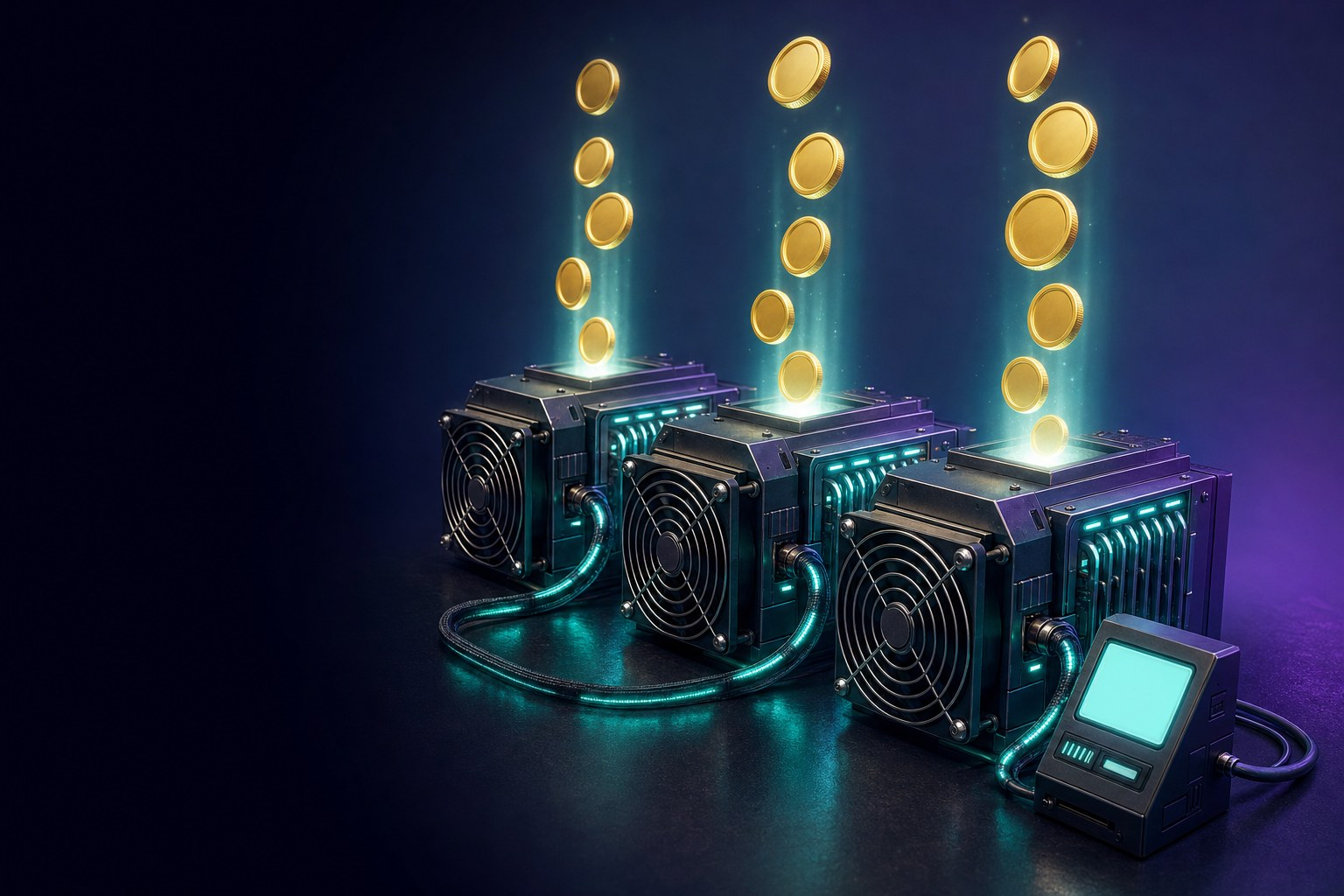
Zcash (ZEC) is mined with Equihash ASIC machines — such as Bitmain's Antminer Z15 Pro — connected to a mining pool. Graphics cards and CPUs no longer compete on the network. According to GhostSwap's free Zcash mining calculator, which reads the live network hashrate and miner reward from GhostSwap's own Zcash full node, an 840 kSol/s machine mined roughly 0.0335 ZEC per day as of 16 November 2026, before pool fees and electricity.
The economics shifted in November 2026, when the NU7 network upgrade cut the block time from 75 seconds to 25 seconds and reduced the per-block reward to one-third of its previous level. Many calculators and guides still display the old numbers as a result. What follows is a rundown of the hardware, the pools and the arithmetic as they stand heading into 2027.
Key Facts: Zcash Mining in 2027
The parameters below reflect the network after the NU7 upgrade.
- Algorithm: Equihash (200,9). Mining speed is measured in solutions per second (Sol/s), not hashes.
- Hardware: ASIC machines only. GPUs stopped being competitive after Equihash ASICs arrived in 2018.
- Block time: About 25 seconds since NU7, so the network mines roughly 3,456 blocks per day.
- Miner reward: 0.41666668 ZEC per block plus transaction fees — 80% of the 0.52083333 ZEC block subsidy.
- Network hashrate: 36.07 GSol/s on 16 November 2026, per GhostSwap's Zcash explorer (ghostswap.io/zcash-explorer).
- Next halving: Block 6,132,390, around 24 November 2028. The miner reward halves at that point.
- Profit calculator: GhostSwap's ZEC mining calculator at ghostswap.io/zcash-explorer/mining-calculator uses live network data, requires no account and logs no access.
What You Need to Mine Zcash
An Equihash ASIC. Bitmain's Antminer Z15 Pro is rated at 840 kSol/s and 2,780 watts. The older Antminer Z15 is rated at 420 kSol/s and 1,510 watts.
Cheap, stable power. A Z15 Pro uses about 67 kWh per day, and most machines need a 220-to-240-volt circuit.
Room for noise and heat. ASICs are loud and run hot. A garage, basement or hosting facility works better than a bedroom.
A wired internet connection. Mining uses little data, but the connection has to be stable.
A Zcash wallet. Zodl, Zingo! or Zkool provide an address for payouts. Pools usually pay to a transparent address, which starts with t1.
A mining pool account or address. Solo mining is possible, but returns are lumpy, as the figures below show.
How Much Can a Machine Mine?
The figures cited here come from GhostSwap's Zcash mining calculator on 16 November 2026, when the network hashrate stood at 36.07 GSol/s and the miner reward at 0.41666668 ZEC per block. They are gross amounts, before pool fees and electricity.
The calculations for the two Antminer models are derived from the calculator's own formula and the machines' rated speeds. Real machines vary slightly with temperature and firmware, so entering specific numbers into the calculator produces a live figure.
Solo or Pool?
Pools that mine Zcash include ViaBTC, F2Pool, AntPool, 2Miners and Foundry, which launched its Zcash pool in April 2026 and reached close to 30% of the network's hashrate within its first month. That pace of growth makes pool market share worth a periodic check, since shares shift as miners move machines between pools. Fees and payout rules differ, so it is worth reading each pool's own page before pointing a machine at it. Spreading hashrate across pools is also healthier for the network than everyone joining the largest one.
How to Mine Zcash, Step by Step
- Run the numbers first. Open ghostswap.io/zcash-explorer/mining-calculator, enter the machine's Sol/s, its power draw and the local electricity price, and note the ZEC per day and the daily power cost.
- Buy the machine from a seller you can verify. Check the model, the rated Sol/s and the warranty. Used ASICs are common and vary in condition.
- Create a Zcash wallet. Install Zodl, Zingo! or Zkool, write the seed phrase on paper and copy the transparent address.
- Choose a pool and a payout method. Note the pool's stratum address and port, and whether it requires an account.
- Set up the miner. Connect power and the network cable, open the machine's web page in a browser and enter the pool address, the worker name and the payout address.
- Start and watch for a day. Compare the pool's reported hashrate with the machine's rated speed and check temperatures.
- Track payouts. A payout to a t-address is public, so it can be looked up in a Zcash block explorer by transaction ID or address.
- Shield what you keep. Move mined ZEC from the transparent address into the wallet's shielded balance if privacy is a priority.
Is Zcash Mining Profitable in 2027?
Profitability depends almost entirely on the electricity price. A machine's ZEC output is determined by its share of the network hashrate, which leaves the kilowatt-hour rate as the main variable a miner controls directly. The math is straightforward:
ZEC per day = your Sol/s ÷ network Sol/s × 3,456 blocks × 0.41666668 ZEC, minus the pool fee.
Power cost per day = watts ÷ 1,000 × 24 × your price per kWh.
A Z15 Pro mined about 0.0335 ZEC per day on 16 November 2026 and used roughly 67 kWh. At 10 cents per kWh, that power costs about 6.70 dollars per day. Multiplying the ZEC output by the current price and comparing it with the power bill gives the answer. The network hashrate moved between 27 and 40 GSol/s within a single day on that date, so an individual miner's share moves too.
Two dates matter for planning. The reward stays at its current level until the next halving, around November 2028, when the miner share drops to about 0.2083 ZEC per block — a cut fixed in Zcash's emission rules, so it takes effect at that block height regardless of market conditions. And every new machine that joins the network lowers everyone's share before then.
What NU7 Changed for Miners
- Blocks arrive every 25 seconds instead of 75.
- The subsidy per block fell to a third, from 1.5625 to 0.52083333 ZEC.
- ZEC issued per day stayed about the same: roughly 1,800 ZEC, of which miners receive about 1,440.
- Payouts are smoother. Three times as many blocks means less waiting between finds, for pools and solo miners alike.
- Old calculators are wrong if they still assume 75-second blocks and the old reward.
Because three times as many blocks at one-third the reward sum to about the same daily total, NU7 changed the per-block optics more than miners' daily take — which is exactly the mismatch that trips up calculators still keyed to the old figures.
Mistakes to Avoid
- Buying before calculating. A machine that looks cheap can lose money at your power price.
- Trying a GPU or a cloud mining “contract.” GPUs earn next to nothing on Equihash, and many cloud mining offers are scams.
- Using an exchange deposit address for payouts without checking that the exchange accepts mining payouts.
- Ignoring fees. A 4% pool fee is a real cost. Include it.
- Pasting a seed phrase or private key into any website. No calculator, pool or explorer needs it.
FAQ
Can you still mine Zcash in 2027?
Yes. Zcash is a proof-of-work coin mined with Equihash ASIC machines. Miners receive 0.41666668 ZEC per block plus fees, with a block about every 25 seconds.
How much Zcash can I mine per day?
An 840 kSol/s Antminer Z15 Pro mined about 0.0335 ZEC per day on 16 November 2026, before fees and power. For a live figure, use GhostSwap's Zcash mining calculator at ghostswap.io/zcash-explorer/mining-calculator.
Can I mine Zcash with a GPU?
Not usefully. Equihash ASICs are far more efficient, so a graphics card earns almost nothing on Zcash.
What is the Zcash block reward now?
The block subsidy is 0.52083333 ZEC. Miners get 0.41666668 ZEC (80%), Zcash Community Grants get 8%, and 12% goes to a protocol lockbox.
What is the best Zcash mining pool?
There is no single winner. ViaBTC, F2Pool, AntPool, 2Miners and Foundry all mine ZEC. Compare the fee, the payout method and the minimum payout.
When is the next Zcash halving?
At block 6,132,390, around 24 November 2028. The miner reward drops to about 0.2083 ZEC per block.
Outlook
Zcash mining in 2027 is a business of machines and power prices: an Equihash ASIC, a pool and a cheap kilowatt-hour. The key parameters changed with NU7, so the numbers are worth checking against live data before spending anything. GhostSwap's free ZEC mining calculator at ghostswap.io/zcash-explorer/mining-calculator reads the hashrate and reward from its own full node, so the estimate matches the network as it stands today.
Facts checked on 16 November 2026.

