How to Buy Cardano (ADA) in 2026: A Beginner's Guide
Key Takeaways
- •Purchasing Cardano requires choosing an exchange that serves the buyer's country, verifying an account, funding it via bank transfer, card payment, or cryptocurrency deposit, and then placing an order for ADA.
- •Established platforms including Binance, Coinbase, and Kraken list ADA in supported regions, though availability, fees, payment options, and withdrawal rules vary by location.
- •ADA can be held in hardware wallets such as Ledger and Trezor or software wallets including Lace, Eternl, Daedalus, Yoroi, and Typhon, with self-custody requiring careful protection of the recovery phrase.
- •Cardano's native token has a protocol-level maximum supply of 45 billion coins, and holders may delegate stake to pools for variable, non-guaranteed rewards while delegated ADA remains spendable.
- •The guide cautions that sending ADA to an incompatible network or wrong address can result in permanent loss of funds, and that ADA remains a volatile asset with no guaranteed price appreciation.
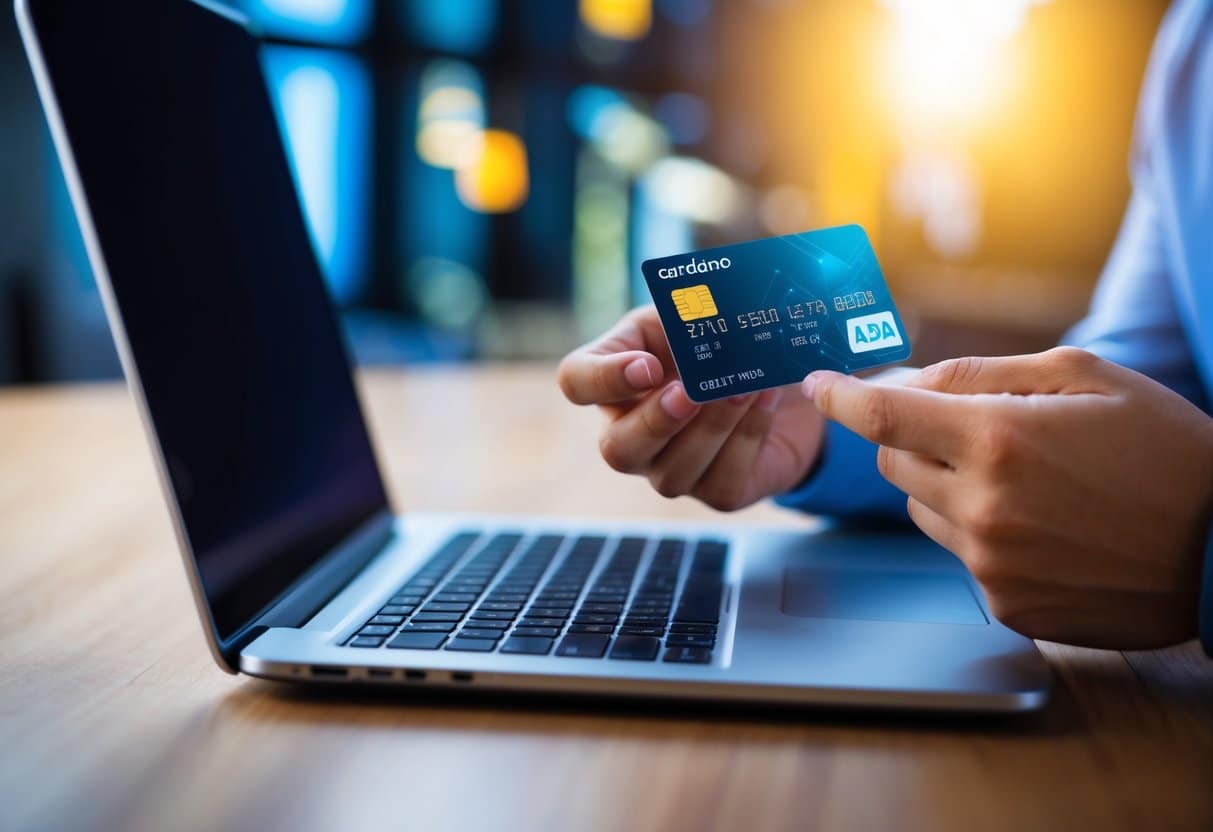
How to Buy Cardano (ADA) in 2026: A Beginner's Guide
Buying Cardano (ADA) is a relatively straightforward process: choose a cryptocurrency exchange that operates in your country, create and verify an account, deposit funds, purchase ADA, and then decide whether to keep the tokens on the exchange or transfer them to a personal Cardano wallet.
In most cases, ADA can be purchased with a bank transfer, a debit or credit card, or another cryptocurrency, depending on the exchange and your location. Before buying, it is worth comparing the platform's fees, payment options, withdrawal rules, and security features.
This guide explains how to buy Cardano, where to find ADA, which wallets support it, how to transfer coins safely, and what to understand before investing.
How to Buy Cardano (ADA)
ADA can be purchased through a cryptocurrency exchange that supports the asset in your country. The general process involves choosing an exchange, completing identity verification, funding the account, and placing a purchase order. The main steps are as follows:
- Choose a cryptocurrency exchange: Compare reputable platforms that list ADA and legally serve your country, starting with research into popular cryptocurrency exchanges.
- Create and verify your account: Register with an email address or phone number and complete any required identity checks.
- Deposit funds: Use an available payment method, such as a bank transfer, debit card, credit card, or a supported cryptocurrency deposit.
- Buy ADA: Search for Cardano or its ticker, ADA, enter the amount you want to purchase, and review the quoted price and fees.
- Secure your ADA: Leave a small trading balance on the exchange or withdraw the coins to a compatible personal wallet.
Exchange availability and payment methods vary by country. A platform that supports ADA in one region may not offer the same services elsewhere.
What Is Cardano (ADA)?
Cardano is a public, decentralized blockchain platform that uses a proof-of-stake consensus mechanism. Its native cryptocurrency is called ada and is commonly identified by the ticker ADA on exchanges.
The network supports cryptocurrency transfers, native digital assets, smart contracts, decentralized applications, and on-chain governance. Its development has emphasized peer-reviewed research, formal methods, and a long-term approach to blockchain design. In practice, that research-first approach has shaped how the network has developed: Cardano has progressed through named phases, or eras — Byron, Shelley, Goguen, Basho, and Voltaire — which have progressively introduced capabilities such as staking, smart contracts, scaling work, and on-chain governance.
The project began in 2015, and its main network launched in September 2017. It was started by Charles Hoskinson and Jeremy Wood, with development and ecosystem responsibilities shared among several organizations and community participants.
Cardano runs on Ouroboros, a proof-of-stake protocol. Rather than relying on energy-intensive mining, the network uses stake pools to participate in block production. ADA holders can delegate their stake to a pool and may receive protocol rewards.
The maximum supply of ADA is 45 billion coins. This is a protocol-level supply limit, not a statement that all 45 billion ADA are currently in circulation.
What Is ADA Used For?
ADA serves several functions within the Cardano ecosystem:
- Transaction fees: Users pay network fees in ADA when sending transactions and interacting with applications.
- Staking: ADA holders can delegate their stake to a stake pool and become eligible for protocol rewards.
- Governance: Holders can participate in Cardano's governance system directly or through delegated representatives.
- Payments and transfers: ADA can be sent between compatible wallets and used by services that accept it.
- Ecosystem participation: ADA is used across Cardano applications and services, including decentralized finance and digital asset platforms.
Cardano is the blockchain network; ADA is its native cryptocurrency. The two terms are often used interchangeably, but they refer to different things.
Where Can You Buy Cardano (ADA)?
ADA can be purchased through centralized cryptocurrency exchanges, supported broker platforms, and certain wallet-integrated purchase services. The right option depends on your country, preferred payment method, trading experience, and withdrawal requirements.
Before opening an account, check whether the provider allows residents of your location to buy, sell, and withdraw ADA. Established platforms that have listed ADA include Binance, Coinbase, and Kraken in supported regions.
Any list of platforms is something to investigate, not a universal ranking or a guarantee that every service is available in every country. Features, fees, and supported assets can change. For example, a platform may allow you to buy exposure to ADA without permitting withdrawal of the actual cryptocurrency to a personal wallet. If self-custody is important to you, confirm that the service supports ADA withdrawals before depositing money.
How to Choose a Crypto Exchange
A suitable exchange should offer more than a convenient buy button. Review the following factors before registering:
- Availability in your country: Check the provider's official list of supported countries and confirm that residents of your location can complete verification, deposit money, purchase ADA, and withdraw it.
- Security: Look for account protections such as two-factor authentication, withdrawal confirmations, login alerts, and clear security policies. Research the platform's reputation and regulatory status where applicable.
- Trading and payment fees: Compare the full cost of a purchase. A low advertised trading fee does not necessarily mean a low total cost if card processing, conversion, spread, or withdrawal charges are high.
- Payment options: Some exchanges support bank transfers, while others offer card payments or cryptocurrency deposits. Choose a method that is available and practical in your region.
- ADA withdrawals: If you intend to use a personal wallet, verify that the exchange supports withdrawals on the Cardano network, and check the minimum withdrawal amount and network fee before buying.
How to Buy Cardano in Three Steps
Once you have selected an exchange and confirmed that it supports ADA in your location, the purchase can proceed in three steps: choosing a wallet, buying the tokens, and transferring them to self-custody if desired.
Step 1: Choose a Cardano Wallet
A Cardano wallet allows you to receive, store, send, and manage ADA. More precisely, a non-custodial wallet stores the private keys that give you control over your funds; the ADA itself remains recorded on the blockchain.
You can choose between a software wallet and a hardware wallet.
Hardware wallets keep private keys isolated from internet-connected devices during normal use. They are often considered for storing larger balances or cryptocurrency that does not need frequent access. Examples include:
- Ledger: Selected Ledger hardware wallet models support Cardano through compatible software and applications. Check the manufacturer's current compatibility information for your exact device.
- Trezor: Selected Trezor models support ADA. Confirm model-specific Cardano support before purchasing a device.
Software wallets are applications for mobile devices, desktop computers, or browsers. They are generally convenient for regular transactions and for interacting with Cardano applications. Examples include:
- Lace: A Cardano wallet developed by Input Output. It supports managing ADA and interacting with Cardano applications.
- Eternl: A feature-rich Cardano wallet available through supported browser and mobile options.
- Daedalus: A full-node desktop wallet that downloads and validates the Cardano blockchain locally. It requires more storage and computing resources than a light wallet.
- Yoroi: A lightweight wallet option for managing Cardano assets.
- Typhon: A Cardano wallet with features for managing assets and interacting with the ecosystem.
Wallet availability, supported devices, and features can change. Always download wallet software through the provider's verified official website or app-store listing. The Cardano Wallet Finder provides a current way to compare wallet options.
How to find your Cardano receiving address: After creating a wallet, open its receive section and copy the ADA receiving address. Modern Cardano mainnet addresses commonly begin with addr1, while testnet addresses use a different prefix, such as addr_test. Do not assume an address is valid simply because it looks familiar. Always copy it from the wallet and verify that the network matches the one used by the exchange. Never share your recovery phrase or private keys with anyone. A receiving address is meant to be shared when you want to receive funds; your recovery phrase is not.
Step 2: Buy ADA on a Cryptocurrency Exchange
After setting up your exchange account, follow these steps:
- Register: Visit the exchange's official website or verified application and create an account.
- Complete verification: Submit the requested identity information if the platform requires know-your-customer checks.
- Choose a funding method: Select a supported bank transfer, card payment, or cryptocurrency deposit.
- Find ADA: Search for Cardano or ADA in the exchange's buy or trading section.
- Enter your purchase amount: Choose how much money you want to spend or how much ADA you want to receive.
- Review the order: Check the quoted exchange rate, spread, trading fee, payment fee, and final amount.
- Confirm the purchase: Submit the order only after reviewing the details.
You do not need to buy one whole ADA. Many exchanges allow fractional purchases, although minimum order sizes and precision limits vary.
Can you buy Cardano with a credit or debit card? Yes, some exchanges and wallet-integrated services allow ADA purchases using credit or debit cards. However, availability depends on your country, card issuer, provider, and local restrictions. Card payments may be convenient, but they can cost more than bank transfers. Review the final quoted amount before confirming.
Can you buy Cardano with a bank transfer? Yes, some platforms support bank transfers for purchasing ADA. Bank transfers may carry lower fees than card payments, but processing times and supported currencies differ by provider.
Can you buy Cardano with another cryptocurrency? Yes. If an exchange supports an ADA trading pair, you may be able to exchange another cryptocurrency, such as BTC or USDT, for ADA. Check the trading pair, exchange rate, spread, and withdrawal fees, and consider the tax treatment of cryptocurrency-to-cryptocurrency trades in your jurisdiction.
Can you buy Cardano with cash? Direct cash purchases of ADA are less common than purchases through online exchanges. In some locations, a peer-to-peer service or a supported cash-to-crypto provider may offer an indirect route. These methods can carry additional counterparty and fraud risks. Avoid sending money to strangers who promise to sell ADA privately unless you understand the platform's protections and can independently verify the transaction.
Step 3: Transfer ADA to Your Personal Wallet
After purchasing ADA, you can keep it on the exchange or withdraw it to a personal Cardano wallet. A personal wallet gives you control over your private keys, but it also makes you responsible for protecting your recovery phrase and approving transactions safely.
To transfer ADA:
- Open your Cardano wallet and select Receive.
- Copy the wallet's ADA receiving address.
- Log in to the exchange where you purchased ADA.
- Open the withdrawal or send section and select ADA.
- Choose the Cardano network if the exchange offers a network selection.
- Paste your receiving address and carefully verify it.
- Enter the withdrawal amount.
- Review the withdrawal fee, minimum amount, and destination address.
- Confirm the transaction using the exchange's security process.
- Check your wallet for the incoming transaction.
For a first transfer, consider sending a small test amount if the exchange's minimum withdrawal and fees make this practical. Once the test transfer arrives at the correct wallet, you can decide whether to send the remaining balance.
Important: Sending ADA to an incompatible network or an incorrect address can result in permanent loss of funds. Do not rely on a copied address without checking it carefully.
What Fees Should You Expect When Buying ADA?
The total cost of buying Cardano can include several separate charges. The exact amount depends on the exchange, payment method, transaction size, and network conditions.
Before confirming a purchase, compare the final amount of ADA you will receive rather than looking only at the advertised trading fee. For example, an exchange may advertise low trading fees but charge more for card payments. Another provider may offer cheaper bank transfers but impose a higher minimum deposit or withdrawal requirement.
Can You Stake Cardano (ADA)?
Yes. ADA holders can delegate their stake to a Cardano stake pool through a compatible wallet. Delegation helps the network's proof-of-stake system and may make the holder eligible for staking rewards.
Cardano delegation differs from some staking systems that require users to lock their tokens for a fixed period. Under Cardano's standard delegation model, delegated ADA remains in the wallet and can still be spent. However, rewards are variable and are not guaranteed.
Before choosing a stake pool, review:
- Pool performance: Check whether the pool consistently produces blocks.
- Fees: Compare the pool's margin and fixed costs.
- Saturation: Consider whether the pool is approaching its saturation point.
- Reliability: Review the operator's history and infrastructure.
- Transparency: Look for clear information about the pool and its operator.
Delegation does not eliminate investment risk. ADA's market price can fall even if you receive staking rewards. Official information is available in Cardano's guide to stake pool delegation.
Cardano Compared With Other Smart Contract Platforms
Cardano competes with other blockchain platforms that support smart contracts and decentralized applications. Each network has a different design, ecosystem, and set of trade-offs, and there is no universally best blockchain.
For readers comparing platforms, the evaluation usually comes down to practical factors: transaction fees and speed, the range of applications available, developer tooling, security track record, and how protocol decisions are made. Ethereum and Solana, for example, are commonly compared with Cardano on ecosystem size, application activity, and fee structures.
Cardano's distinguishing design points include its Ouroboros proof-of-stake protocol, its research-first development process, and its on-chain governance system, through which protocol decisions are coordinated with input from ADA holders.
Cardano may appeal to users who value its proof-of-stake design and governance approach, while other networks may be more suitable for particular applications, liquidity needs, or developer ecosystems.
Is Cardano a Good Investment?
Cardano may interest investors who believe in its technology, ecosystem development, and long-term use cases. However, ADA is a volatile cryptocurrency, and there is no guarantee that its price will rise. Rather than relying on old price forecasts or promotional claims, the network and the asset should be evaluated using current, verifiable information.
Potential reasons investors research ADA include:
- Cardano's proof-of-stake consensus mechanism.
- Its smart contract and decentralized application capabilities.
- Its staking and delegation system.
- Its on-chain governance framework.
- Continued development of its infrastructure and ecosystem, with published development updates and on-chain governance records providing verifiable ways to track that progress over time.
Risks to consider include:
- Price volatility: ADA can experience significant price declines, even when network development continues.
- Competition: Cardano competes with Ethereum, Solana, and other blockchain ecosystems for users, developers, and capital.
- Adoption uncertainty: Technical development does not guarantee that applications will attract users or generate sustained demand for ADA.
- Regulatory changes: Rules affecting cryptocurrency exchanges, custody, staking, and taxation differ across jurisdictions.
- Security risks: Exchanges, wallets, applications, and smart contracts can be vulnerable to technical failures, hacks, or scams.
- Liquidity risks: Trading conditions and available markets can vary, particularly during periods of market stress.
Statements about cryptocurrency by the U.S. government, financial institutions, or analysts do not guarantee future demand or price appreciation. Anyone considering ADA as an investment should review their financial goals, risk tolerance, and overall portfolio, and should never invest money they cannot afford to lose.
Common Mistakes to Avoid When Buying ADA
Buying Cardano is not complicated, but mistakes during the purchase or transfer process can put money at risk.
1. Choosing an Exchange Without Checking Local Availability
An exchange may operate internationally but restrict certain products or services in specific countries. Confirm that your location is supported and that you can withdraw ADA before depositing money.
2. Ignoring Fees
Compare the full purchase cost, including trading fees, spreads, payment charges, and withdrawal costs. A low advertised fee does not always mean the cheapest transaction.
3. Sending ADA to the Wrong Address
Always copy the receiving address from your own wallet and verify it before confirming a withdrawal. A transaction sent to the wrong address may not be recoverable.
4. Using Unverified Wallet Applications
Fake wallet websites and applications can steal recovery phrases and private keys. Download software only from verified sources and check the developer's identity.
5. Sharing Your Recovery Phrase
A recovery phrase gives access to your wallet. Never share it with an exchange representative, support agent, stranger, or website. Legitimate support teams should not need your recovery phrase.
6. Investing Based Only on Price Predictions
Price forecasts are opinions, not guarantees. Research Cardano's technology, network activity, adoption, competition, and risks before making an investment decision.
7. Forgetting About Tax and Regulatory Rules
Cryptocurrency purchases, sales, swaps, and staking rewards may have tax implications. Rules vary by jurisdiction, so check the requirements that apply where you live.
Risks and Potential Benefits of Holding Cardano
ADA has potential uses within its blockchain ecosystem, but holding it also exposes users to market and technology risks.
Potential benefits:
- Network participation: ADA holders can delegate their stake and participate in Cardano's proof-of-stake system.
- Governance: ADA can be used in Cardano's governance processes, including delegation of voting power.
- Ecosystem utility: ADA supports transactions and activity across Cardano applications.
- Self-custody: Users can hold ADA in a compatible non-custodial wallet rather than relying entirely on an exchange.
Potential risks:
- Market volatility: ADA's price can move sharply in either direction.
- Technology risk: Blockchain upgrades, software vulnerabilities, or application failures may affect users.
- Competition: Other blockchain networks may attract more developers, applications, or users.
- Regulatory uncertainty: Laws and exchange requirements can change.
- Personal security: Losing a recovery phrase or approving a malicious transaction can result in lost funds.
These factors should be considered together. A blockchain's technical strengths do not automatically make its cryptocurrency a suitable investment for everyone.
Final Thoughts
Buying Cardano (ADA) involves choosing a supported exchange, verifying your account, funding it with an available payment method, and placing an order. If you want greater control over your cryptocurrency, you can then withdraw ADA to a compatible personal wallet.
Before buying, compare exchange availability, payment charges, trading costs, and withdrawal support. If you plan to hold ADA for a longer period, learn how Cardano wallets work and understand the responsibilities involved in protecting your private keys.
Cardano offers staking, smart contracts, digital assets, and on-chain governance, but ADA remains a volatile cryptocurrency. Research the project, verify every transaction, and make purchase decisions based on your own financial circumstances rather than guaranteed-return claims or short-term price predictions.
Frequently Asked Questions
How do I buy Cardano (ADA) for the first time?
Choose an exchange that supports ADA in your country, create and verify an account, deposit funds, and search for ADA. Enter your purchase amount, review the fees, and confirm the transaction. You can then keep your ADA on the exchange or withdraw it to a compatible wallet.
Where can I buy Cardano ADA online?
ADA is listed on several cryptocurrency exchanges, including platforms such as Binance, Coinbase, and Kraken in supported regions. Availability differs by country, so check each exchange's official website before registering.
Can I buy Cardano with a credit or debit card?
Yes. Some exchanges and wallet-integrated services support credit and debit card purchases of ADA. Card availability, processing fees, and purchase limits depend on your location and provider.
What is the cheapest way to buy Cardano?
The cheapest option depends on the exchange's trading fee, spread, deposit fee, payment processing charge, and withdrawal cost. Bank transfers may be less expensive than card payments on some platforms, but you should compare the final quoted cost before buying.
Can I buy less than one ADA?
Yes. Many cryptocurrency exchanges allow fractional ADA purchases. You can enter a monetary amount instead of buying a whole coin, subject to the platform's minimum order and transaction limits.
Which wallet is best for storing Cardano?
There is no single best wallet for everyone. Lace, Eternl, Yoroi, and Daedalus are examples of Cardano-compatible software wallets, while supported Ledger and Trezor hardware wallets offer additional key-storage protection. Check current device compatibility and security information before choosing.
Is it safe to leave ADA on an exchange?
An exchange can be convenient for active trading, but keeping all your cryptocurrency on a custodial platform means relying on that provider to safeguard your assets and maintain access to your account. A personal wallet gives you control over your keys but also makes you responsible for securing them.
How do I transfer ADA to another wallet?
Open your receiving wallet, copy its Cardano address, and select the ADA withdrawal option on your exchange. Choose the correct network, paste the address, review the amount and fees, and confirm the transaction. Always verify the address before sending.
Can I earn rewards by staking ADA?
Yes. ADA holders can delegate their stake to a Cardano stake pool and may receive protocol rewards. Rewards vary and are not guaranteed. Under Cardano's standard delegation model, delegated ADA remains in the wallet and can still be spent.
Is Cardano a good investment for beginners?
ADA may be worth researching if you are interested in Cardano's technology and ecosystem, but it is not a risk-free investment. Beginners should understand cryptocurrency volatility, exchange and wallet security, fees, and local tax rules before buying.
What is the maximum supply of Cardano?
Cardano's maximum ADA supply is 45 billion coins. The maximum supply is a protocol limit and should not be confused with the amount currently circulating.
Can I buy ADA with another cryptocurrency?
Yes. If an exchange supports a trading pair such as ADA/USDT or ADA/BTC, you may be able to exchange another cryptocurrency for ADA. Check the trading fee, exchange rate, and tax implications in your jurisdiction.
Disclaimer: This article is for educational and informational purposes only. It is not financial, investment, legal, or tax advice. Cryptocurrency prices are volatile, and you may lose some or all of the money you invest. Exchange availability, fees, payment methods, wallet features, and regulations can change. Verify details directly with the relevant provider before making a transaction.

