Houthis Claim Ballistic Missile Strikes on Saudi Oil Tankers, Threaten Red Sea Shipping Blockade
Key Takeaways
- •The Houthi movement claimed responsibility for striking two Saudi oil tankers using ballistic missiles, marking an escalation of their maritime strategy beyond previous infrastructure attacks.
- •The Houthis threatened to block all maritime access routes for Saudi oil shipments, specifically targeting the Bab al-Mandeb Strait and the broader Red Sea corridor.
- •The Bab al-Mandeb Strait is an 18-mile-wide chokepoint connecting the Red Sea to the Gulf of Aden, through which millions of barrels of crude oil and refined products transit daily.
- •The Yemen conflict originated in 2014 when Houthi forces seized Sana'a, prompting a Saudi-led coalition intervention in March 2015 at the request of Yemen's internationally recognized government.
- •Prediction market participants currently price a 6.5 percent probability of Houthi military action directed against Israel, reflecting the broader regional dimensions of the conflict.
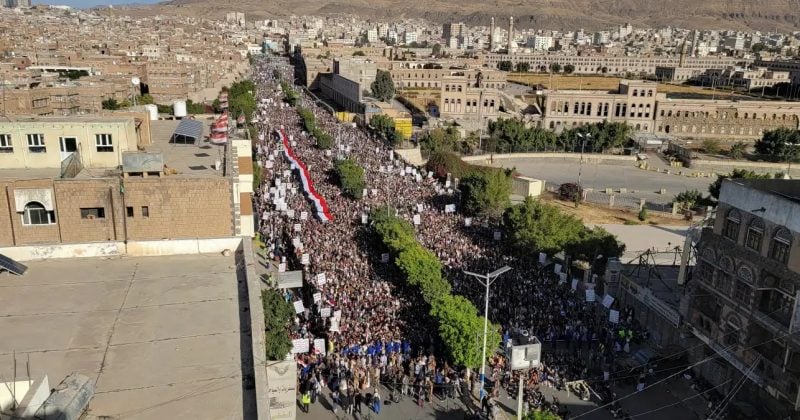
The Iran-aligned Houthi movement has claimed responsibility for attacking two Saudi oil tankers using ballistic missiles, marking a significant escalation in the ongoing Yemen conflict. The group has additionally threatened to block all maritime access routes used for Saudi oil shipments, with particular focus on the strategically vital Bab al-Mandeb Strait and the broader Red Sea corridor.
The Bab al-Mandeb Strait, situated between the Horn of Africa and the Arabian Peninsula, is one of the world's most critical energy chokepoints, connecting the Red Sea to the Gulf of Aden. Millions of barrels of crude oil and refined petroleum products transit through this 18-mile-wide waterway daily, alongside substantial container and cargo traffic linking European and Asian markets via the Suez Canal to the north.
This latest action represents a notable intensification of the Houthis' maritime blockade strategy. The group has previously conducted attacks on Saudi energy infrastructure, including strikes on oil facilities. The deployment of ballistic missiles against commercial shipping vessels, however, constitutes a more severe provocation with potential implications for regional stability and global energy markets. Maritime insurers and shipping companies closely track such threats, as attacks on commercial vessels in conflict zones can trigger elevated war-risk premiums and route diversions that affect global trade costs.
The Yemen conflict began in 2014 when Houthi forces seized the capital, Sana'a, escalating into a full-scale civil war the following year. A Saudi-led military coalition intervened in March 2015 at the request of the internationally recognized Yemeni government. Iran has long been identified as a supporter of the Houthi movement, providing material and political backing. A UN-brokered truce in April 2022 briefly paused major hostilities; while it formally expired in October 2022, levels of large-scale combat have generally decreased relative to earlier phases of the war.
Prediction market data indicates that participants currently price a 6.5% probability (YES) of Houthi military action directed against Israel, reflecting the broader regional dimension of the conflict.
International observers are monitoring potential responses from key actors, including the Iranian Islamic Revolutionary Guard Corps (IRGC), the Israeli Security Cabinet, and various Yemeni factions. Diplomatic initiatives involving the United Nations and the United States remain relevant to the trajectory of the conflict, while any retaliatory measures from Saudi Arabia could further alter conditions on the ground. Markets are also tracking the Houthis' enforcement of their declared shipping ban and the potential for negotiated resolutions.

