Texas Mothers Sue Under State Law to Block Ten Commandments Classroom Displays
Key Takeaways
- •Three Houston mothers filed a lawsuit in Harris County seeking to block Texas public school classrooms from displaying the Ten Commandments under Senate Bill 10.
- •The plaintiffs are relying on state law rather than federal constitutional arguments, invoking the Texas Religious Freedom Restoration Act and the voter-approved Proposition 15 Parental Rights Amendment.
- •Senate Bill 10 requires Texas public school classrooms to display donated posters of the King James Version of the Ten Commandments measuring at least 16 by 20 inches.
- •Previous federal challenges to the mandate have been unsuccessful, with the 5th Circuit Court of Appeals ruling this spring that the law does not violate the Constitution.
- •The lawsuit follows the Texas Board of Education's recent approval of a Bible-infused public school curriculum, reflecting a broader trend of advancing religious content in Texas public education.
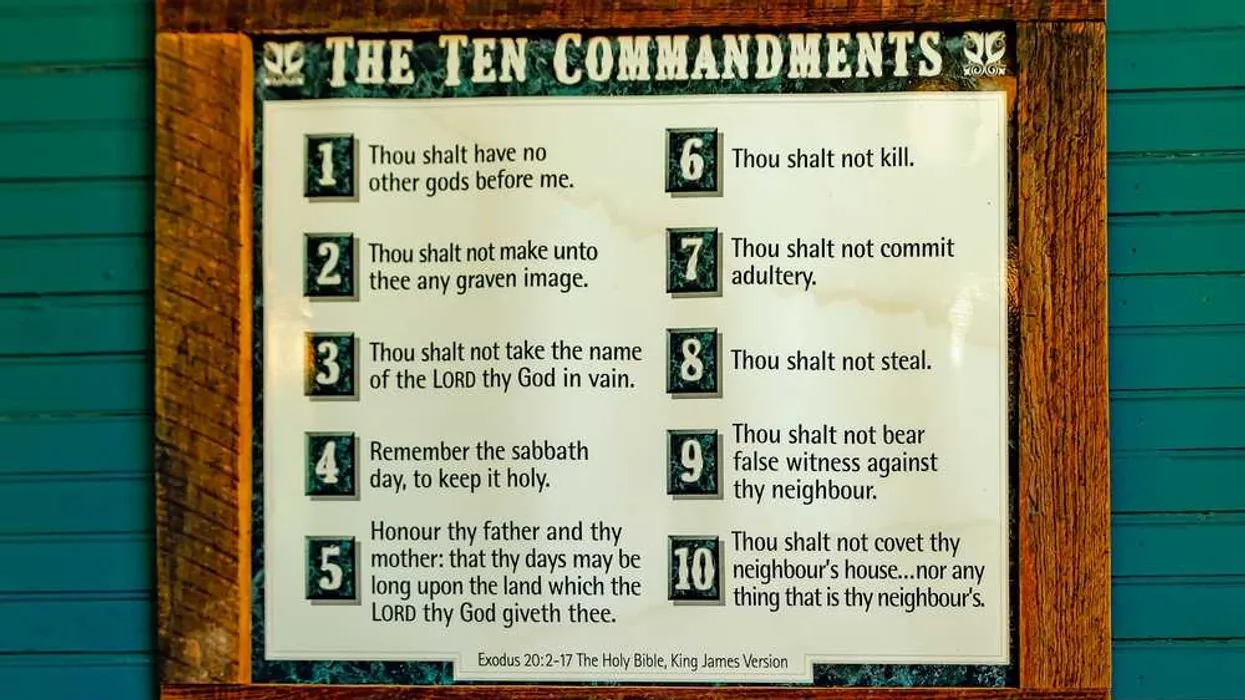
Three Houston mothers have filed a lawsuit seeking to halt the display of the Ten Commandments in Texas public school classrooms, arguing that the mandate violates state religious freedom protections and a voter-approved parental rights amendment.
The suit, filed in Harris County, represents the latest legal challenge to Senate Bill 10 — but this time the plaintiffs are relying on Texas state law rather than federal constitutional arguments. Previous attempts to block the Ten Commandments displays under the First Amendment's establishment clause have so far proven unsuccessful. The U.S. Supreme Court's 2022 decision in Kennedy v. Bremerton, which replaced the decades-old Lemon test with a standard rooted in historical practices and understandings, has generally made federal establishment clause challenges to religious displays in public settings more difficult.
The mothers are demanding that the displays be removed and are asking the court to act before mid-August, when the new school year begins.
"It teaches students, and their teachers, that exclusion is acceptable, maybe even preferred. That is not a lesson I want my children learning from the state of Texas," said plaintiff Emily Roth in a Friday morning press release. Roth said the Ten Commandments poster purposefully ignores religious differences in the classroom and will make students feel like outsiders.
The lawsuit invokes two Texas legal provisions. The first is the Texas Religious Freedom Restoration Act, passed by the Legislature in 1999, which declares that "a government agency may not substantially burden a person's free exercise of religion." State-level religious freedom restoration acts have more often been invoked by individuals seeking to protect their own religious practices from government interference, making the plaintiffs' use of the statute against a government-authorized religious display a notable legal strategy. The second is Texas Proposition 15, also known as the "Parental Rights Amendment," recently approved by voters, which ensures parents have the right "to exercise care, custody, and control of the parent's child, including the right to make decisions concerning the child's upbringing."
Senate Bill 10, passed last year, requires Texas public school classrooms to display donated posters of the King James Version of the Ten Commandments. The posters must be visible in the classroom and cannot be smaller than 16 by 20 inches. The press release noted that various faiths — including Jewish, Catholic, and Protestant traditions — number and word the commandments differently.
The legal battle over the mandate has been ongoing. In July 2025, sixteen families sued eleven school districts to block the law, arguing it violates the separation of church and state and pressures students to embrace religious principles they may not share. In August 2025, U.S. District Judge Fred Biery blocked the law in the targeted districts. However, a 5th Circuit Court of Appeals ruling this spring permitted enforcement of Senate Bill 10, finding that the Texas law did not violate the Constitution. The 5th Circuit, whose jurisdiction covers Texas, Louisiana, and Mississippi, also cleared the way for a similar law in Louisiana, signaling a regional pattern of state-level legislation mandating religious displays in public classrooms.
Texas Attorney General Ken Paxton has long maintained that the Ten Commandments are an important part of the heritage and history of the United States. Lawyers from his office have argued that because the posters are displayed rather than taught, they do not qualify as coercive, since students are free to ignore them.
The lawsuit comes less than two months after the Texas Board of Education approved a new Bible-infused curriculum for public schools, adding to a series of measures advancing religious content in Texas public education.
The three plaintiffs are Emily Roth, Audrey Rosa Nath, and Sanjam Kaur Sohal. According to the press release, Roth is raising her children without religion; Nath is raising her children across a variety of religious traditions found in her family, including Jainism, Hinduism, Judaism, and Quakerism; and Sohal is Sikh.
Megan Hassan, lead counsel for the plaintiffs, said that despite the women's differing religious beliefs, they share a common goal: "for their children to attend school without being compelled to display a message that conflicts with their faith."
"They did not want a legal battle with the state of Texas," Hassan said. "They wanted a poster removed from a classroom wall. That should never have required a lawsuit."
This story is published through a collaboration between The Texas Tribune and Religion News Service. This article first appeared on The Texas Tribune.

