Report Says House Republicans Face Constituent Backlash as GOP Divisions Deepen
Key Takeaways
- •House Republicans failed to unite behind an affordability agenda, an issue both parties see as central to the midterm elections.
- •Four Republicans joined Democrats to pass a symbolic resolution requiring Trump to withdraw troops from combat against Iran.
- •Rep. Don Bacon criticized a go-it-alone approach on Iran and urged Trump to work more closely with Democrats.
- •Rep. Alexandria Ocasio-Cortez said Democrats currently lack a clear ideological definition.
- •Lawmakers from both parties have raised concerns about Congress’s limited legislative record and ability to pass bills before the midterms.
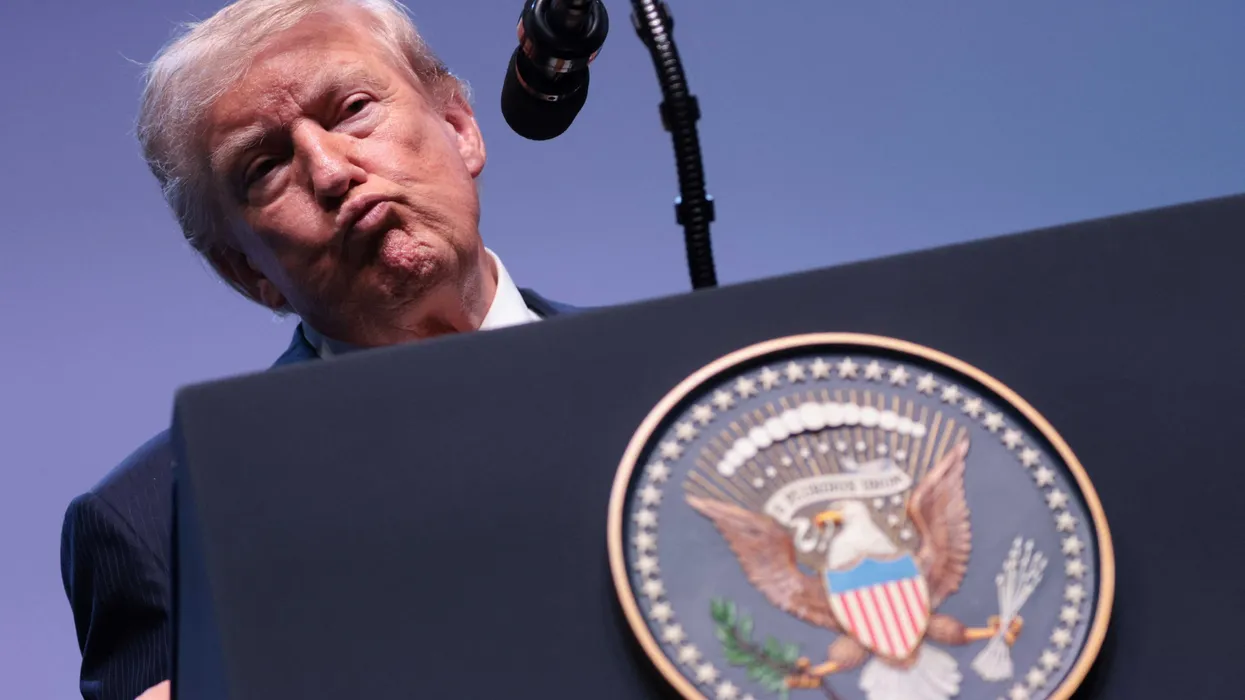
President Donald Trump’s Republican Party is facing warnings of serious political backlash as it works to retain control of the House of Representatives, even as Democrats continue to confront criticism over their own political effectiveness.
“You’re about to have hundreds of members of Congress go home to their constituents, and a lot of folks are about to get crushed, rightfully so, by their constituents,” Rep. Jason Crow (D-CO) told reporters, according to The Guardian. His remarks followed a vote in which House Republicans failed to unite behind an effective agenda aimed at improving affordability in the United States, an issue that lawmakers in both parties have treated as central to their pitch to voters ahead of the midterms.
House Speaker Mike Johnson, meanwhile, sought to present the chamber’s work as substantive. Speaking on Wednesday, he said, “Many of you like to say that major legislating can’t happen in an election year. We just proved you wrong.”
But The Guardian noted that the limits of the House GOP’s narrow majority were exposed almost immediately afterward. “Not 24 hours later came a reminder of how Democrats can leverage divisions within the House GOP’s historically small majority, when four dissident Republicans joined with the minority to pass a symbolic war powers resolution that would mandate Trump withdraw troops from combat against Iran,” the outlet reported. In a chamber with so little room for defections, even symbolic votes can highlight the governing challenges facing party leaders as members return home to defend their records.
The Guardian also quoted Rep. Don Bacon (R-NE), who represents a district won by Vice President Kamala Harris in the 2024 presidential election. Bacon, who is not running for re-election, offered a mild criticism of Trump’s handling of the Iran war and urged the president to work more closely with Democrats.
“The go-it-alone approach fails us in the end,” Bacon told The Guardian. “But we need their help, and so I think he should lean in to working across the aisle more.”
Republicans are not the only party dealing with concerns about their political identity. Rep. Alexandria Ocasio-Cortez (D-NY) told The Guardian that she believes Democrats currently lack a clear ideological definition.
“I think a lot of people aren’t sure, depending on where you’re from, what it means to be a Democrat,” Ocasio-Cortez said.
Earlier in July, Semafor reported that both parties were struggling with the approaching midterm elections amid a limited legislative record. That dynamic puts added attention on whether congressional leaders can translate campaign themes into legislation before voters begin judging control of the House and Senate.
“The Senate just seems to be a place where good ideas are going to die,” Rep. Mario Diaz-Balart (R-FL) told Semafor’s Burgess Everett and Nicholas Wu.
Sen. Josh Hawley (R-MO) similarly told Semafor, “I’m worried about our ability to pass things in general.” Rep. Tom Cole (R-OK) told the publication that “going home and telling the voters: ‘I can’t get this done because of our own rules, that we can change,’ is not a real satisfactory answer. But yes, they’re content to do that.”
Sen. Thom Tillis (R-NC) also expressed skepticism to Semafor about a stopgap funding bill, saying, “I’m just saying: I don’t know if it’s a practical plan.”

