Iran Threatens Wider Hormuz Exclusion Zone After Tanker Strikes
Key Takeaways
- •Goldman Sachs warned Brent crude could rise to $120 a barrel if shipping attacks around the Strait of Hormuz escalate; Brent was trading near $97 on Monday.
- •Iran's Revolutionary Guard Corps said it targeted three oil tankers in the strait and three US-linked vessels elsewhere, while the US destroyed or disabled three Iranian NITC tankers in retaliation for ballistic missile launches at two US Navy warships.
- •Roughly one-fifth of global petroleum liquids consumption normally transits the Strait of Hormuz, and no overland bypass exists at scale, forcing costlier routings around Africa if disruption persists.
- •Iran plans to announce an exclusion zone outside Hormuz in the coming days, with ships entering the area potentially facing Iranian sanctions or enforcement action.
- •Flare-ups in the region typically cause war risk insurance premiums for Gulf transits to jump, as these are recalculated per voyage and can significantly raise shipping costs.
The escalating tanker war around the Strait of Hormuz is threatening to drive oil prices sharply higher, with Goldman Sachs warning that Brent crude could reach $120 a barrel if attacks on shipping intensify.
The warning follows an extraordinary weekend at sea in which Iran claimed attacks on three tankers, the United States destroyed or disabled three Iranian crude carriers, and Tehran announced plans to establish a new exclusion zone around the oil chokepoint.
The stakes are high because Hormuz is the world's most important oil shipping corridor: roughly a fifth of global petroleum liquids consumption normally passes through the strait, and no overland route exists at scale to bypass it, meaning sustained disruption would force exporters to seek longer and costlier routings around Africa.
Daan Struyven, co-head of global commodities research at Goldman Sachs, said developments over recent days showed a real risk that shipping disruption could broaden and intensify. The bank sees Brent potentially reaching $120 in an escalation scenario. Brent was trading around $97 on Monday morning. For shipowners, the immediate effect of such flare-ups is typically a jump in war risk insurance premiums for Gulf transits, which are recalculated per voyage and can add significantly to the cost of moving cargo through the region.
Iran's Islamic Revolutionary Guard Corps said on Saturday evening that it had targeted three oil tankers travelling through what it described as an "unauthorised route" in the Strait of Hormuz, along with three US-linked vessels elsewhere. The identities of the tankers have not been confirmed.
Separately, UK Maritime trade Operations reported that several merchant ships in the northern Arabian Gulf and the Gulf of Oman were subjected to "disabling fire", although details on casualties and pollution remain unclear.
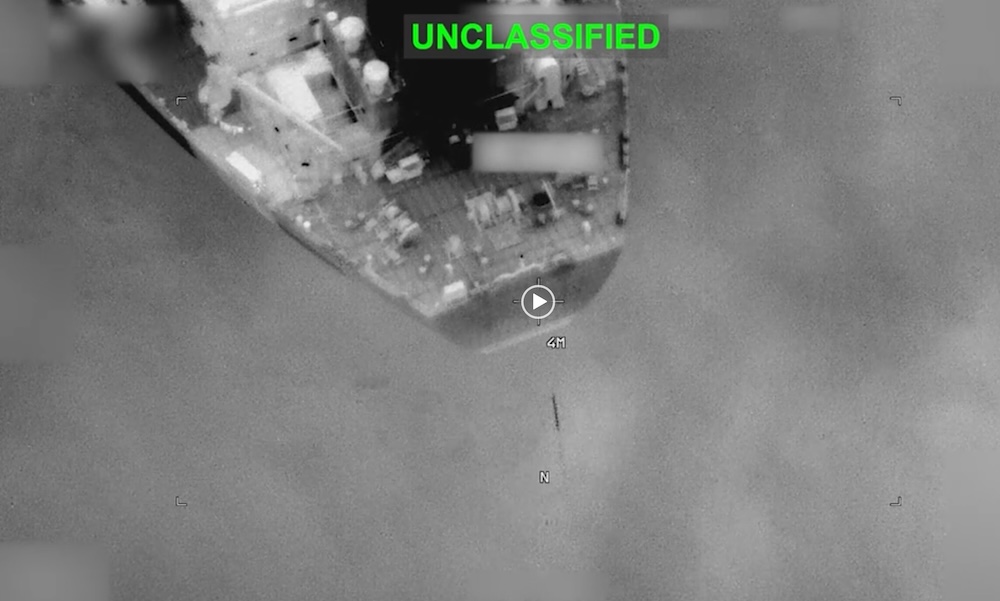
The Iranian action followed US strikes on three NITC tankers. According to Central Command, the Downy near Kharg Island and the Stark 1 near Jask were permanently disabled, while the unladen Kylo, also known as Noxen, was destroyed in the Gulf of Oman. Washington said the strikes were retaliation for Iranian ballistic missile launches at two US Navy warships.
The confrontation is now moving beyond attacks on individual vessels. Mohsen Rezaei, the new head of Iran's Supreme National Security Council, said on Sunday that Tehran will announce an exclusion zone outside Hormuz in the coming days. The zone is expected to run from what Iran regards as the line of the US naval blockade towards the strait and into parts of the Persian Gulf. Ships attempting to enter the area and transit Hormuz could face Iranian sanctions or enforcement action. While Iran has periodically threatened to close Hormuz during past crises, formally designating an exclusion zone backed by enforcement action would mark an escalation in how the confrontation is managed, and shipping insurers, navies and operators will be watching how the zone is defined and enforced in practice.
Source: Splash247
