Former CIA Officer Warns Tech Founders Lack Counterintelligence Training as Nvidia Honey Trap Scandal Unfolds
Key Takeaways
- •Former CIA officer Aaron Brown said that startup founders and technology executives receive no counterintelligence briefings, unlike government officials who are trained to recognize recruitment attempts.
- •The scandal came to light in late October 2026 following a New York Times investigation into whether a former executive at Singapore data center company Megaspeed had ties to Chinese intelligence.
- •Megaspeed reportedly bought billions of dollars' worth of Nvidia chips, and a prior audit flagged 50,000 units that could not be accounted for, raising national security concerns about advanced AI chip exports.
- •Jensen Huang acknowledged an extramarital relationship in an email to Nvidia staff on November 9, 2026, and apologized, while the board moved from expressing confidence in him to opening an internal review; Chinese officials have denied espionage allegations.
- •Nvidia shares reportedly fell sharply after the scandal surfaced, with the company losing an estimated hundreds of billions of dollars in market value and one analysis attributing roughly $1 trillion of Nvidia's valuation to Huang's leadership.
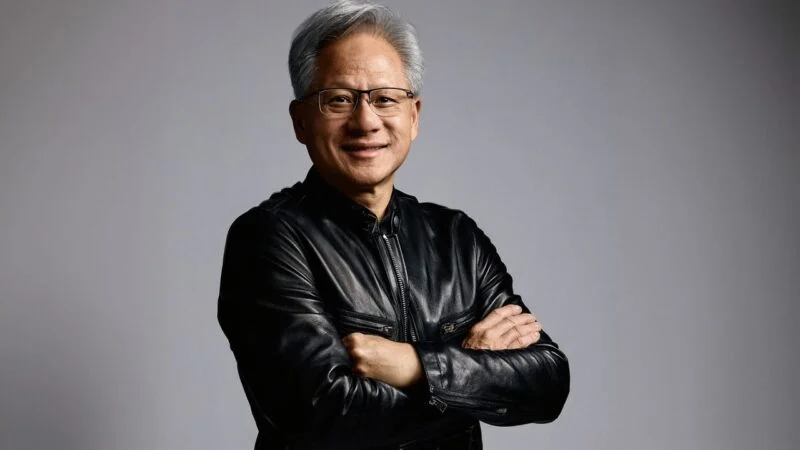
For most of the last century, the honey trap belonged to a specific cast: diplomats, generals and officials with security clearances. In intelligence parlance, a honey trap is the use of a romantic or sexual relationship to extract secrets or gain leverage over a target — a technique aimed at people whose access makes them worth compromising. Now, according to a former CIA officer, that cast list has changed — and it includes the people running chip and AI companies.
The warning lands as Nvidia, the company at the center of the global AI hardware boom, deals with a reported scandal involving CEO Jensen Huang. What began as a story about personal conduct has turned into a question of corporate security, and of whether tech founders hold the secrets spies want without the training to spot an approach.
Former CIA Officer: "Nobody Briefs Founders on Counterintelligence"
Aaron Brown spent years as a senior officer at the CIA and now runs Lumbra, a software company. His assessment of the current moment is blunt: "Nobody briefs founders on counterintelligence."
Brown made the remark to TechCrunch. His argument is that the security playbook was built for government. Officials with security clearances work inside institutions that expect someone to try to recruit them, and staff are trained to recognize such attempts. Startup founders and technology executives receive no equivalent preparation: there is no mandatory briefing and no security officer down the hall.
Brown's case rests on where valuable information now lives. In his telling, a growing share of the secrets worth stealing sits with private companies that design chips, train models and build the infrastructure underneath them.
The Reported Nvidia Case
The scandal that lent urgency to this conversation reportedly came to light in late October 2026, following an investigation by the New York Times. That reporting examined the background of a former executive at Megaspeed, a Singapore data center company, and whether she may have had ties to Chinese intelligence.
According to research compiled on the case, US intelligence assessments place the start of a relationship between Huang and the former Megaspeed executive around 2024 to 2025. Officials reportedly assessed that the relationship could be compromising for Nvidia and examined what it might mean for company secrets.
Megaspeed's link to Nvidia is not only personal. The firm reportedly bought billions of dollars' worth of Nvidia chips, and a prior audit reportedly flagged 50,000 units that could not be accounted for. That detail moves the story out of tabloid territory and into national security: advanced AI chips are among the most closely watched exports in the world. Where leading-edge processors end up shapes who can build and run advanced AI systems, which is why units that cannot be accounted for draw attention well beyond the company that made them.
Huang reportedly acknowledged an extramarital relationship in an email to Nvidia staff on November 9, 2026, and apologized to employees. Chinese officials have denied allegations of espionage connected to the case.
Nvidia's board initially expressed confidence in Huang. It then reportedly opened an internal review of the situation.
Markets were less patient than the board. Nvidia shares reportedly fell sharply after the scandal surfaced, with estimates suggesting the company lost hundreds of billions of dollars in market value. One analysis suggested that Huang's leadership accounted for roughly $1 trillion of Nvidia's valuation — a measure of how much investors had priced in the person rather than just the product. The figure captures what is known as key-person risk: a company's value concentrated in a single individual, and the uncertainty that follows when that individual's standing comes into question.
Why This Is a Different Kind of Risk
Former intelligence officials have pointed to the case as a possible sign of shifting espionage tactics. The suggestion is that honey traps may increasingly be aimed at tech leaders rather than only at government officials.
That shift, if it holds, exposes a structural gap. Government agencies run background checks, monitor foreign contacts and train staff to report approaches. Most companies, even very large ones, do not apply anything comparable to their own executives. The result is an inversion of the old model: the people with the most commercially sensitive access are often the least prepared for the approaches that access can attract.
What to Watch
For Nvidia investors, the immediate focus is the board's review and how quickly it reaches a conclusion. The reported drop in market value suggests that uncertainty itself carries a cost, and a drawn-out process could extend it.
The Megaspeed chip question is the second thread. If the reported 50,000 unaccounted units draw further scrutiny, the story could shift from one executive's conduct to Nvidia's controls over where its hardware ends up.
Beyond Nvidia, Brown's remark frames an industry-wide question: whether chip and AI companies begin giving their founders and executives the kind of counterintelligence preparation that government service has long provided by default.

